Re.Heritage Home Decor
CartView Collection
Menu
ShopCustom ShadesSoft FurnishingsCandle RefillsPicnic HampersJournalOur StoryContactView CollectionCart

Made one at a time

Handmade Lampshades for the Lamps You Love

A good lamp deserves more than a standard replacement. Re. makes handmade lampshades with the fabric, proportion, and quiet character that let a favorite piece feel at home again.

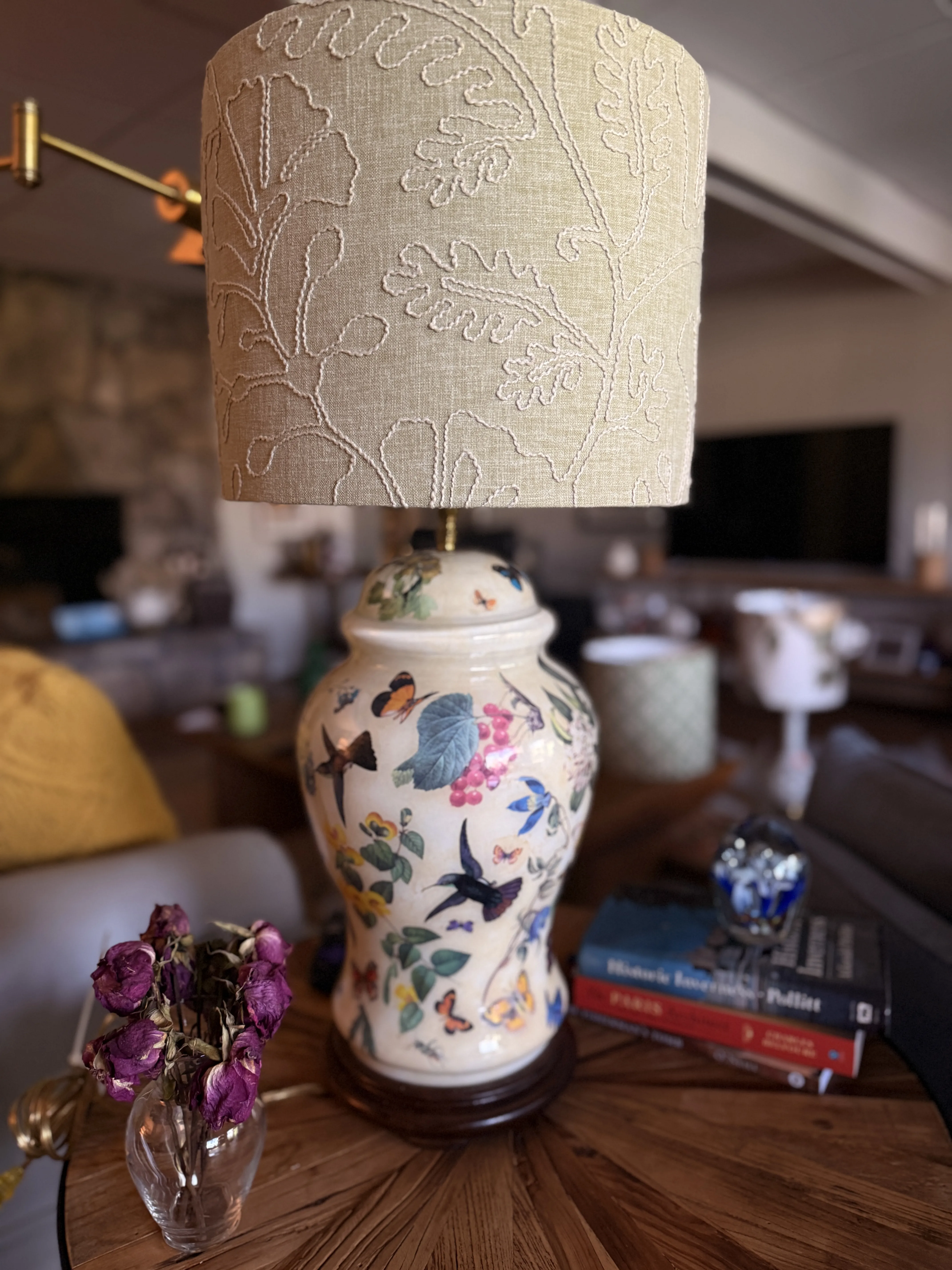
Handmade botanical lampshade on a restored vintage ceramic lamp

A shade changes the whole piece

Keep the lamp, then make it feel like yours.

Some lamps stay with you because of the base. It may be a porcelain ginger jar found years ago, a brass piece with a beautiful line, or a lamp inherited from someone whose taste you still recognize. The old shade may be tired, the wrong scale, or simply not made for the room you have now. A handmade lampshade gives the piece a fresh role without sanding away what made it worth keeping.

Re. begins with the lamp, not a catalog number. Its width, height, neck, socket, harp, and overall silhouette all shape the direction. A shade needs to cover the hardware comfortably, leave the best part of the base visible, and sit with enough confidence that the lamp does not feel top-heavy or unfinished. Those details are what separate a shade that merely fits from one that belongs.

Then comes the room. A bedside lamp may need a soft, useful glow that does not crowd the headboard. A reading chair may need more light and a taller presence. A console or entry can carry a more decorative shade, one that makes the room feel settled when the overhead lights are off. Handmade work makes room for those real-life decisions.

The finished shade is personal because it responds to the piece you have. It can bring a favorite fabric into the room, make an older base feel lighter and more current, or add the small amount of pattern, texture, or warmth a corner was missing. It should look considered from the doorway and still reward you when you turn it on at the end of the day.

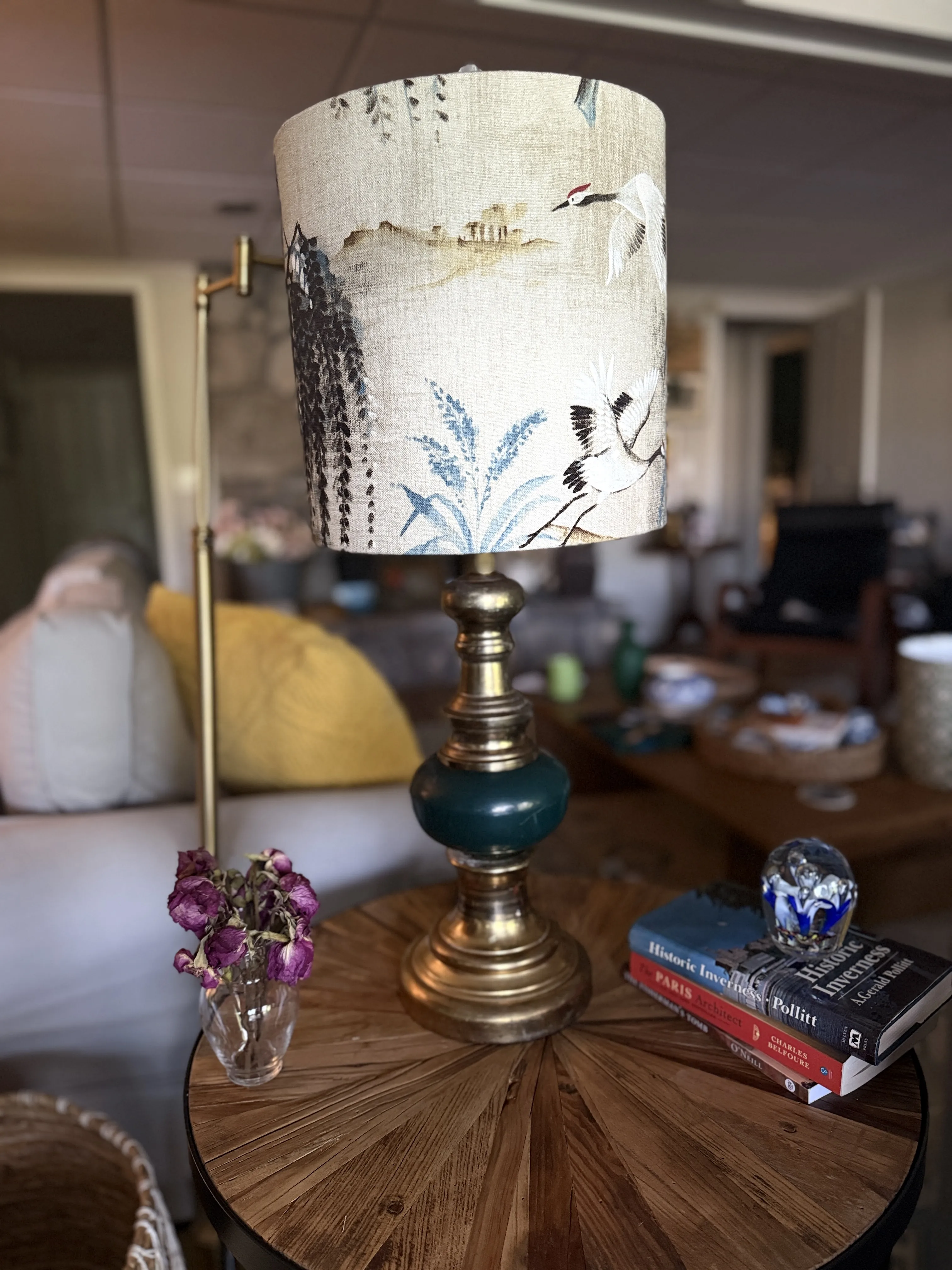
Restored brass lamp with a crane-patterned handmade lampshade

Built around the details

Fabric, frame, and light need to agree.

A handmade lampshade is not only about choosing a pretty textile. The frame determines the silhouette. The fitter determines how it sits on the lamp. The lining and fabric determine whether the glow is bright and open, warm and softened, or more intimate after dark. Each choice has a visible effect once the shade is in its real setting.

Pattern needs a little judgment too. A large botanical, stripe, or scenic print can be wonderful when the frame gives it enough room to read. On a smaller shade, a quieter repeat, woven texture, or small-scale motif may have more impact. Re. considers the way a design wraps around the frame, where it lands at eye level, and whether the fabric still feels composed from every side.

That attention matters especially with vintage lighting. Older bases often have proportions that standard shades ignore. A tall, narrow brass lamp may need more height. A rounded ceramic base may need a calmer shape above it. A lamp on a narrow table may need a generous glow without a shade that takes over the furniture. The goal is a useful light and a finished object, not an elaborate solution for its own sake.

The choices that matter

Made for the way the lamp will be seen and used.

A proportion that lets the base show.

The shade needs enough width to hold the lamp visually, but not so much that it overwhelms the table or hides a beautiful base. Height matters just as much. The right relationship leaves the lamp looking composed, with the bulb and hardware covered at normal eye level.

A shape with a reason.

Drum shades have an even, tailored line that works well with many ceramic, brass, wood, and painted lamps. Tapered shapes can make a traditional base feel lighter and more graceful. The most satisfying choice usually comes from the lamp's own silhouette rather than a trend or a one-size-fits-all rule.

Fabric that earns its place.

A saved scrap, an heirloom textile, a favorite print, or a quiet linen can all become the starting point. The weave, weight, pattern scale, color, and condition help determine whether the fabric can do its best work on a shade. A good choice relates to the room without trying to match every other thing in it.

Light that suits the room after dark.

Pale and open textiles often create a brighter glow, while deeper colors, denser weaves, and lining can make the light feel more contained. Consider whether the lamp is for reading, a bedside routine, an entry, or an evening room. The way you use the light is part of the design, not an afterthought.

Bring what you have

A photo, a fabric, or a favorite lamp is enough to begin.

You do not need to arrive with the answer. Re. can start with the piece you want to keep and help you make sense of the scale, shade shape, fabric, and light. A few clear details lead to a much better result than guessing from a shelf.

Start a handmade shade inquiry
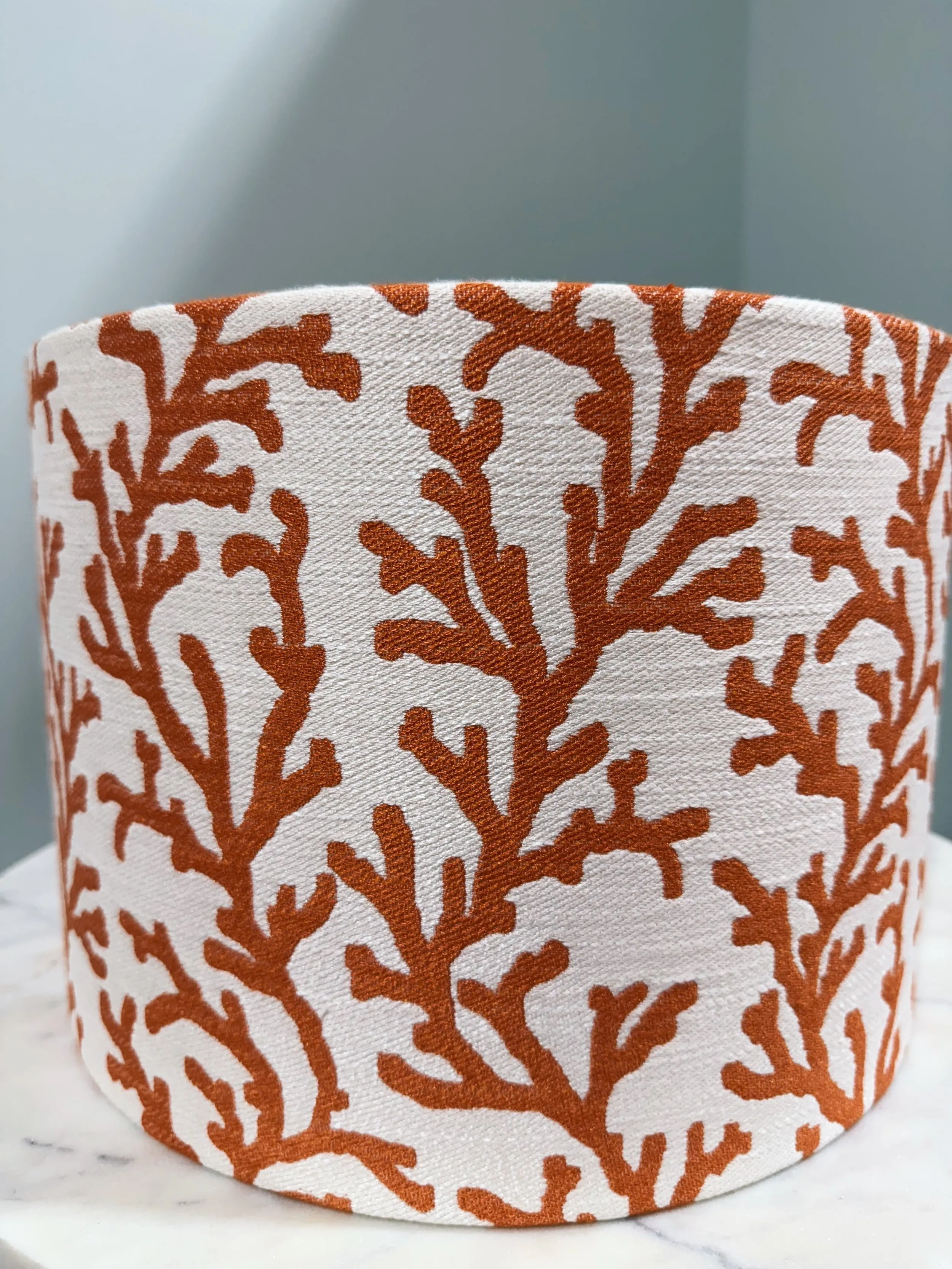
Botanical handmade fabric lampshade with a softly gathered edge

What to send Re.

A few useful views tell the story of the lamp.

Photos and simple measurements keep the first conversation practical. They show the scale of the piece, the hardware that needs to work, and the room the finished shade needs to serve.

Show the lamp from the front and side.

A front view reveals the base width and overall shape. A side view shows the socket, harp, and height the shade needs to cover. Include the current shade when there is one, even if it is worn out or clearly wrong, because it gives a helpful reference point.

Take one wider photo of the room.

A lamp looks different beside a bed, chair, sofa, or mirror than it does on a worktable. A wider view helps Re. see the furniture, color, and space around it, then judge whether the new shade should be quiet, lively, tall, narrow, or more generous.

Share the fabric clearly.

If you have a textile in mind, send a full image and one closer view of the weave or pattern. A rough measurement of the remnant is useful too. This makes it easier to see whether a motif can sit well around the frame before the fabric is committed.

Measure what you can.

The base width at its widest point, the lamp height to the socket or harp, and the current shade's top, bottom, and height are all helpful. The lampshade size guide gives you a straightforward starting point when you want a little more direction.

Let the lamp's character lead.

A new shade does not have to recreate every detail of an older base. A clean linen can calm a decorative lamp. A patterned fabric can give a simpler piece more life. The strongest pairing lets the original lamp remain visible, then gives it one new element that feels right for the room.

Frequently asked questions

Handmade lampshades.

What makes a lampshade handmade?

A handmade lampshade is built around the individual frame, fabric, lining, and fitter rather than taken from a standard run. Re. considers how those choices sit on your particular lamp, so the finished shade has the right scale, glow, and point of view for the room.

Can you make a lampshade for a vintage lamp?

Yes. Vintage lamps are often the best candidates for a handmade shade because their proportions, hardware, and character do not always suit a standard replacement. A clear photo of the lamp and its existing shade, if it has one, gives Re. a useful place to begin.

Can I choose the fabric?

Often, yes. You may bring a saved remnant, an heirloom textile, or a fabric that already belongs in the room. Re. can also help you choose from studio options. The important part is seeing how the pattern, weave, color, and light will behave once the fabric becomes a shade.

Do I need exact measurements before I reach out?

No. A few rough measurements and photographs are helpful, but you do not need to solve every detail first. Re. can help you narrow the right direction from the lamp's height, base width, current hardware, and the space where it will live.

What kind of lampshade shapes can be handmade?

The right shape depends on the lamp and the room. A clean drum can give a detailed base a quieter outline, while a tapered shape can add lift to a traditional silhouette. Re. will help you choose a shape that keeps the lamp balanced and the hardware comfortably covered.

How do I start a handmade lampshade inquiry?

Email Re. a front photo and side photo of the lamp, a wider image of the room, and a photo of any fabric you are considering. Include the current shade measurements when you have them. That is enough to begin a useful conversation.

A better light for the things you keep

Send Re. the lamp you want to see differently.

A handmade lampshade can make a familiar piece feel newly yours and give the room one more detail with a story behind it.

Email Re. about your lamp