Shade width
Choose a shade bottom about one-and-a-half to two times the lamp base width at its widest point.
 Heritage Home Decor
Quick lampshade size guide
Use these three checks before you buy. You only need a tape measure and a look at your lamp from across the room.
Check your measurements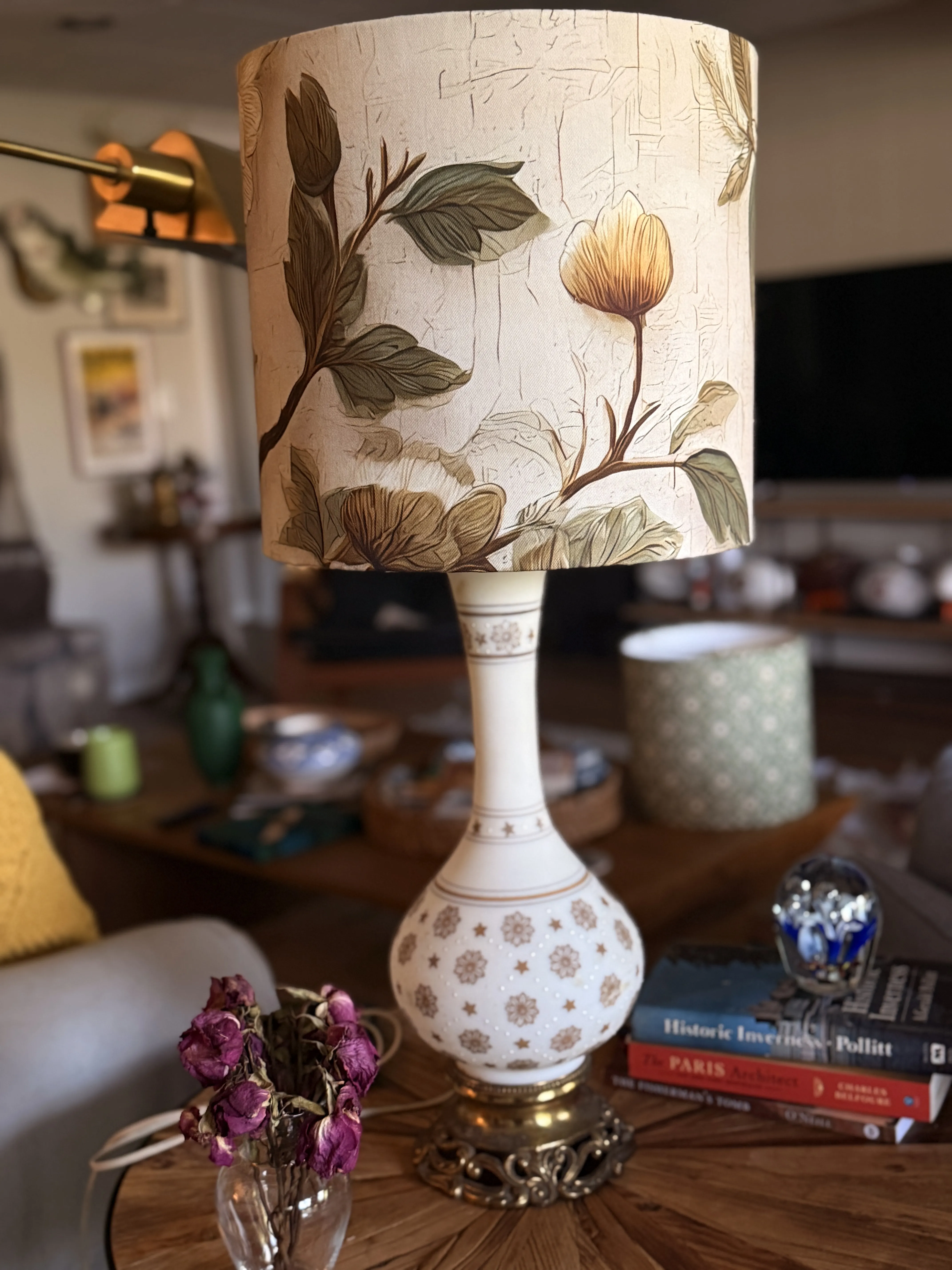
The quick answer
Choose a shade bottom about one-and-a-half to two times the lamp base width at its widest point.
A shade around two-thirds of the lamp base height is usually a balanced place to begin.
From normal eye level, the shade should hide the bulb, socket, and harp.
These are guides, not rules. The lamp, the table, and the room still get the final say.
Three checks before you choose
Measure straight across the widest part of the base. For a round base, this is the diameter. For a square or rectangular base, measure corner to corner. Multiply that number by one-and-a-half to two for a sensible shade-bottom range.
Measure the shade's top and bottom diameters, then its vertical height. Measure the lamp from the bottom of the base to the top of the socket or harp. A shade around two-thirds of the base height will often feel balanced and keep the lamp’s neck or detail visible.
Confirm how the shade attaches before you buy, then step back and sit where the lamp will be used. A bedside lamp needs clearance around the headboard, while a console lamp can usually carry a more generous shade. The shade should look right from there, not only on a worktable.
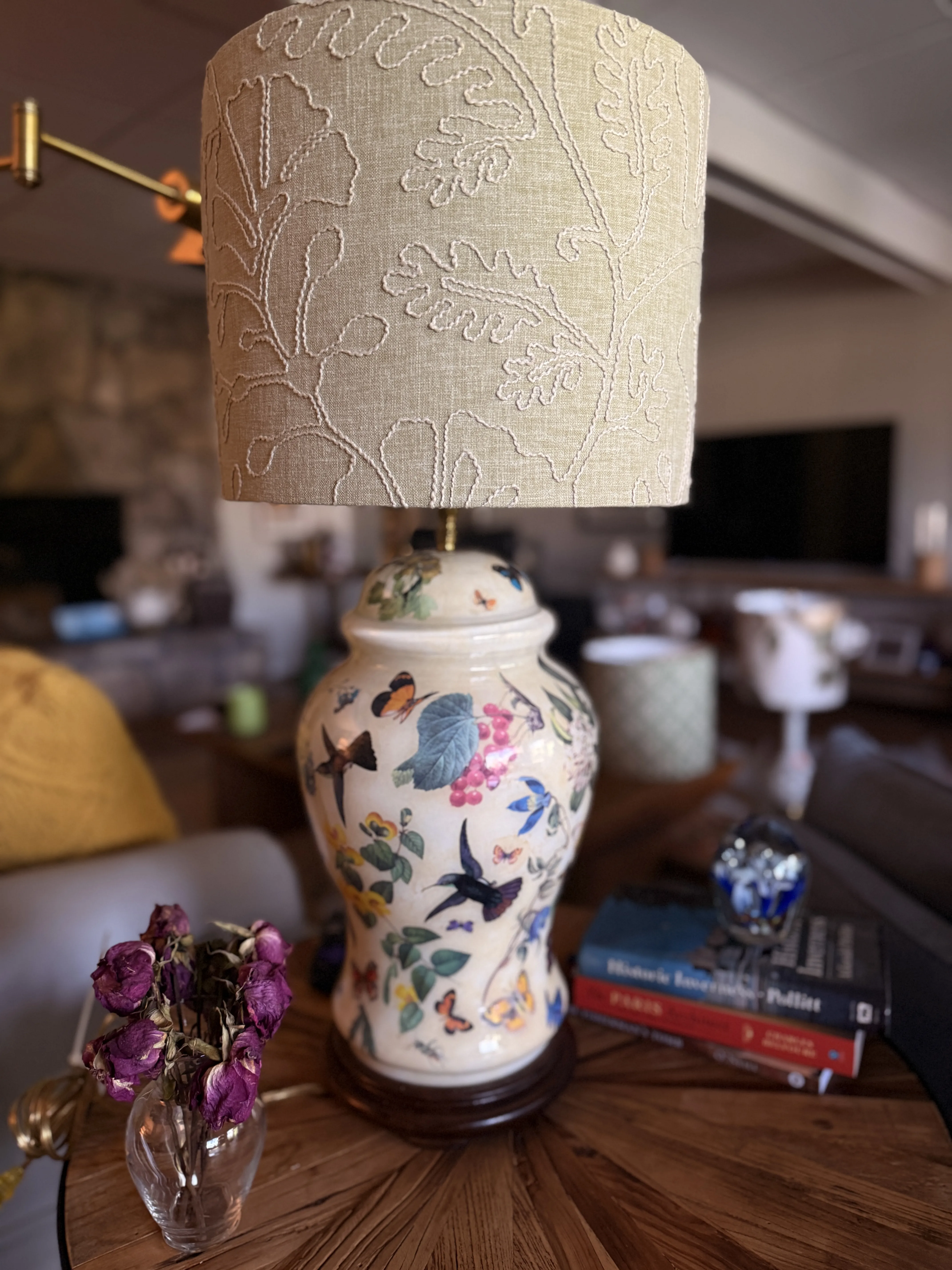
One last check
Turn the lamp off and look beneath the shade. A spider fitter sits on a harp and is held with a finial. A clip-on shade attaches to the bulb. An uno fitter threads onto the socket. The new shade must use the same kind of attachment before its proportions matter.
When the shade is on, make sure the bottom sits above the table with enough room to use the switch and that the bulb is not visible from the chair, bed, or sofa nearby.
When the rule needs help
An unusual vintage base, an awkward harp, a narrow console, or fabric with a story can make a custom shade the better answer. A few clear photos, the measurements above, and a look at the room are enough to start the conversation.
Explore custom lampshadesMeasure the top diameter, bottom diameter, height, and fitter type of the shade you have now. Then measure the lamp base at its widest point and the height from the bottom of the base to the top of the socket or harp.
For many table lamps, start with a shade bottom that is about one-and-a-half to two times the width of the lamp base. Then check that the shade hides the bulb and hardware at normal eye level.
A useful starting point is a shade around two-thirds of the lamp base height. The right height should leave the base visible while hiding the socket, harp, and bulb.
Use the rules as a starting point, not a verdict. Photograph the lamp from the front and side, include its measurements, and let the lamp’s silhouette and the room make the final call.