
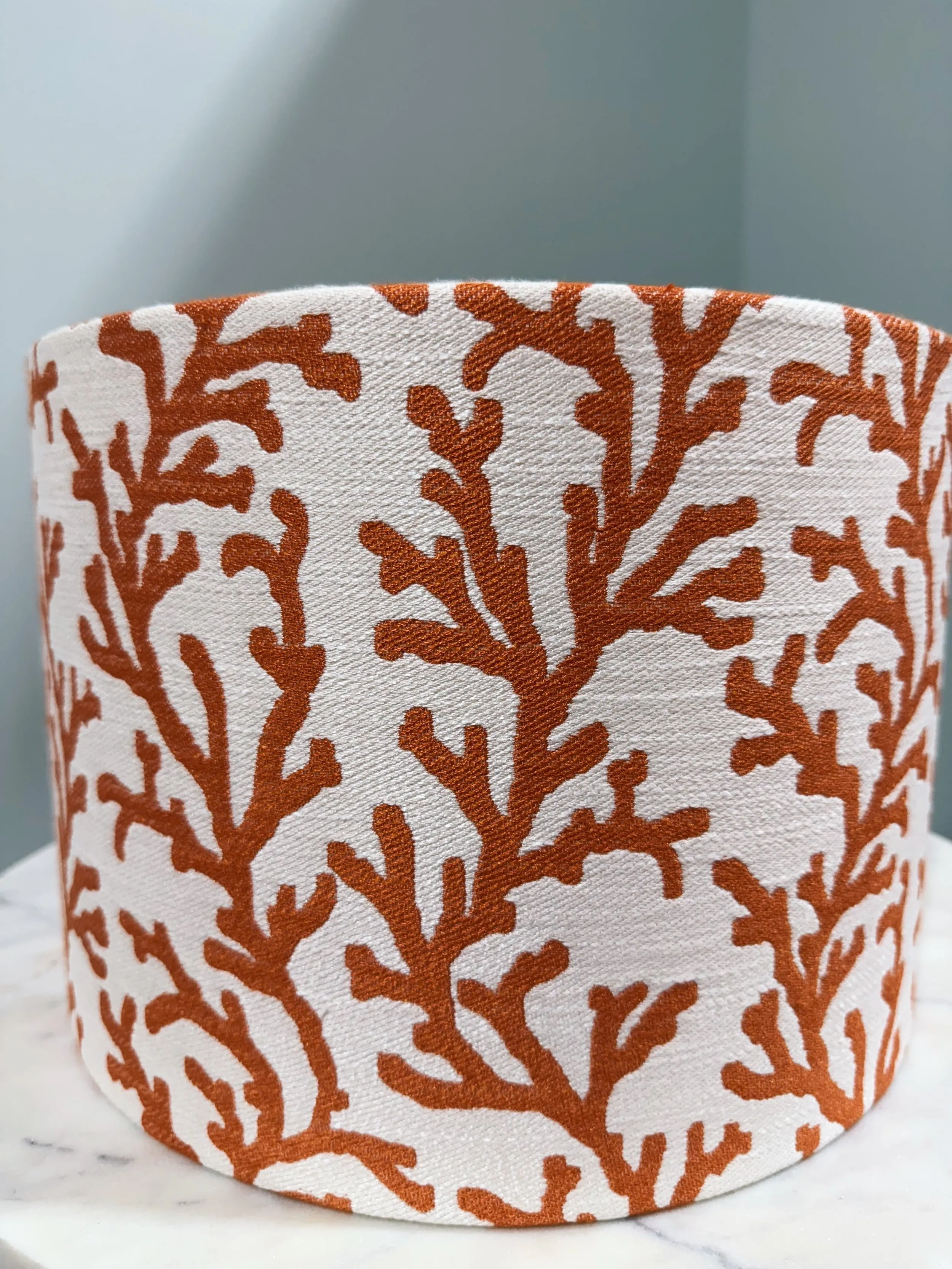
The right shade can bring an old lamp back into balance. The wrong one can make even a beautiful base feel a little off. Fortunately, a few simple measurements take most of the guesswork out of it.
Set the lamp on a level surface, grab a tape measure, and jot down the details below. You are looking for a good fit and a shape that feels right in the room, not chasing a perfect formula.
Measure these three things before choosing a replacement lampshade
Start with the shade you have, then compare it with the lamp and the room. For most round, square, or tapered shades, these are the notes that matter first:
- Top and bottom width: measure straight across each opening, edge to edge. On a rectangular shade, note both the width and depth.
- Vertical height: stand the shade upright and measure straight from the bottom rim to the top rim. Slant height is useful too, but it is not the same measurement.
- Fitter and harp: check how the shade attaches before comparing shapes. A spider fitter needs a harp, while uno and clip-on shades attach differently.
If the lamp needs an oval shade, use the oval lampshade measuring guide. An oval needs a long and short measurement at both the top and bottom, so one width alone is not enough.

Start with the lamp, not the shade
Put the lamp where it will live, then step back. A bedside lamp needs more clearance than one on a deep console. Decide whether you need reading light, a soft glow, or simply a little warmth on a shelf.
Measure the base at its widest point, straight across for round bases and corner to corner for square ones. Also note the height to the top of the socket. Those two numbers are your best starting point. Home Depot’s lamp shade measurement guide is a useful reference too.
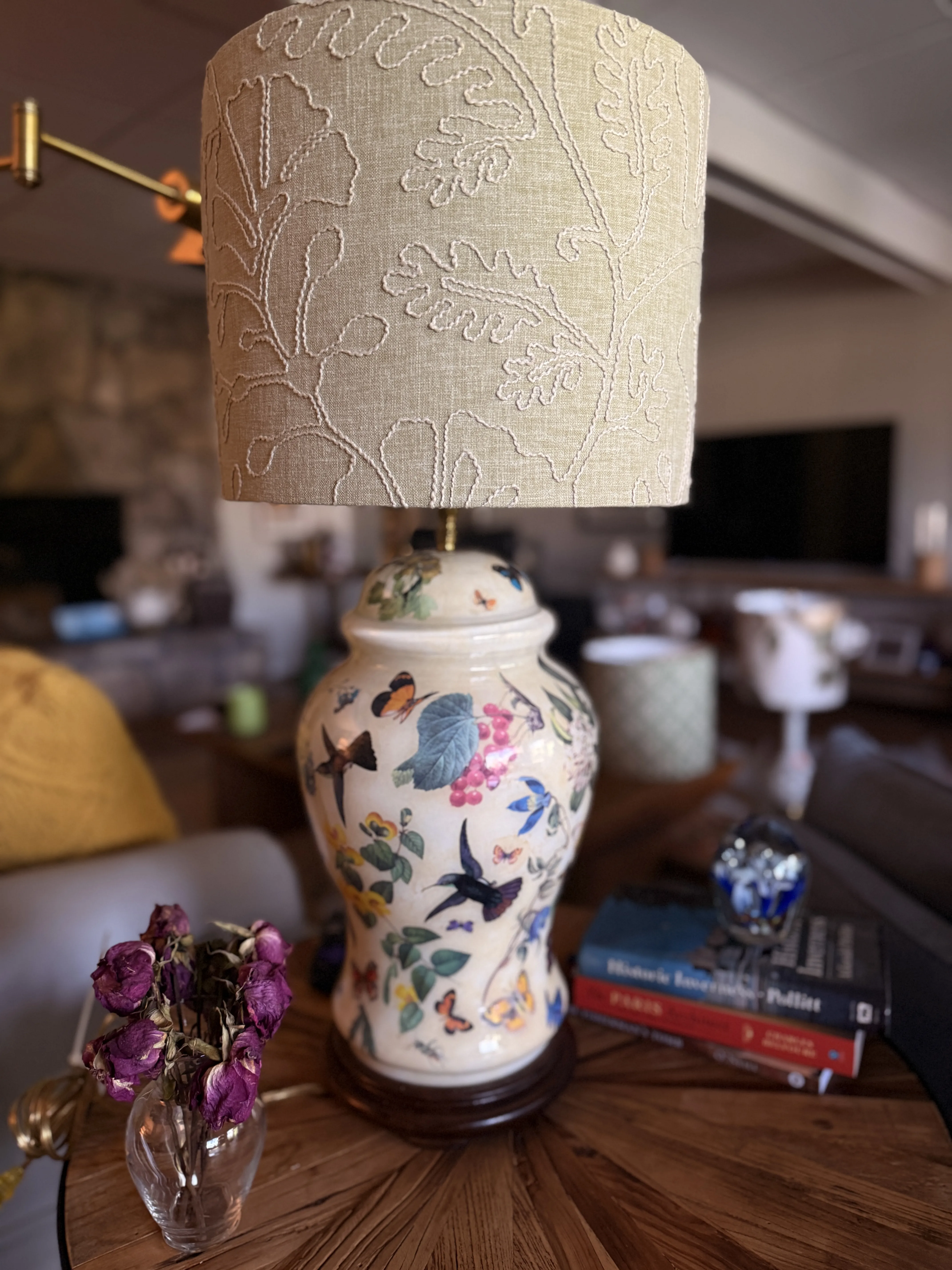
1. Measure the shade’s top diameter
Measure straight across the top opening, edge to edge through the centre. That is the top diameter. For square or rectangular shades, record both width and depth. Skip the circumference, as shades are normally sized by their straight-across measurements.
This matters most on tapered shades and gives the bulb, socket, and harp enough breathing room.
2. Measure the bottom diameter, or width and depth
Measure across the widest point at the bottom. For rectangular, oval, or square shades, record width and depth separately.
As a guide, the bottom is often about one-and-a-half to twice the base width. It is not a rule. A large ginger jar may suit a restrained shade, while a slim brass lamp can carry something fuller. Trust your eye once you have the numbers. Re.'s lamp shade calculator can turn the base size, height, harp, and surrounding clearance into a useful starting range.
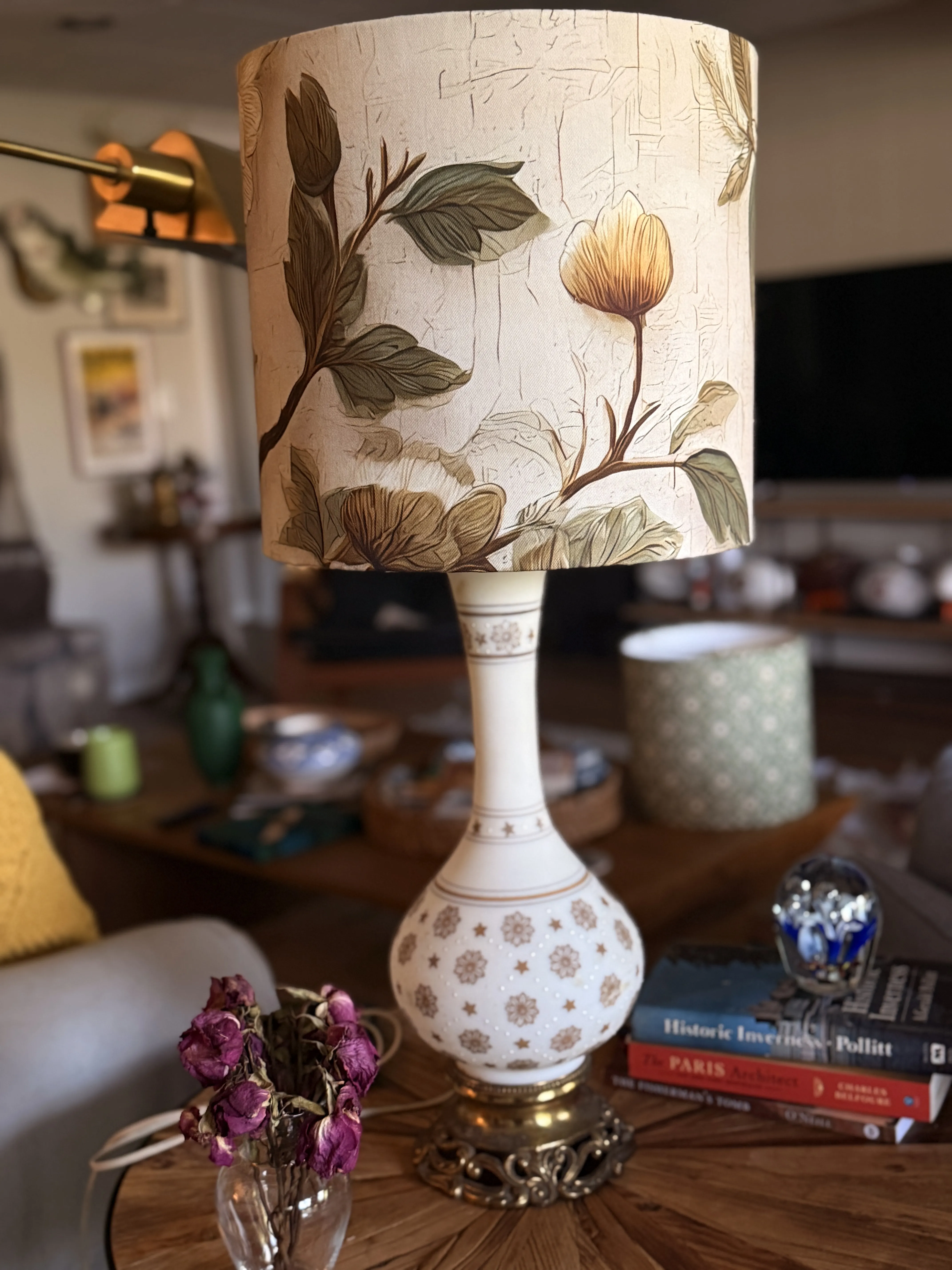
3. Measure the vertical height and the slant
Vertical height runs straight up inside the shade. Slant height follows the outside slope from top rim to bottom rim. They only match on a straight-sided drum shade.
Give both when you can. Retailers often use slant height, while a shade maker may need vertical height to judge the lamp’s proportions.
4. Check the fitter before you fall in love with a shape
The fitter is the hardware that attaches the shade. Many table lamps use a spider fitter on a harp with a finial. Others use clip-on or uno fittings. The fitter must work before proportions even enter the picture.
Look beneath the current shade before you shop. Note the harp height, or photograph the socket and attachment. If the shade sits too high or too low, the lamp harp measuring guide can help you check whether the support, rather than the shade, is the problem. Front and side photos of the lamp will make a custom conversation much easier.
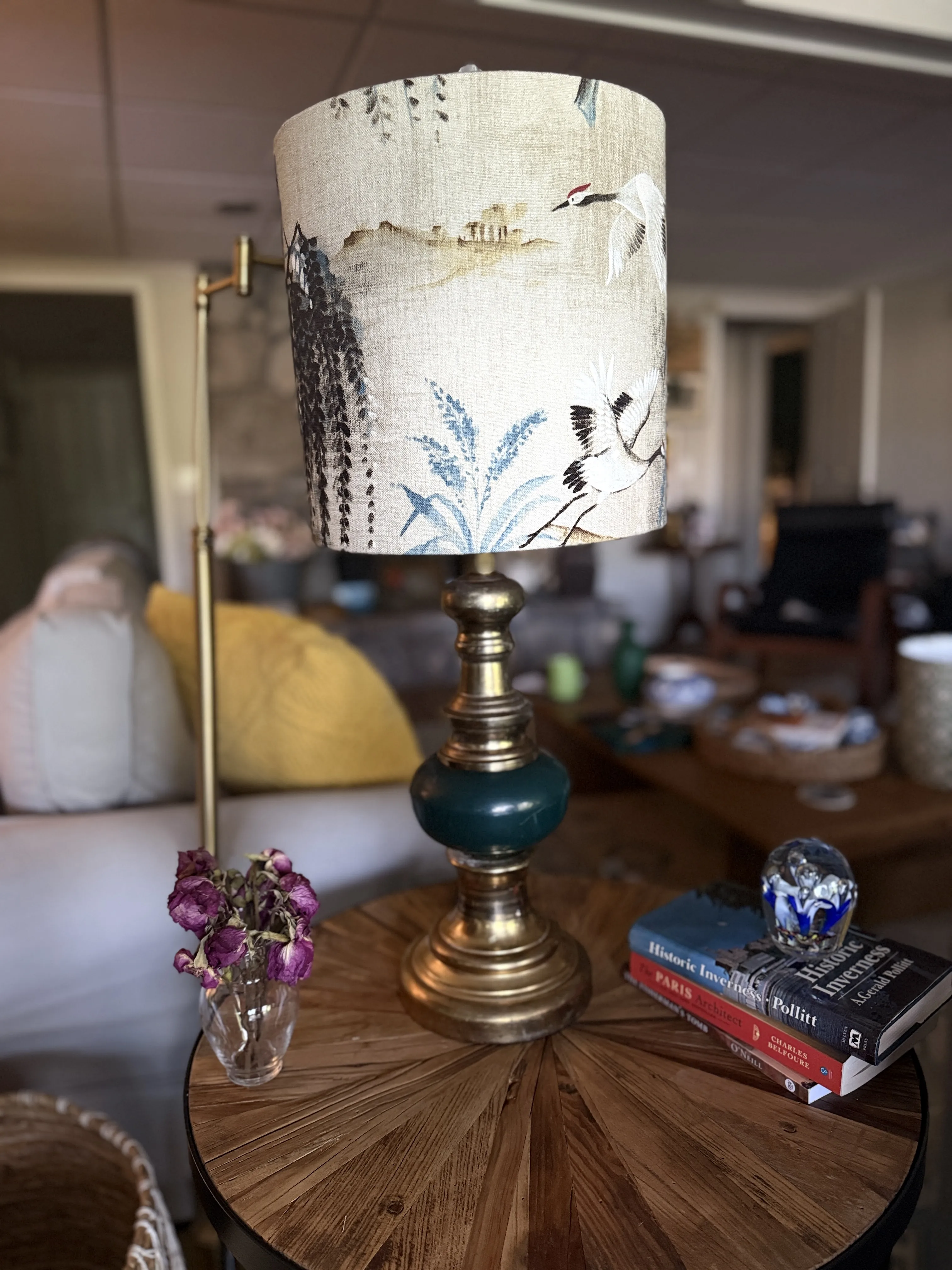
5. Use proportion to make the final call
Now use your eye. A shade around two-thirds of the base height is a reliable starting point. From a normal seated or standing view, it should hide the socket, harp, and bulb.
Then consider the room. Keep a bedside shade clear of the headboard, choose a narrower one for a busy entry, and let a console lamp go a little larger if it has room.
Choose a shape that supports the base
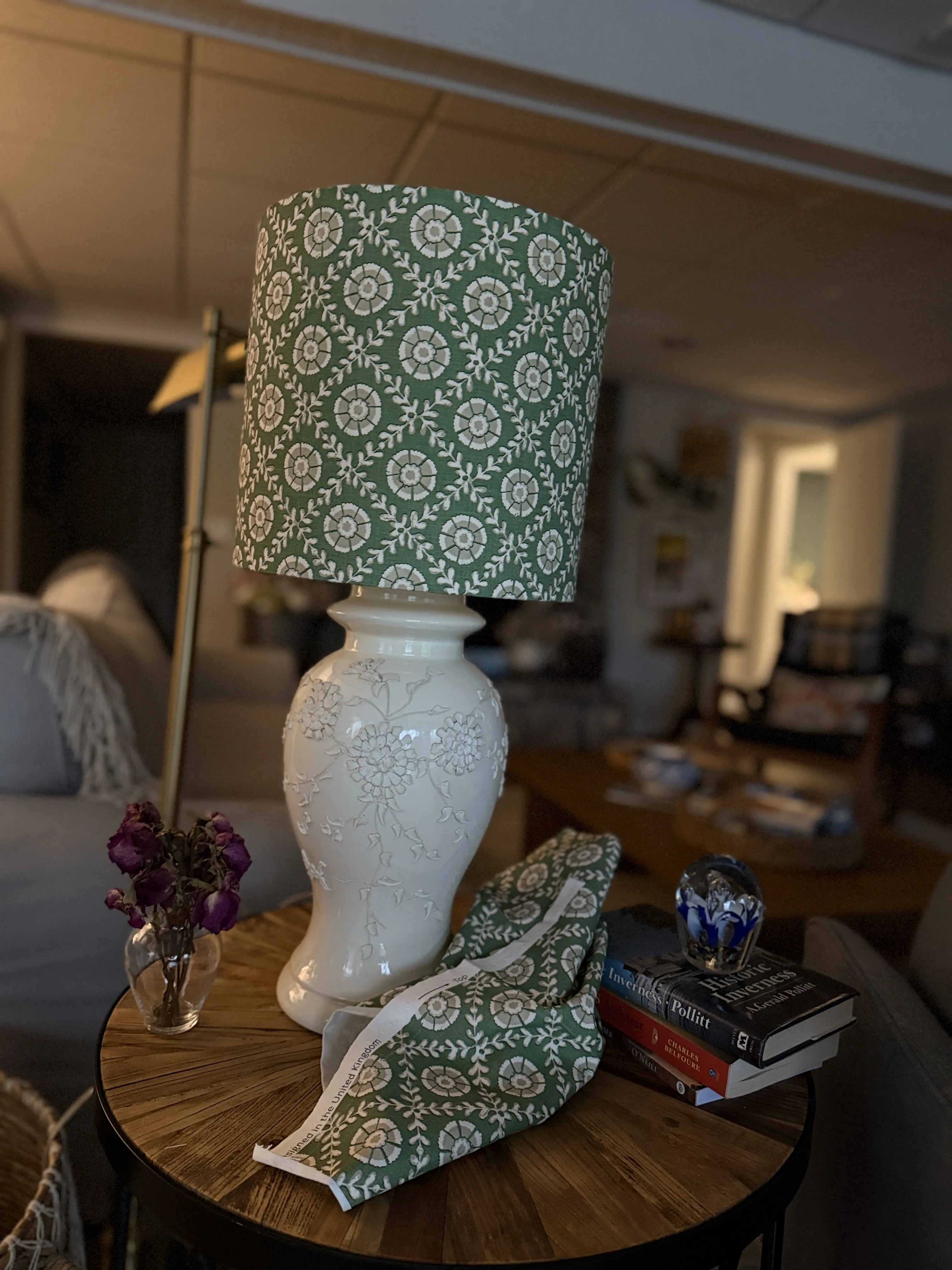
Matching a round base with a round or softly tapered shade is an easy starting point. Angular bases often suit square or rectangular shades. A simple lamp can carry a patterned or pleated shade, while a decorative ceramic base often looks best with quiet linen.
Rules can bend. A drum shade can freshen a traditional lamp, and a tapered one can soften a modern base. From a few feet away, the lamp should simply feel balanced and let the base show.
Decide what you want the light to do
Fabric, lining, and shape change the mood after dark. Linen, cotton, and paper glow through the sides. More opaque shades send light up and down, which can feel moodier on a sideboard or beside artwork.
Pale fabric keeps things open. Darker fabric gives a more focused pool of light. Think about how the lamp is used at night, not just how it looks in daylight.
Watch for the fit problems that measurements reveal
If a shade is too short, the bulb and hardware can show. Too tall, and it can hide the lovely neck or detail that made you keep the lamp. A wide shade may work on a console but be awkward beside a bed.
Also check the harp. A big gap above the base may call for a shorter harp, not a new shade. If the shade sits too low, it can crowd the switch or leave the bulb visible.
Turn the lamp on before deciding. A bright bulb can make pale fabric more transparent at night. Test a reading lamp from the chair or bed where you will use it.
Keep the measurement notes with the lamp
Once you find a shade that works, save the numbers in your phone: base width, lamp height, fitter, and shade dimensions. Vintage lamps move around, and future you will be glad you did.
Take one front-facing photo too. It captures the relationship between lamp, shade, table, and room better than a tape measure can.
A quick measurement checklist
Before you order or call a shade maker, write down these details in one note:
- The lamp base width at its widest point.
- The lamp height from the bottom of the base to the top of the socket or harp.
- The shade’s top diameter and bottom diameter, or the width and depth for a rectangular shade.
- The shade’s vertical height and slant height.
- The fitter type: spider, clip-on, uno, or another attachment.
- A front and side photo of the lamp in the room where it will live.
The room matters too. A shade can meet every measurement and still look wrong beside a high headboard, crowded shelf, or narrow table.
When a custom shade makes more sense
A ready-made shade is often perfect for a common-size lamp and a simple update. Go custom when the base is unusual, you have a fabric you love, or the room needs a very particular proportion. It is often the easiest way to solve a tricky harp or narrow console.
Re. makes custom lampshades using new materials and fabrics with a story of their own. Bring your notes and photos, and we can find the right shape, scale, and finish. For a finished piece, browse the current Re. collection of one-of-one lamps restored in Alabama.
Frequently asked questions
How do I measure an old lampshade for a replacement?
Measure the top diameter, bottom diameter, vertical height, and slant height of the existing shade. Then check the fitter type and the lamp’s widest base measurement before ordering a replacement.
What measurements do I need for a custom lampshade?
A shade maker will usually need the lamp base width, the lamp height to the top of the socket or harp, the fitter type, and your preferred top width, bottom width, and height. Photos of the lamp from the front and side are useful too.
Should a lampshade be the same shape as the base?
Matching shapes is a dependable starting point: round shades tend to suit round bases and angular shades tend to suit square bases. It is a guide rather than a rule, especially for simple or sculptural vintage lamps.
How tall should a lampshade be?
For many table lamps, a shade around two-thirds of the lamp base height creates a balanced starting point. The right height also hides the hardware and keeps the bulb comfortably out of view at normal eye level.
Related posts

Lampshades
How to Clean a Lampshade Without Damaging It
A gentle, material-by-material way to clear dust and light marks while protecting a lampshade’s shape, fabric, and character.

Lampshades
How to Choose a Lampshade That Fits Your Lamp
An easy way to choose lampshade size, shape, fitter, fabric, and light, so your lamp feels right in the room.