

A lampshade changes a lamp's scale, its light, and the whole feel of a room. The good news: choosing one gets much easier when you focus on a few practical details.
Start with the lamp and the room, not the first shade you spot online. The right shade balances size, shape, attachment, fabric, and the kind of light you need.
Begin with the lamp where it will live
Put the lamp where it will live, then step back and view it from where you will actually sit or stand. A generous shade can suit a wide console but crowd a bedside table. Think about the lamp's job too: reading calls for useful, glare-free light, while a quiet corner can simply glow.
Take the few measurements that make a decision easier
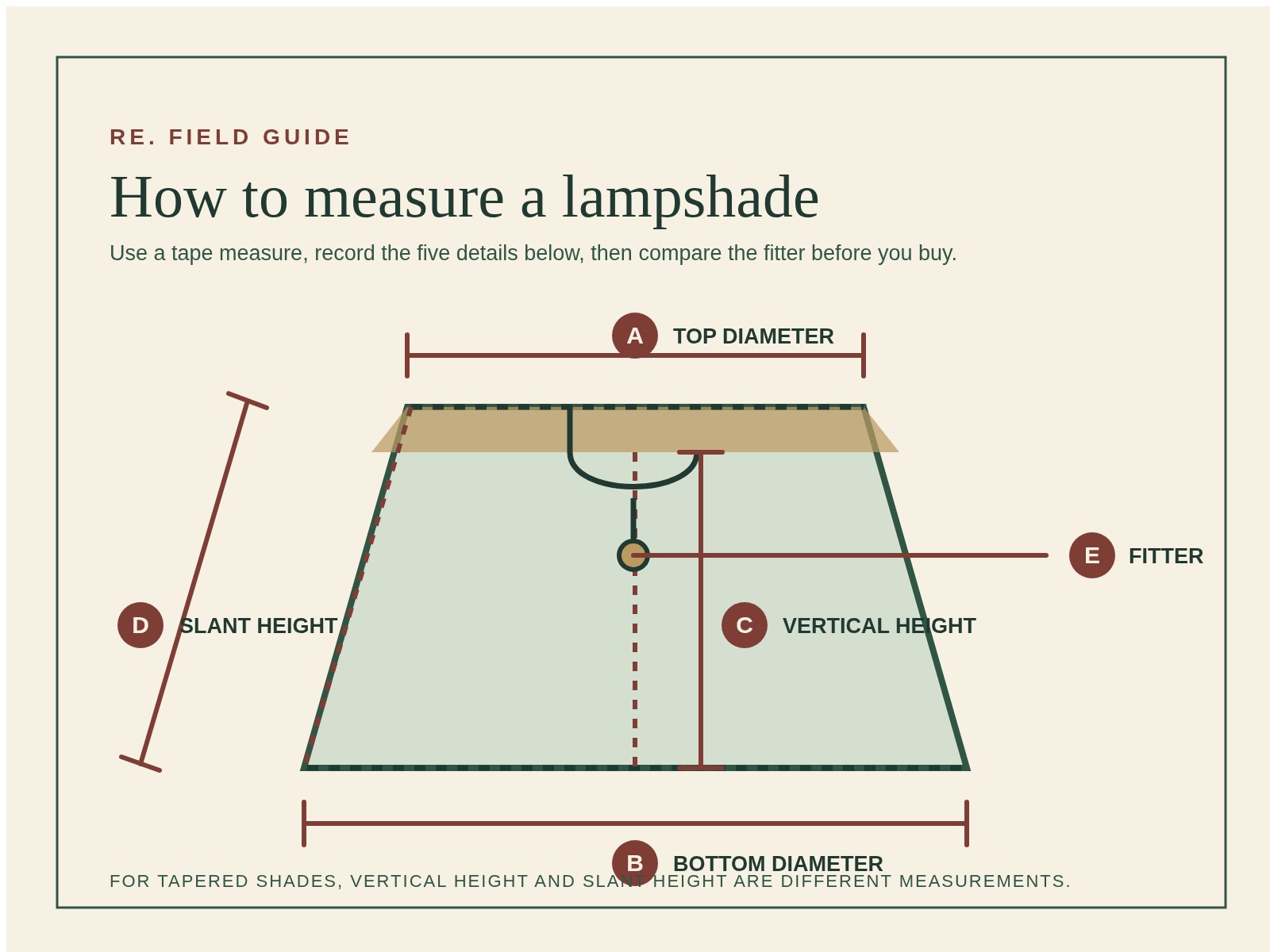
You do not need to measure every curve. Note the base at its widest point, the height to the top of the socket or harp, and the table clearance. For an existing shade, record its top and bottom width, height, and fitter. A shade much narrower than the base can look top-heavy, while one far wider can crowd a small table.
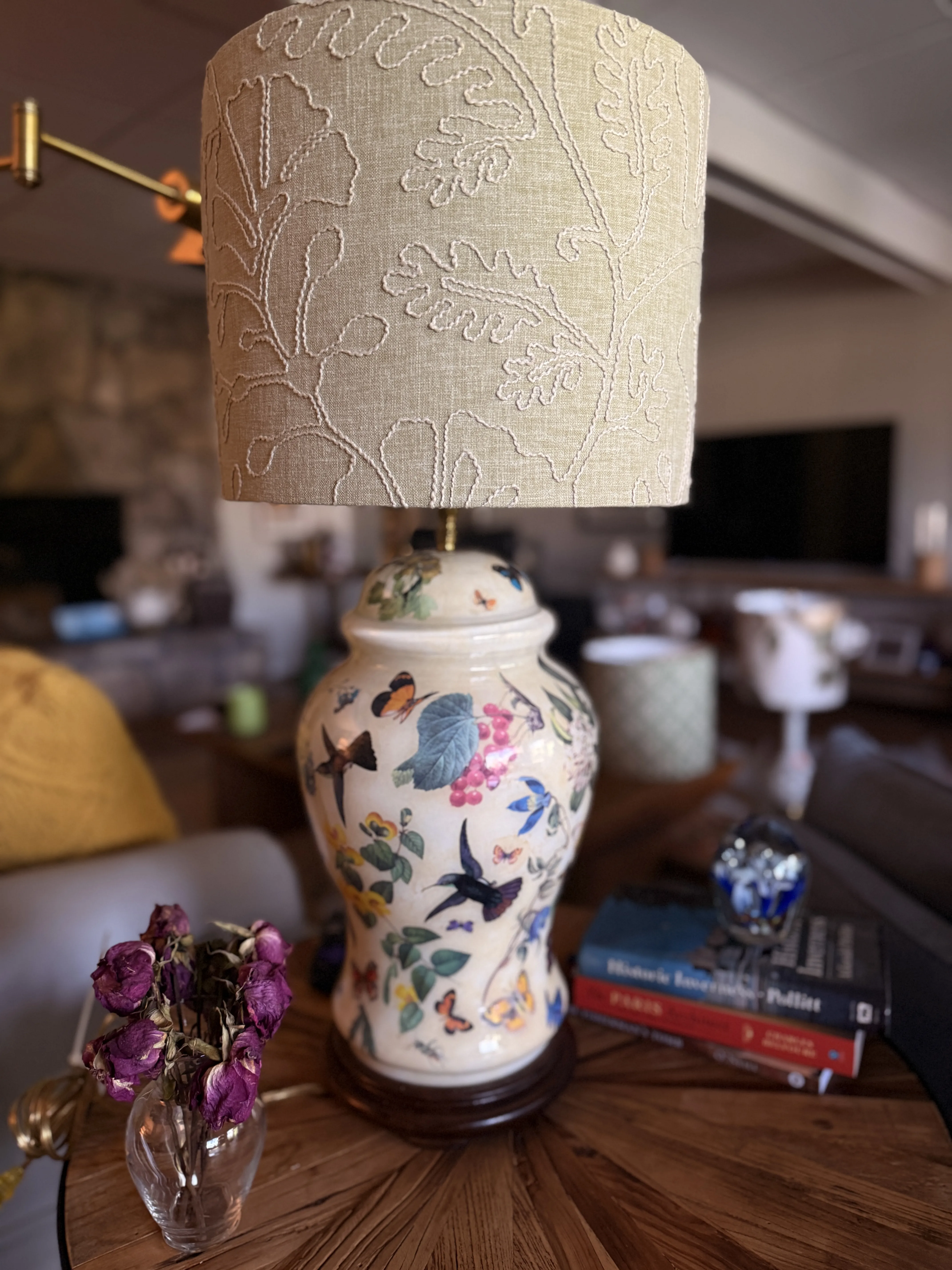
Use those numbers as a starting point, not a rulebook. An ornate base may need a simple shade; a slim lamp may need a fuller one. In a tight spot, clearance matters just as much as proportion.
Choose the shade shape before you choose the fabric
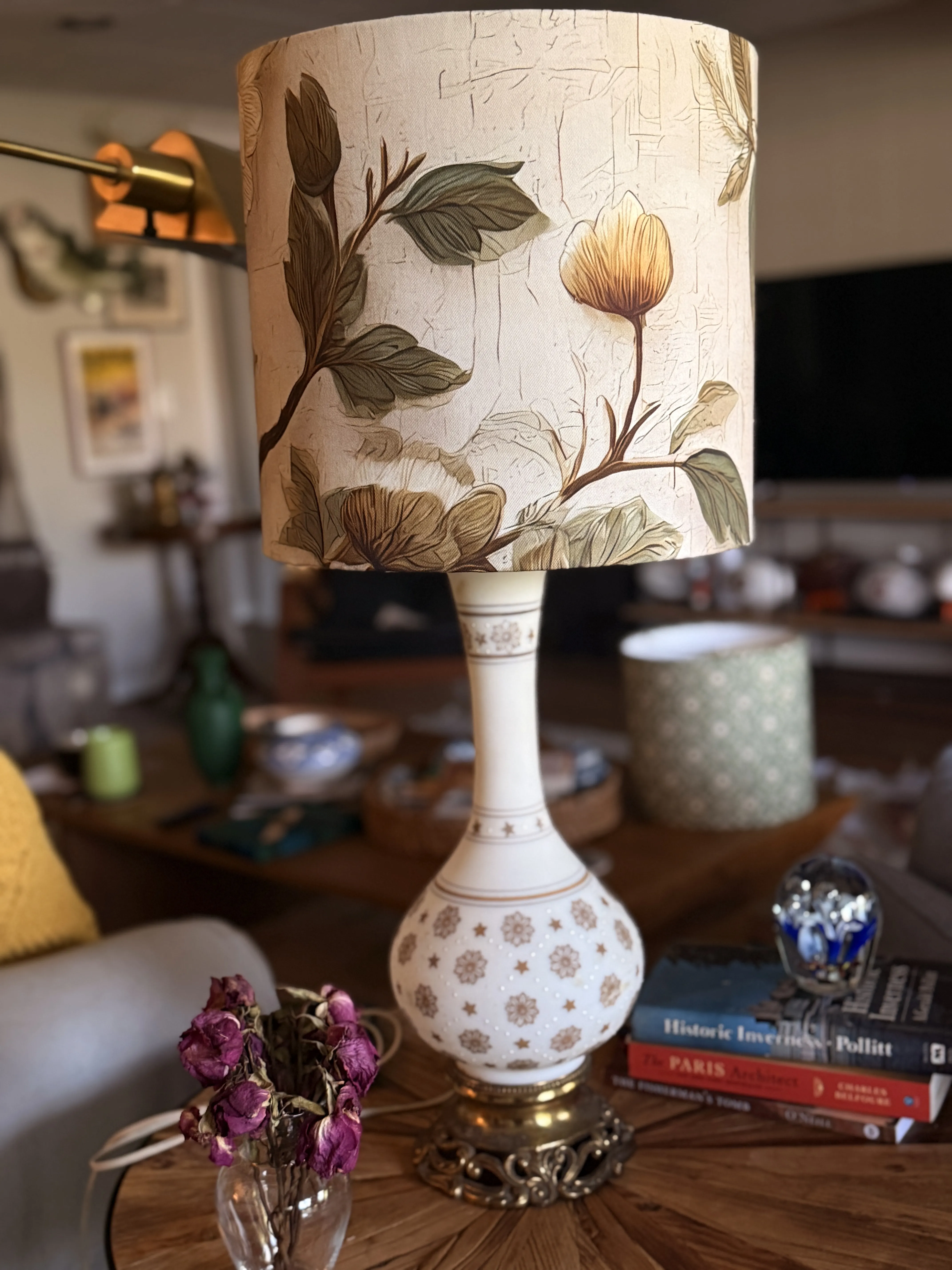
Shape does most of the visual work. A drum shade is clean and easy-going. An empire shade gives a classic tapered line. Bell and pleated shades add softness, while square or rectangular shades bring structure to angular bases. They do not need to match exactly, but they should look like they belong together.
When in doubt, choose the quieter shape and let the base lead. A decorated porcelain lamp often suits simple linen; a plain column can carry a print, pleat, or bolder silhouette.
Make sure the fitter actually works with the lamp
The fitter is the hardware that holds the shade in place, and it matters. Most American table lamps use a spider fitter on a harp with a finial. An uno threads onto the socket; a clip-on attaches to the bulb. Check underneath your current shade first, or take a clear photo if the lamp is unusual.
A harp also affects height. If a shade is the right width but sits too high or low, a shorter or taller harp may be all it needs.
Use height to hide the hardware without hiding the lamp
A good shade hides the socket and bulb from your usual seated or standing viewpoint, without covering the lamp's best details. Around two-thirds of the base height is a useful starting point, not a hard rule.
Switch it on before deciding. A shallow shade can create glare beside a chair or bed; one that is too deep can make the lamp feel squashed and the light heavy.
Choose fabric and lining for the kind of light you want
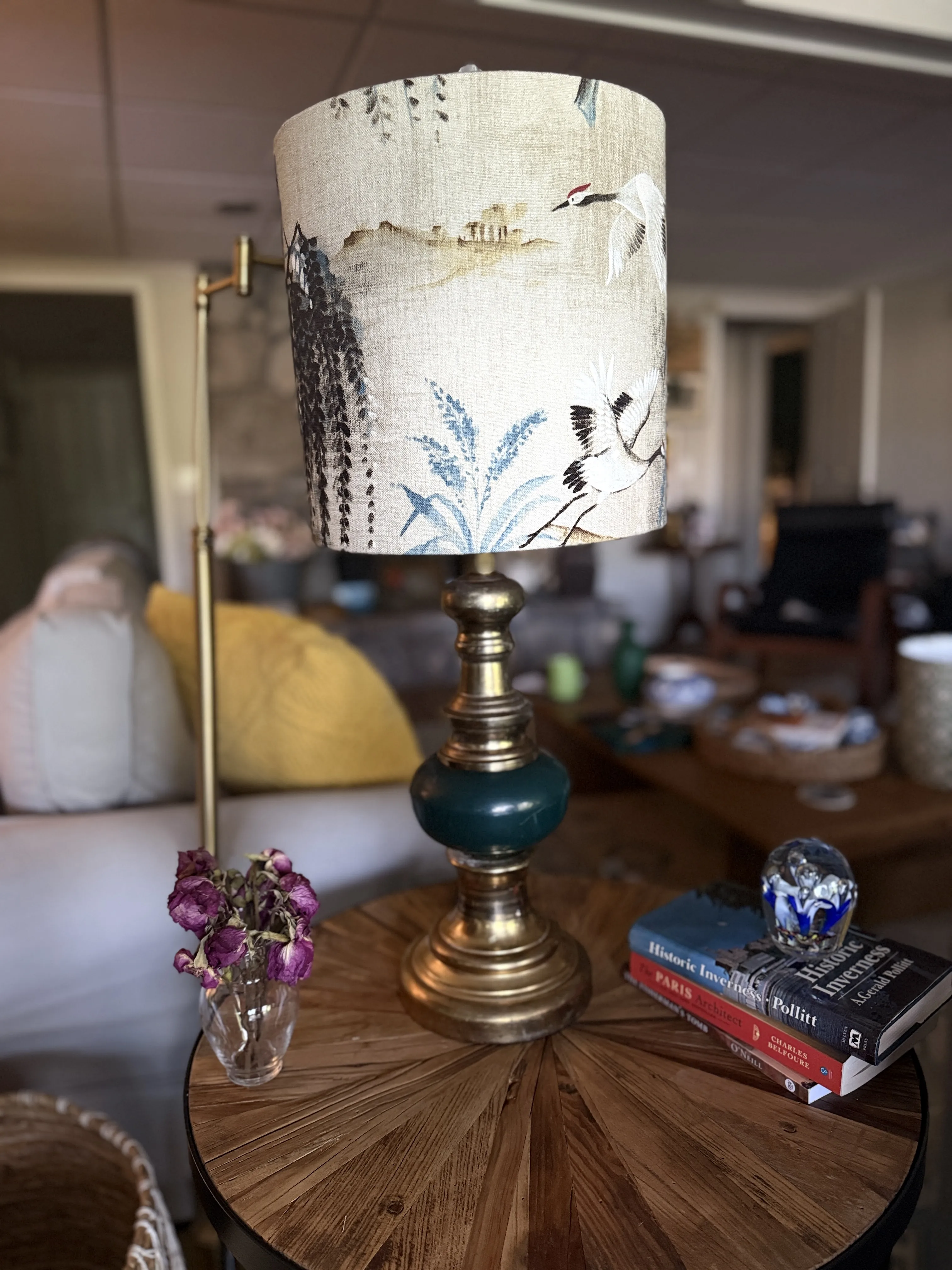
Fabric changes the mood after dark. Linen, cotton, and lighter paper give a gentle all-around glow. Denser fabric, darker color, or opaque lining sends more light up and down, which can feel focused and moody. View a pattern in daylight and with the lamp on, since it may fade into the background once lit.
Choose a bulb within the lamp and shade maker's guidance. The ENERGY STAR guide to LED bulbs is useful background on LEDs. Pick brightness and color temperature for the room, then let the shade soften and direct the light.
Test the proportion from the room, not only up close
Set a possible shade on the lamp and walk away. Check it from the doorway, sofa, and nearby seat, as well as against nearby furniture. The winner is usually the one that gives the base presence and lets the light do its job without shouting.
Know when a custom shade is the better answer
Ready-made works well for common sizes and simple updates. Go custom when the base is unusual, the proportions need to be exact, or you have a fabric you love. It can solve details like a shallow shade for a narrow console or the right height for an awkward harp.
Re. makes custom lampshades for lamps that deserve more than a generic replacement. Bring front and side photos, your measurements, and a sense of where the lamp will live. If a drum feels right, our custom drum lampshade guide has more on fit and fabric.
A quick final check
Before you order: does it fit the attachment, hide the hardware at eye level, balance the base and table, and give the room the light it needs? If yes, you are close.
For exact dimensions, use the lampshade measuring guide. If your current shade is simply tired, the care guide can help. The right shade gives a lamp you love a natural place in the room again.
Frequently asked questions
What size lampshade should I choose?
Start with the base width, height to the socket or harp, and table clearance. The shade should hide the hardware, balance the base, and leave room for the lamp to work.
Should a lampshade match the shape of the lamp base?
It is a useful starting point, not a rule. Round bases often suit drum or empire shades, while angular bases can pair well with square or rectangular shades. Aim for a balanced whole.
What is the difference between a spider, uno, and clip-on fitter?
A spider rests on a harp and uses a finial. An uno threads onto the socket; a clip-on attaches to the bulb. Confirm it before buying, as the wrong attachment will not fit.
When is a custom lampshade worth it?
Choose custom for an unusual vintage base, awkward proportions, special fabric, or a very specific light and scale. Photos and a few measurements are a great starting point.
Related posts
Lampshades
How to Measure a Lampshade in 5 Simple Steps
Measure a replacement lampshade with confidence, from the top and bottom width to the height and fitter that help a lamp feel balanced.

Lampshades
How to Clean a Lampshade Without Damaging It
A gentle, material-by-material way to clear dust and light marks while protecting a lampshade’s shape, fabric, and character.