

Dust, kitchen air, fingerprints, and fireplace smoke all settle on a lampshade. A gentle clean can make a favorite lamp feel fresh again. The key is knowing when to stop.
Most damage comes from too much water or too much scrubbing. Start with the gentlest method and let the shade guide you.
Start by identifying what you are cleaning
Turn the lamp off, unplug it, and let the bulb cool. Remove the shade and set it on a clean, dry table. In good light, check what you are dealing with: sturdy modern cotton or linen, pleated paper, silk, or a vintage shade with glue, lining, paint, or trim.
A newer fabric shade may handle a tested spot clean. An old, brittle, hand-painted, or sentimental shade should usually stay dry. The Smithsonian's textile-care guidance offers the same sensible rule: treat fragile fibers and trims gently.
Remove the shade before you begin
Cleaning is safer away from the socket and base. Remove the finial, set it in a dish, and lift a spider-fitter shade by its metal frame. With clip-on and uno shades, hold the fitter, never twist the fabric.
Never clean a shade on the lamp, especially with moisture. Check the lining too. If it looks weak, brush it lightly and skip water altogether.
The safest first clean is dry dusting
For almost every shade, begin dry. Hold the frame, not the fabric, and brush from the top rim down in short strokes. A clean, soft natural-bristle or makeup brush works well around pleats and trim.
A sturdy modern shade can also handle a vacuum with a clean brush attachment on low suction. Keep it just off the fabric. Skip crevice tools, spinning brushes, and strong suction, which can pull fabric from the frame.

How to clean a modern fabric lampshade
Still seeing a small mark? Test a hidden area, usually by the back seam, with a barely damp white microfiber cloth. Blot once or twice, then let it dry completely.
If color comes off, the edge darkens, or a ring appears, stop. If it dries evenly, blot the mark from the outside in, using a clean part of the cloth each time. Never rub.
Do not spray a shade with water, fabric cleaner, or upholstery foam. It can loosen adhesive, leave a tide mark, or change how the shade looks when lit.
What to do with yellowing, smoke, and kitchen film
Yellowing can come from age, sunlight, heat, smoke, or cooking oils. A wet clean rarely restores an old shade and can leave a pale patch that looks worse than an even patina.
Dust thoroughly first. Only wash a removable cover if its maker says you can. Heavy smoke, grease, or nicotine often reaches the lining too. For a valuable or meaningful lamp, ask a conservator before experimenting. The American Institute for Conservation's directory can help.
Paper, parchment, and pleated shades should stay dry
Paper and parchment shades reward restraint. Water can leave a ring, soften pleats, buckle the surface, or loosen a seam. Use a soft brush from top to bottom, following the pleats. Support the inside if the shade is fragile.
A soft vinyl eraser may lift a tiny mark from sturdy, uncoated paper. Test under the lower rim first and use almost no pressure. Skip it on painted, hand-colored, brittle, or powdery shades. A small mark beats a shiny rubbed patch.

Silk, hand-painted, beaded, and vintage shades need a lighter touch
Silk water-spots easily, paint can lift, and old beads or fringe may be held on with fragile thread or glue. For these shades, stick to dry dusting unless you know the construction and a hidden test spot behaves well.
Skip tape, lint rollers, compressed air, hair dryers, and fragrance sprays. They can pull fibers, damage lining, warp a plastic liner, or leave residue.
Clean the frame and hardware separately
Wipe the harp, finial, socket area, and base with a dry cloth. Keep polish, glass cleaner, and furniture spray well away from the shade.
Check for loose seams, bent wire, detached lining, or fabric lifting from the rim. If the shade leans, exposes the bulb, or feels brittle, replacement may be kinder than another cleaning.
Let the shade dry before it goes back on the lamp
If you used moisture, let the shade air-dry completely, upright, and away from sun or heat. Do not put it back on a warm lamp to speed things along.
Once dry, look at it with the lamp off and on. A little variation may disappear in the light. It does not need to be spotless, just even, stable, and right for the lamp.

Know when it is time to stop cleaning
Deep yellowing, brittle lining, torn fabric, warped frames, water stains, or smoke damage can mean it is time to stop. Keep the original if it is part of the lamp's story, then choose a new shade that lets the base shine.
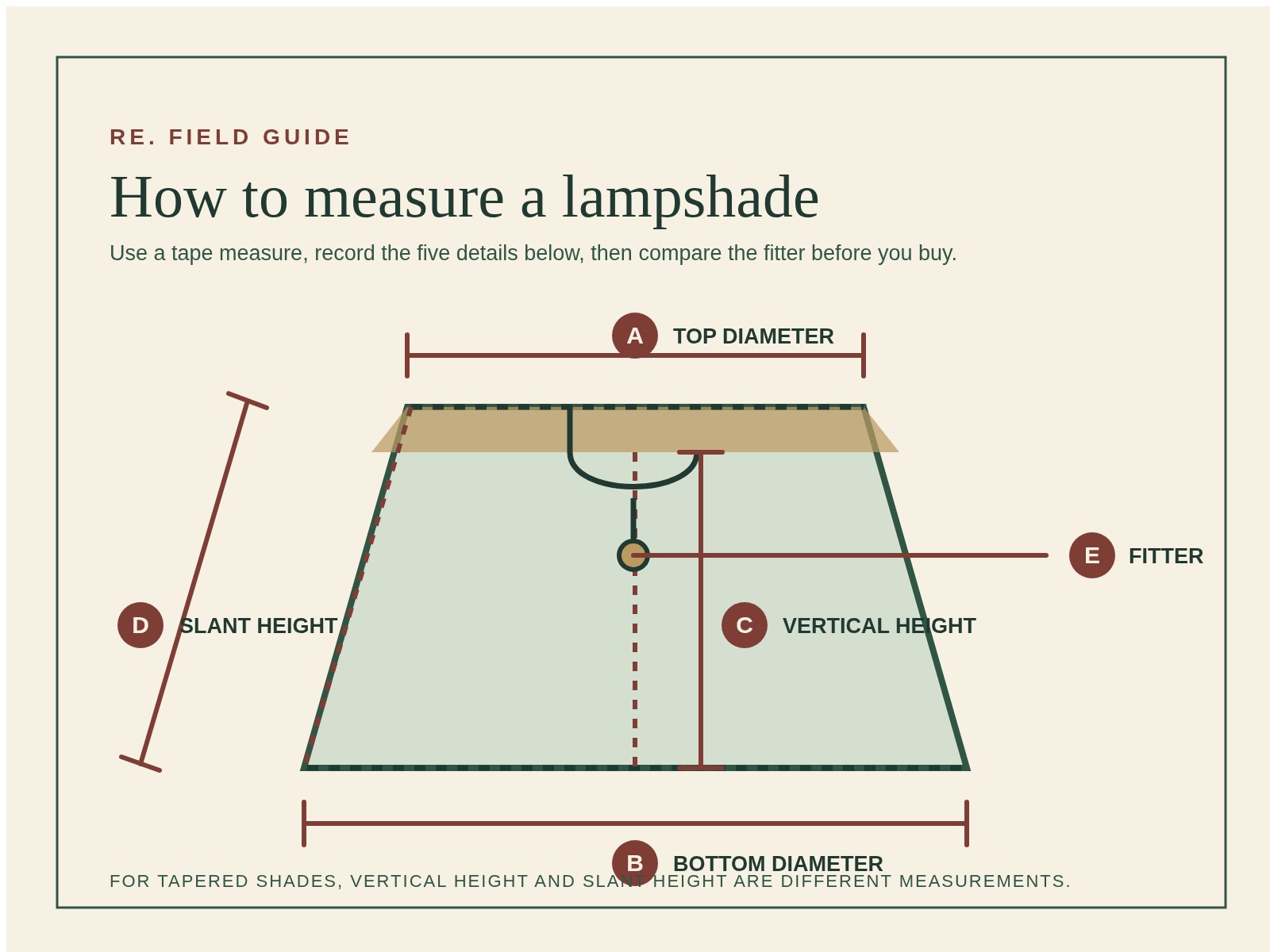
That is especially true for unusual vintage lamps. The right shape, height, and fabric can bring out their best. Re. makes custom lampshades for lamps that need more than a standard replacement. For help with shape and scale, see the lampshade measuring guide.
A simple care routine for longer-lasting shades
Light dusting every month or two is safer than waiting for a shade to look gray. Keep lamps away from cooking steam where you can, use the correct bulb wattage, and turn them off before moving them.
Take a photo after cleaning. It is a handy reference for color, height, and shape if you ever need a replacement, and helps you spot changes early.
Frequently asked questions
Can I wash a fabric lampshade?
Only wash a fabric lampshade when its construction and care information clearly allow it. Many lined, glued, pleated, vintage, silk, and paper shades can stain, warp, or loosen when wet, so dry dusting is the safer default.
What is the safest way to remove dust from a lampshade?
Turn the lamp off, remove the shade, and support it with one hand while you use a soft brush or a vacuum with a clean brush attachment on the lowest suction. Work from the top down in short, gentle passes.
How do I remove a small stain from a lampshade?
First test a barely damp white cloth on an inconspicuous spot. Blot rather than rub, use very little moisture, and stop if color transfers to the cloth or a water mark begins to form.
When should I replace a lampshade instead of cleaning it?
Replace or recover a shade when the lining is brittle, the frame is bent, the fabric is deeply yellowed, or cleaning would risk an irreplaceable material. A custom shade can keep a favorite lamp useful while preserving the character of its base.
Related posts
Lampshades
How to Measure a Lampshade in 5 Simple Steps
Measure a replacement lampshade with confidence, from the top and bottom width to the height and fitter that help a lamp feel balanced.

Lampshades
How to Choose a Lampshade That Fits Your Lamp
An easy way to choose lampshade size, shape, fitter, fabric, and light, so your lamp feels right in the room.