
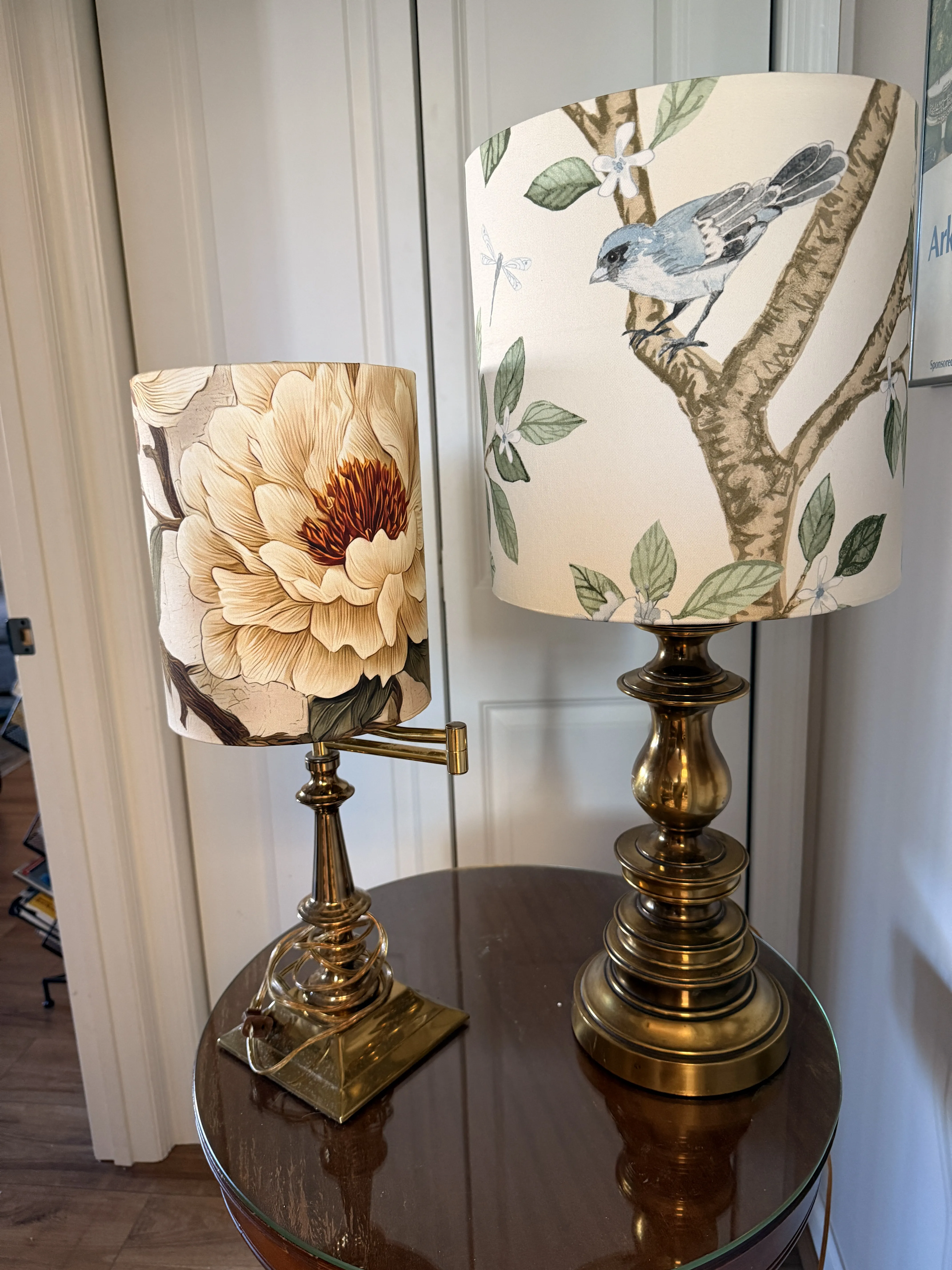
An oval lampshade needs a few more notes than a round one, but the job is still simple. Measure the long side, the short side, and the height at both the top and bottom. Add a quick fitter check, and you will have the information needed to replace a worn shade or begin a custom one without guessing.
Why an oval shade needs two width measurements
A round shade is measured by its diameter: one straight line from one side to the other through the center. An oval shade has two different spans. The length is the longer measurement across the oval, and the width is the shorter measurement across it.
Both matter. A shade that is the right long measurement but too wide can crowd a narrow table. One that is too short from front to back may look pinched or leave too much of the lamp's hardware exposed. Writing down both dimensions also helps you compare listings that use different wording, such as length and width, or side to side and front to back.
Before you start, turn the lamp off, let it cool, and take the shade off if it comes away easily. Work on a clean table with a flexible tape measure, a pencil, and a note on your phone. A front and side photo of the lamp is useful later, especially when the old shade has lost its label.
For a shade with a decorative braid or trim, measure the structural rim rather than the outermost edge of the trim. The trim changes the visual finish, but the frame is what determines whether the replacement will fit and sit correctly. Make a separate note about any trim you want to keep or repeat.
1. Measure the top opening
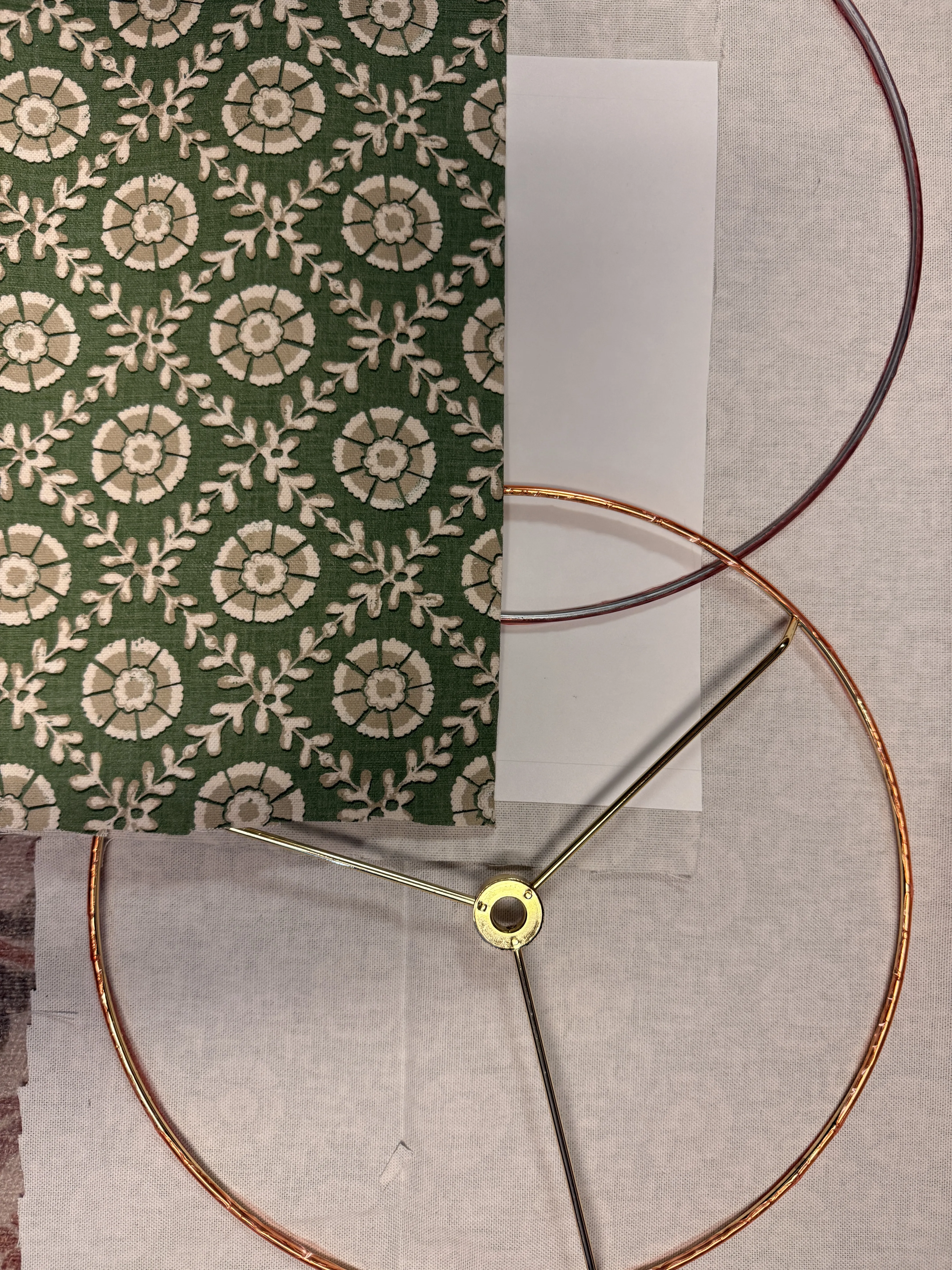
Measure straight across the longest point of the oval, rim to rim. This is the top length. Keep the tape level rather than following the curve of the rim.
Then measure across the shortest point, again rim to rim. This is the top width. Think of it as the front-to-back measurement when the shade is on the lamp. Record the two numbers together, for example, “top: 10 inches long by 7 inches wide.”
If the shade is soft, pleated, or a little out of round from age, do not pull it into shape. Measure it as it sits, then take a photo. A replacement may need a small adjustment, but the photo gives you a more honest starting point than forcing an old frame to behave.
2. Measure the bottom opening
Repeat the same two measurements across the bottom rim. Start with the longest point, then the shortest point. On an empire-shaped shade, the bottom will usually be larger than the top. On a more tailored oval drum shade, the two openings may be closer in size.
The bottom measurement has a big visual job. It determines how much room the shade takes over the table and how generously it sits around the lamp base. For a bedside table, make sure it will not run into the headboard or crowd the reach to a switch. For a console, check the depth against the wall and the objects that live beside it.
Do not substitute the circumference for these dimensions. Measuring around the rim may help a maker estimate trim, but it is not what you need to compare an oval replacement shade. The two straight spans are the useful numbers.
3. Measure the vertical height
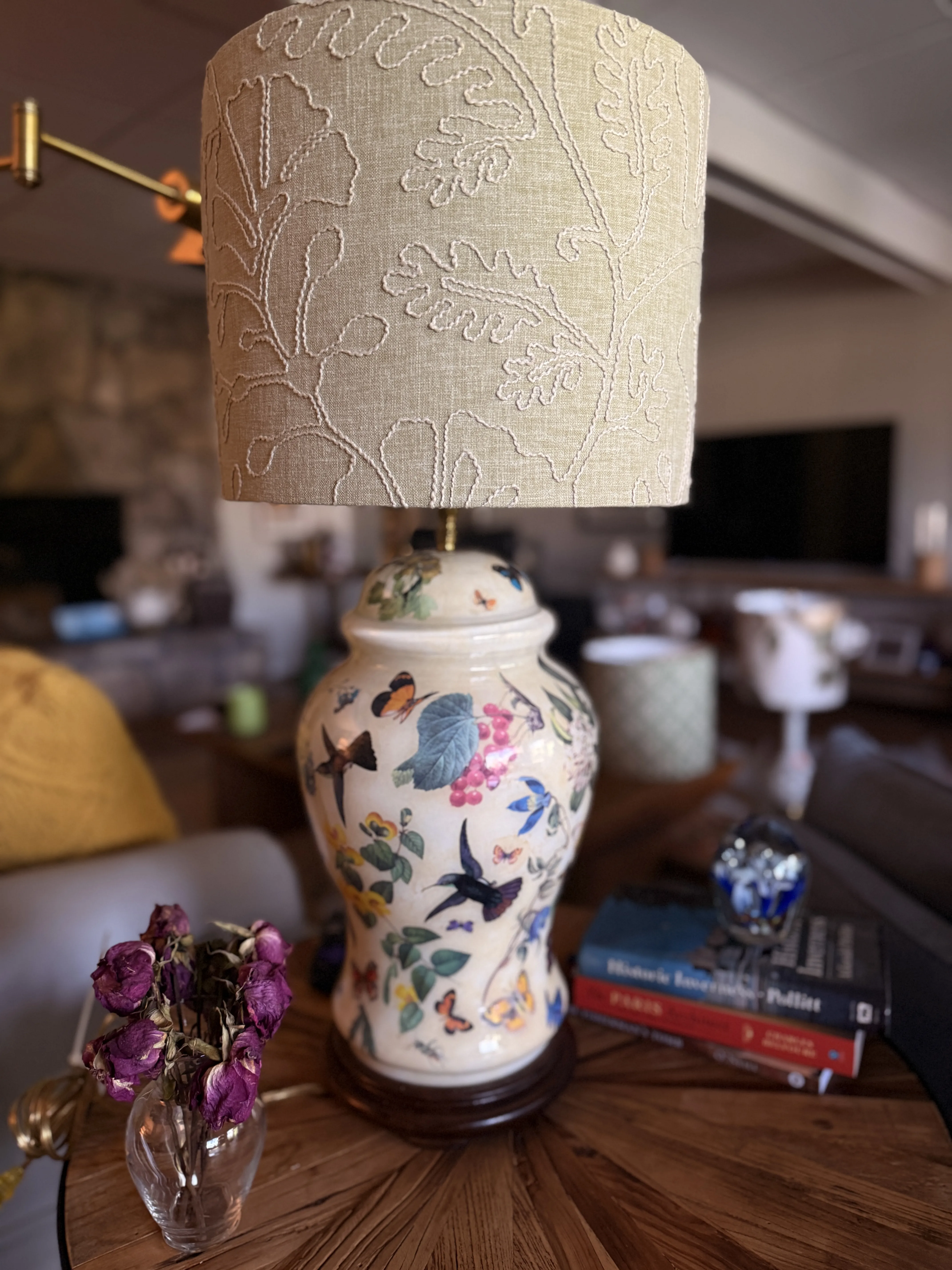
Place the shade on the table and measure straight up from the bottom rim to the top rim. This is its vertical height. Do not measure along the sloping side, because that is the slant height and may make a replacement sound taller than it actually is.
Vertical height affects what the lamp hides and what it reveals. A shade that is too short can expose the bulb, socket, or harp. A shade that is too tall can swallow a delicate neck or cover the best part of a vintage base. The current shade is only a starting point, so stand back and decide whether its height is actually working before you copy it exactly.
For a wider view of proportion, use Re.'s lampshade size guide. It walks through the base width, overall lamp height, and room checks that help a replacement look intentional rather than merely possible.
4. Check the fitter before you shop
Flip the shade over and look at the metal support inside. The fitter determines how the shade attaches. Most table-lamp shades use a spider fitter, which rests on a harp and is held in place with a finial. An uno fitter attaches directly to the socket, while a clip-on shade attaches to the bulb.
The right oval dimensions will not help if the fitter is wrong. Note the fitter type, then measure from the top rim down to the fitter if it sits noticeably lower inside the shade. This “drop” changes where the shade lands on the lamp. It is especially important when you are trying to hide hardware on a short-necked or unusually tall base.
If the shade sits too high or too low but you like its overall proportions, the harp may be the part to reconsider. Re.'s lamp harp measuring guide explains how to check the height of that wire support before replacing a shade you otherwise love.
5. Compare the shade with the lamp and the room
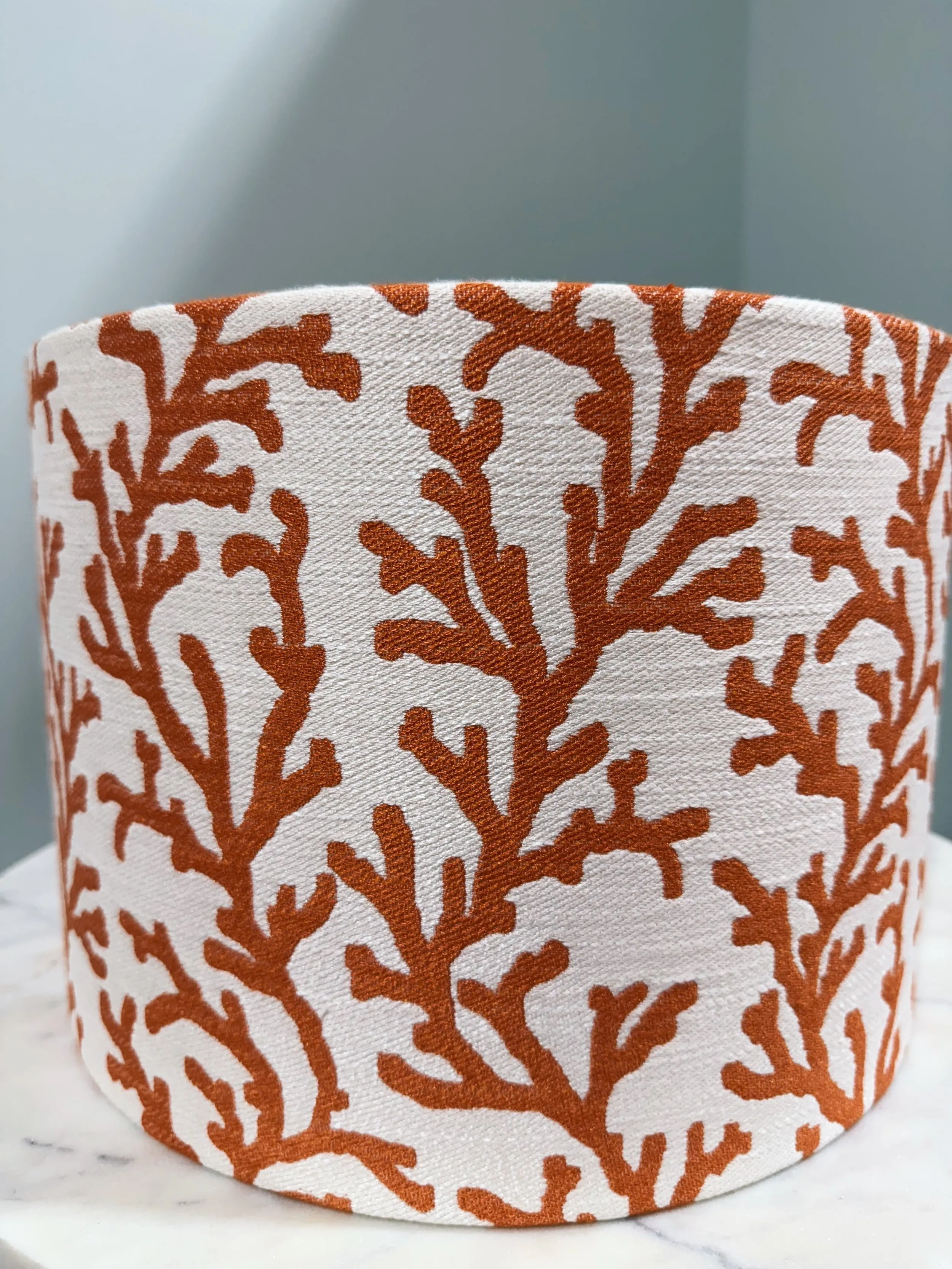
Put the shade back on the lamp and look at it where it will actually live. Sit in the nearby chair, stand in the doorway, and step back across the room. The shade should hide the bulb and hardware at normal eye level without making the lamp feel top-heavy.
An oval shade can be a smart choice when a lamp sits close to a wall or needs to fit neatly on a narrow console. The shorter front-to-back width may give you useful clearance, while the long side still gives the lamp enough presence. It can also soften a very round base or bring a more tailored outline to a traditional room.
Let the furniture have a vote. A wide chair, generous bedside table, or large chest can carry a fuller shape. A slim secretary desk, window ledge, or small round table may call for an oval that gives light without taking over the surface.
Common measuring mistakes to avoid
The most common mistake is measuring around the rim. That number describes the circumference, not the length and width needed for a replacement. Keep the tape straight from one edge to the opposite edge, through the center of the opening. Measure the long span first, then turn the tape a quarter turn for the short span.
Another easy mistake is using the shade's slant height. A sloped empire shade can look much taller on the diagonal than it is vertically. For a replacement, stand the shade upright and measure the shortest direct distance from the bottom rim to the top rim. If a retailer asks for slant height as well, give both measurements clearly rather than substituting one for the other.
It also helps to separate what is true of the old shade from what you want next. If the existing shade is too yellowed, too low, or too deep for the table, copy its measurements only where they work. A replacement can keep the useful length and fitter while changing the height, fabric, or depth that has never quite suited the lamp.
Finally, do not assume that a label's order is universal. One listing may write “12 by 8 by 9,” while another says “12L x 8W x 9H.” Confirm which two numbers describe the top and which describe the height. A quick photo of your tape laid across the shade makes it much easier to resolve a mismatch before you order.
When a measurement falls between standard sizes, pause before sizing down. A little extra room can often be adjusted through shape or fitter position, while a shade that is too small will always look and feel constrained.
Write down these five measurements
When you contact a shade maker or compare replacement listings, keep the numbers together in one note:
- Top length, measured across the longest side
- Top width, measured across the shortest side
- Bottom length, measured across the longest side
- Bottom width, measured across the shortest side
- Vertical height, measured straight up and down
Then add the fitter type, the approximate drop from the top rim to the fitter, the lamp base width, and a front and side photo. That is enough information to have a useful conversation without burying yourself in measurements.
If you are replacing a shade that is damaged, keep the old one nearby until the new one arrives. A bent frame or yellowed lining can make a shade look worse than its proportions really are, but it is still a helpful reference for the fit, the hardware, and the light it once gave.
When an oval shade is the better choice
Choose an oval shade because it solves a real problem, not because it feels like a rule. It is often useful on a lamp that needs to sit close to a wall, in a passage where a round shade sticks out too far, or on a narrow table where every inch of clearance matters.
It can also be the right visual answer. An oval outline gives a lamp a softer, slightly more formal silhouette. On a simple brass or ceramic base, it can make the piece feel settled without making the whole room look overly matched. The fabric, lining, trim, and shape should all support the way the lamp is used after dark.
When you are deciding among shapes, Re.'s guide to choosing a lampshade helps you weigh shape, fabric, fitter, and light together. A good choice has room to be personal. It simply needs to work.
When a custom oval lampshade makes sense
Standard sizes are useful when the lamp is common and the room leaves plenty of space. A custom shade is worth considering when the base is unusual, the current frame has an awkward proportion, you have a fabric with meaning, or you need a precise depth for a narrow spot.
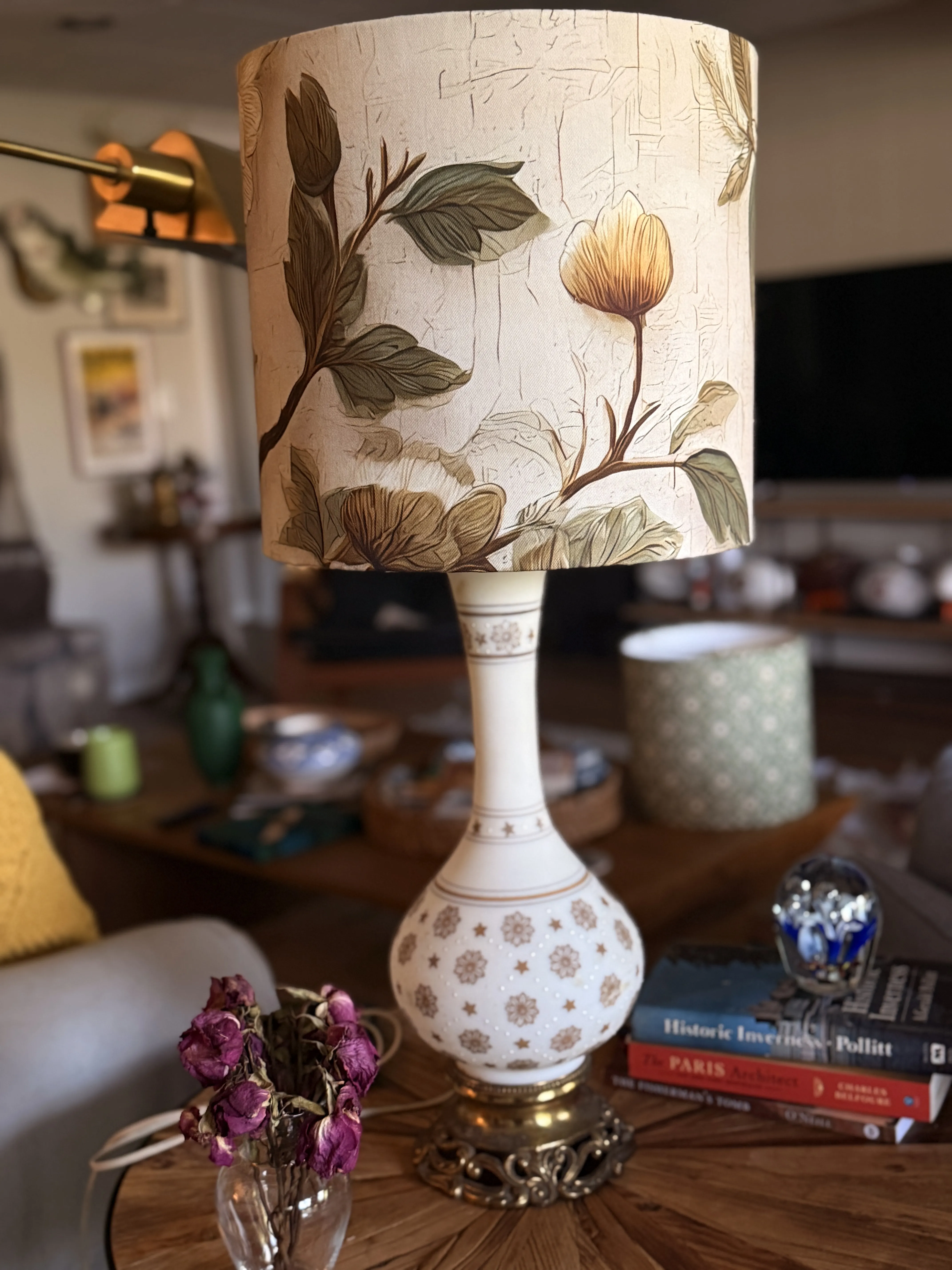
Re. makes custom lampshades around the lamp, not around a stock measurement chart. Share the five oval measurements, the fitter type, a photo of the whole lamp, and a wider photo of the room. From there, Re. can help you decide whether to match the old shade or improve the way the lamp sits and glows.
For lamps that need a more tailored material choice, the custom fabric lampshades page shows how pattern scale, texture, lining, and light can shape the finished result. The measurements give the project its structure. The fabric gives it its character.
Frequently asked questions
How are oval lampshades measured?
Measure the long side and short side across both the top and bottom openings, then measure the vertical height. Those five notes describe the shade far more accurately than one width alone.
What size replacement oval lampshade do I need?
Use the existing shade as a starting point, then compare its measurements with the lamp base, harp, and the table or room where it will be used. A replacement should fit the hardware and feel balanced with the lamp.
Are oval lampshades measured from side to side?
Yes. Measure straight across the long side and straight across the short side. Do not measure around the curved rim, because that gives the circumference rather than the dimensions a shade maker or retailer needs.
Can I use an oval lampshade on a round lamp?
Often, yes. An oval shade can give a round lamp a more tailored look, especially on a narrow console or a lamp that sits close to a wall. Check the width, height, and fitter before deciding.
Related posts
Lampshades
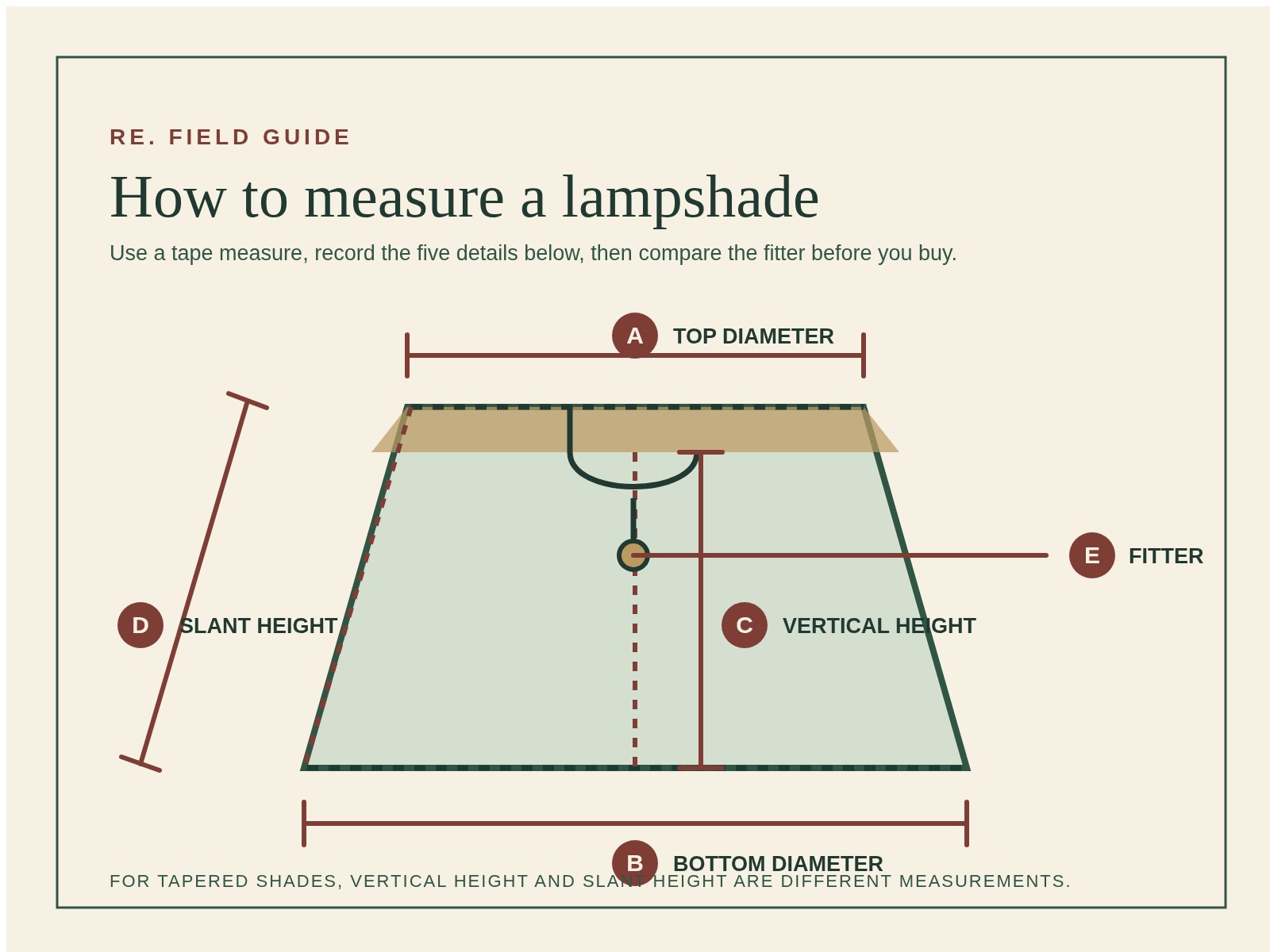
How to Measure a Lampshade in 5 Simple Steps
Measure a lampshade with confidence, from the base and fitter to the height, width, and shape that help a lamp feel balanced.
Lampshades
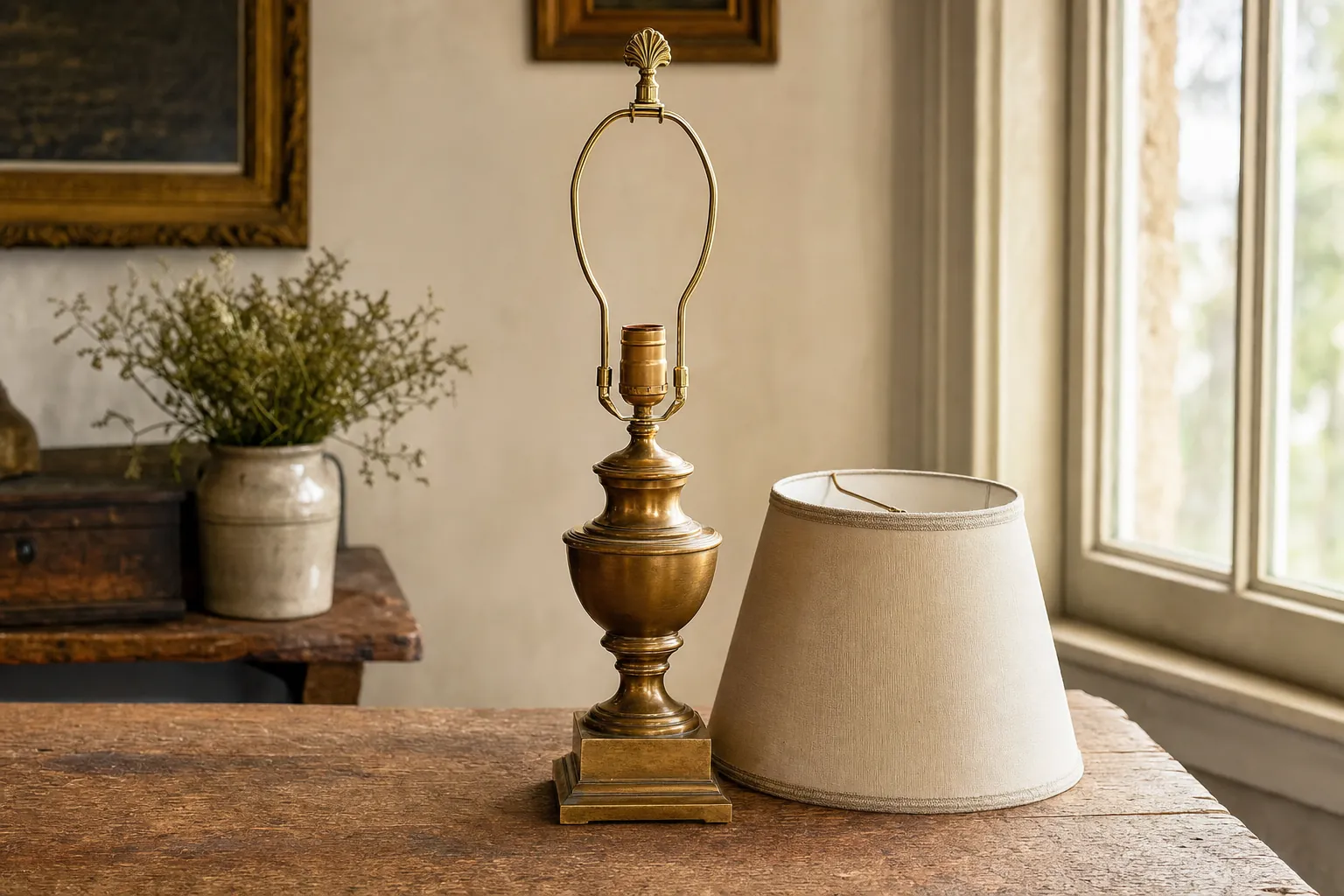
How to Measure a Lamp Harp for the Right Shade Height
A practical way to measure a lamp harp, check shade height, and make a favorite lamp sit comfortably again.