If a lampshade is the right width but seems to hover too high, slump too low, or leave the bulb in full view, the harp may be the missing piece. This humble wire frame controls the shade's height and can make a familiar lamp look settled again without changing the shade itself.
It is easy to shop for a shade by fabric, shape, and diameter, then discover that the finished lamp still feels a little off. The harp is the connection between those choices. Once you know what it does and where to measure, you can tell whether the lamp needs a different harp, a different shade, or simply a closer look at the fitting already in place.
First, make sure your lamp uses a harp
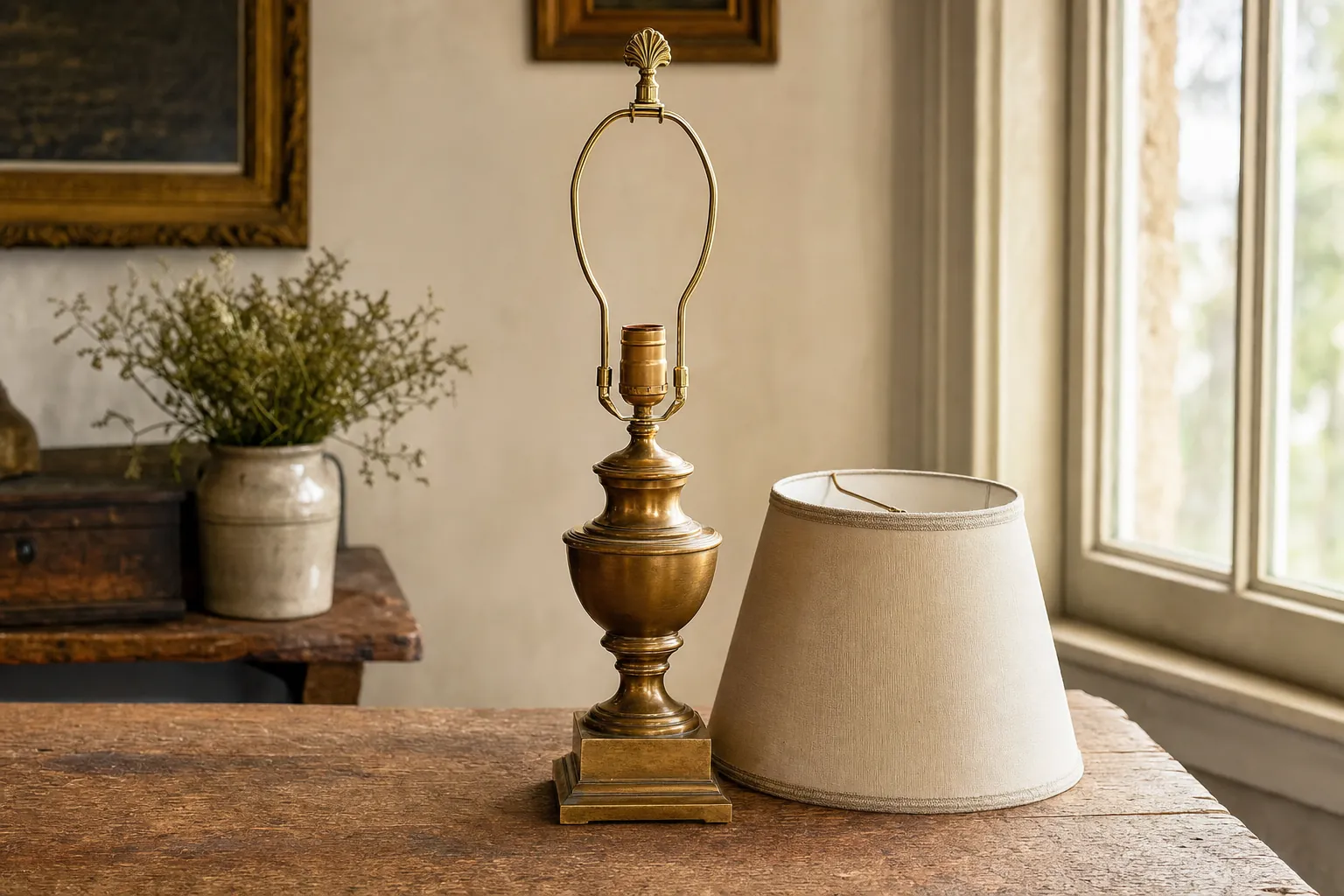
A lamp harp is the U-shaped wire frame that rises from the lamp base and supports a shade from underneath. It usually ends in a threaded top where a finial holds the shade in place. You will most often find one on a table or floor lamp with a spider-fitter shade.
Look under the top opening of the shade. A spider fitter has a metal crossbar with a small center washer. It rests on top of the harp, and the finial screws down above it. The Lamps Plus guide to measuring a shade shows this common setup on table and floor lamps. An uno shade attaches directly to the socket, while a clip-on shade attaches to the bulb, so neither uses a conventional harp.
This distinction matters before you order anything. A lovely replacement shade will not work as intended if its attachment does not match the lamp. The fitting is the practical check. The harp is the height check.

Know the few parts you are looking at
You do not need to become a lamp-parts expert. It helps, though, to name the pieces when you are comparing an old lamp to a replacement. The bottom ends of the harp sit in two small holders at the base of the socket. Those holders are often called a saddle. The arms rise on either side of the bulb, meet at the top, and carry the shade and finial.
The harp itself is usually removable. On many lamps, squeezing the two lower arms inward lets the harp lift out of its saddle. Do this with the lamp unplugged and cool. If the hardware feels stiff, corroded, or unfamiliar, do not force it. A vintage lamp can have quirks that are worth preserving rather than wrestling with at the kitchen table.
The shade does not always need to sit at the exact same point as the previous one. Its own shape, spider depth, and proportions affect where it lands. Still, the existing harp gives you a useful baseline. Take a photo before removing anything, especially when you are working with a lamp that has been in the family for years. It makes reassembly much less mysterious.
How to measure a lamp harp
For a replacement harp, measure the height of the existing one from the bottom where it rests in the saddle to the very top where the finial screws on. Hold a ruler or tape measure vertically alongside the harp. Do not measure around the curved wire. You want its straight, usable height.
Hardware suppliers may describe the measurement in slightly different language, but the practical goal is the same: find the height that places the shade where it belongs. Start with the existing harp as your baseline, then use the shade washer and the shade's bottom edge to judge whether the new setup should sit higher or lower. A lamp can look balanced with a shorter or taller harp than the old one, depending on how much of the socket the shade needs to cover.

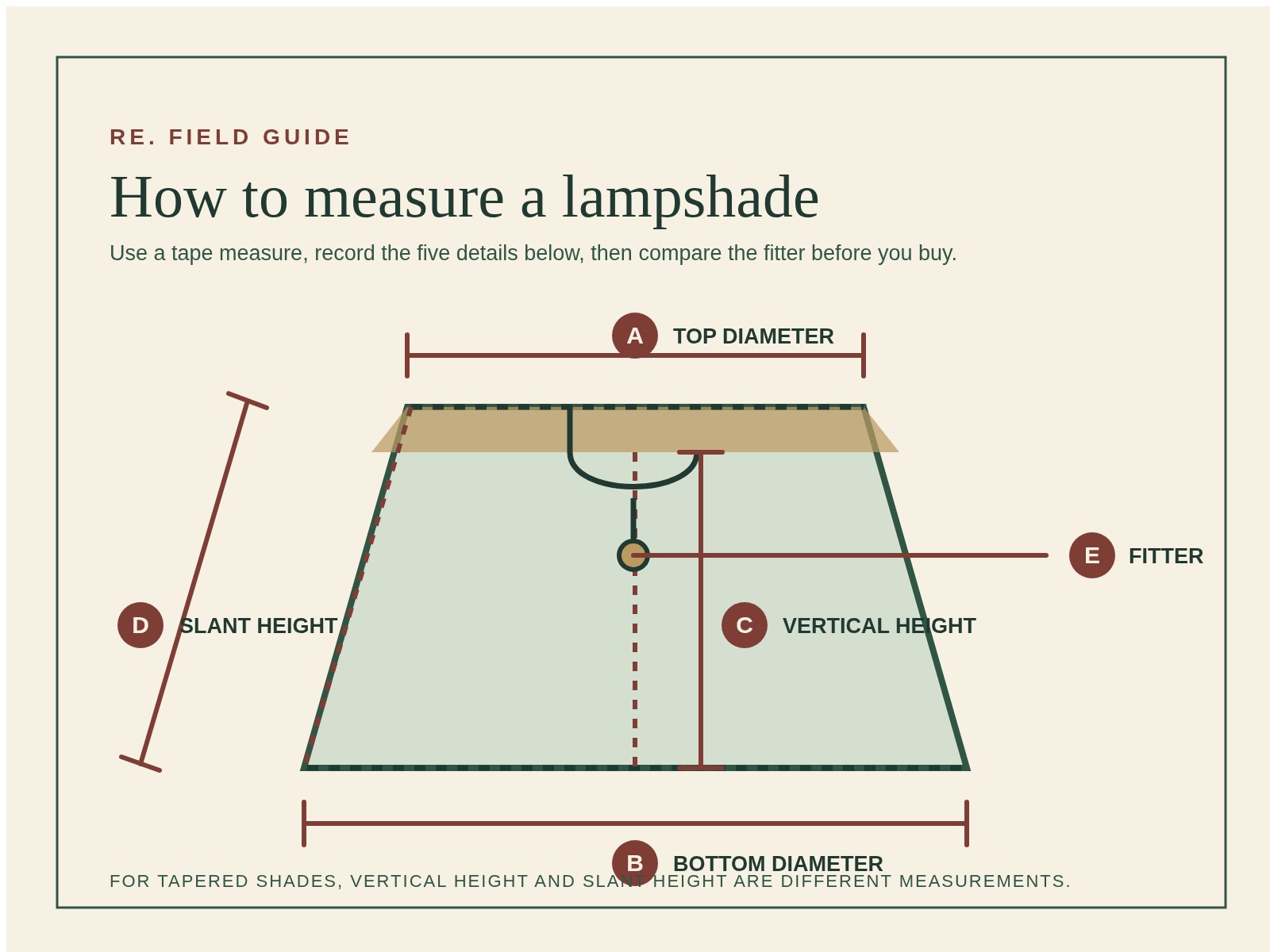
Write the measurement down, then take two more notes before you shop: the bottom diameter and vertical height of the shade you plan to use. The fuller the shade, the more important it is to see the whole lamp together rather than buying by a single number. Re.'s lampshade measuring guide walks through the top width, bottom width, vertical height, slant height, and fitting that complete that picture.
If you need an adjustable replacement, Re. recommends this 8, 9, and 10-inch adjustable lamp harp kit. It can be a practical way to test the height that suits your lamp before settling on a final setup.
Affiliate note: Re. may earn a small commission if you buy through this link, at no extra cost to you.
Use the shade to judge the right height
The best harp height lets the shade hide the socket and bulb from the angle at which you actually use the lamp. Sit in the chair beside it. Stand in the doorway. Look at it from across the room. If you can see a glaring bulb below the lower edge of the shade, the harp may be too short for that shade. If there is a large, awkward gap between the shade and the lamp base, the harp may be too tall.
There is no universal number that suits every lamp. A taller decorative base can often carry a shorter harp if the shade already has enough vertical depth to cover the socket. A slim lamp with a shallow shade may need more height. A wide, low drum shade can create a completely different line from a tapered empire shade, even when both have the same bottom diameter.
Start with the shade you want to use, then work backward. Place it on the harp if you can. Look for a calm relationship between the shade, lamp neck, and base. The finished lamp should look like one object, not a handsome base wearing a hat that landed in the wrong place.
Make a five-minute test before ordering
You can do a great deal with the lamp, shade, and a small stack of books before buying a different harp. Put the lamp on a level surface where it normally lives. With the lamp unplugged, rest the shade in position and support it gently at the height you think it needs. Step back, then sit beside it if it is a reading or bedside lamp.
From each viewpoint, ask three simple questions. Can you see the bulb or socket below the shade? Does the shade cover so much of the neck that the base loses its shape? Does the lower edge make a calm line with the furniture around it? The right answer usually looks unforced. The lamp will have enough height to feel useful, but not so much that the shade seems to float above it.
Take a quick phone photo from across the room. A photograph removes the temptation to study every small detail up close, and it makes awkward spacing easier to spot. Compare that photo with one of the current setup. If the new position solves the visual problem without changing the shade width or shape, changing the harp may be worth exploring.
Do not treat a common proportion rule as a command. Vintage lamps often have wider shoulders, taller necks, or decorative socket assemblies that call for an adjustment. The practical test is more reliable than forcing a favorite lamp to match a diagram.
Check the bulb and clearance before deciding
A lamp that looks right unlit still needs to work when switched on. With the lamp unplugged, place the shade on the harp and check that it clears the socket and bulb comfortably. The bulb should not press into the shade, and the shade should not sit so low that changing the bulb becomes an ordeal.
Then check the lamp in the room. A bedside lamp needs a shade that keeps bright light out of your eyes while leaving enough light for reading. A lamp on a narrow console needs to feel proportional without taking over the walkway. A larger side-table lamp can carry more volume because it is seen with more surrounding furniture.
When you are also deciding on shade size, use the guide to choosing a lampshade alongside the harp measurement. It helps you compare the lamp's base width, the available table space, shade shape, and the sort of light you want. Lighting New York's lamp-harp measurement overview is also a useful hardware reference. These decisions work better together than as separate purchases.

When a different harp is the better fix
Changing the harp is worth considering when the shade is otherwise right. Perhaps you love its fabric and width, but it exposes too much hardware. Perhaps you found a vintage lamp with a beautiful shade that sits unnecessarily high because a previous owner used whatever harp was nearby. A small hardware change can make that lamp feel intentional again.
It can also be the simpler answer when a new shade feels wrong for reasons that are hard to name. Before rejecting it, compare the old and new shade from eye level. If the new shade is proportionate but the socket is visible, the harp height may be the real issue. If the shade is too wide, too narrow, or fights the base shape, a different harp will not solve the deeper proportion problem.
For a lamp with a damaged or missing harp, make sure the saddle itself is secure and compatible before ordering a replacement. Older lamps are not all built alike. If the socket is loose, the wiring is tired, or the hardware does not seem to fit naturally, it is sensible to have the lamp looked at rather than treating the harp as a cosmetic detail.
A harp is also not the answer when the shade itself is structurally wrong for the lamp. A shade that crowds the table, clashes with the base, or sends glare into the room needs a different proportion or material, not a taller piece of wire. This is why it helps to decide in order: fitting first, height second, then width, shape, fabric, and light. Each step gives the next one a better chance of working.
Keep a favorite vintage lamp in the room
This is where a custom shade can be especially useful. An inherited ceramic lamp, a flea-market brass find, or a one-of-a-kind base may need a precise height, a particular shape, or fabric that makes sense with the room. A ready-made shade can be a good answer, but it cannot always address every proportion at once.
Re. makes custom lampshades for lamps that deserve that extra attention. A clear front and side photo, the harp measurement, the lamp's widest base measurement, and a note about where it will live give the conversation a strong start. If you are working toward a clean, straight-sided silhouette, the custom drum lampshade guide can help you think through shape and fit. For fabric choices that carry the room's color and character, see custom fabric lampshades.
A simple final check before you buy
Before ordering a replacement harp or shade, take one last look at the full lamp. Confirm that you have a spider fitter and a harp, rather than an uno or clip-on attachment. Record the existing harp height. Measure the shade you want to use. Then look for the shade position that hides the hardware, clears the bulb, and feels proportionate with the base and table.
That short list prevents most expensive surprises. It also gives you a much clearer way to explain what is not working. And when the lamp is special, there is no prize for forcing a generic solution. The right height is simply the one that lets the lamp look at home again.
Frequently asked questions
Where do I measure a lamp harp from?
Measure the usable height from the point where the harp sits in the lamp base to the top where the finial secures the shade. If you are replacing an existing harp, comparing that height is the simplest starting point.
Does the lampshade determine the harp size?
The shade and the lamp determine the right harp together. The goal is for the shade to sit at a comfortable height, conceal the socket and bulb from normal view, and leave the lamp base looking balanced.
Can I use any harp with any lampshade?
No. A harp works with a spider-fitter shade. Uno and clip-on shades use different attachments, so confirm the fitting before buying a replacement part or shade.
What if a new lampshade sits too high or too low?
Before replacing a shade you love, check the harp. A different harp height can change where the same shade sits and may solve the problem without changing its width, fabric, or shape.