
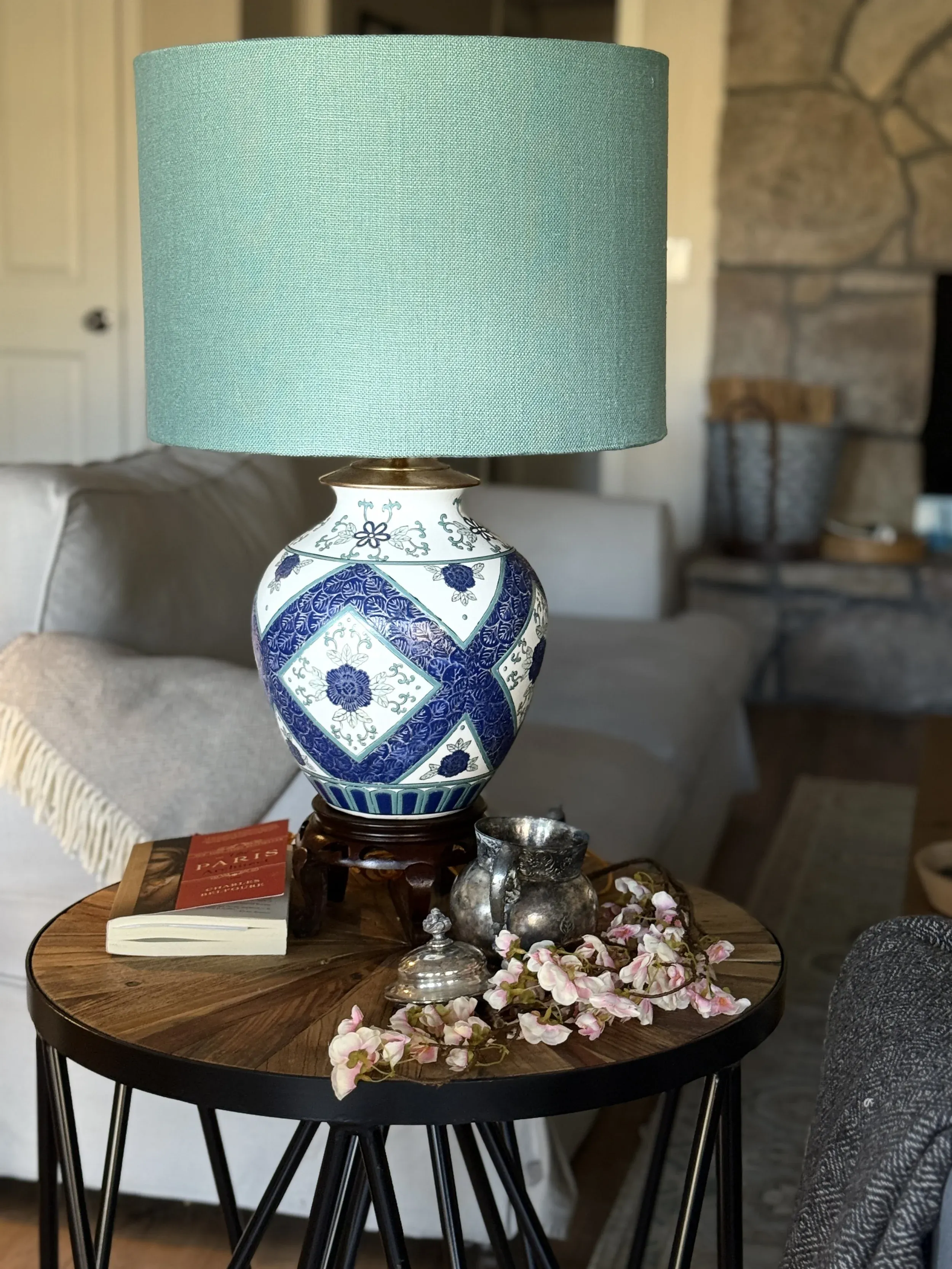
A lamp shade calculator can give you a much better starting point than a guess, especially when you are replacing a tired shade on a lamp you would rather keep. The numbers matter, but they are not the whole story. A good shade also needs to sit at the right height, clear the furniture around it, and let the lamp look like itself.
Use the calculator below to narrow the field. Then take the result back to the lamp. Look at it from the chair, the bed, or the doorway where the lamp actually earns its keep. That last check is what turns a possible fit into a comfortable one.
A practical starting point
Try the lamp shade calculator
Enter the measurements you have. The result gives you a sensible size range to test with the lamp and the room.
Your starting range
This range follows the lamp's base proportion. Test it against the table, headboard, wall, and sight line from where you sit.
With a 8 inch harp, check that the shade's fitter will place the bottom rim low enough to hide the socket and bulb.
What this lamp shade calculator uses
The calculator begins with four measurements: the lamp base width, the base height, the harp height, and the clear space around the lamp. Together, they answer the practical questions that a single product listing cannot. How broad can the shade be before it crowds a headboard? How tall can it be before it hides the lamp's best detail? Will it sit low enough to cover the bulb?
The suggested bottom-width range follows a familiar proportion, usually around one and a half to two times the widest part of the base. That gives many table lamps enough presence without making the shade feel unrelated to the lamp. It is a starting range, not a command. A broad ginger jar can look better with a calmer outline, while a slender brass lamp may carry a fuller shade when it has room.
- Base width guides the overall spread.
- Shade height helps cover the socket and bulb.
- Harp height determines where a spider-fitter shade lands.
- Clearance keeps the lamp usable on the table.
Measure the lamp base at its widest point
Set the lamp upright on a level surface and measure the widest part of its base. For a round base, measure straight across. For a square or rectangular base, note both the front-to-back depth and the side-to-side width. Use the larger dimension as the calculator's base width, then keep the other number with your notes.
Do not include a cord, a decorative finial, or a little curve that projects beyond the visual body of the lamp. You are trying to understand the lamp's real footprint. If it has a wide shoulder but a narrow lower body, measure the shoulder. That is the part the shade needs to balance.
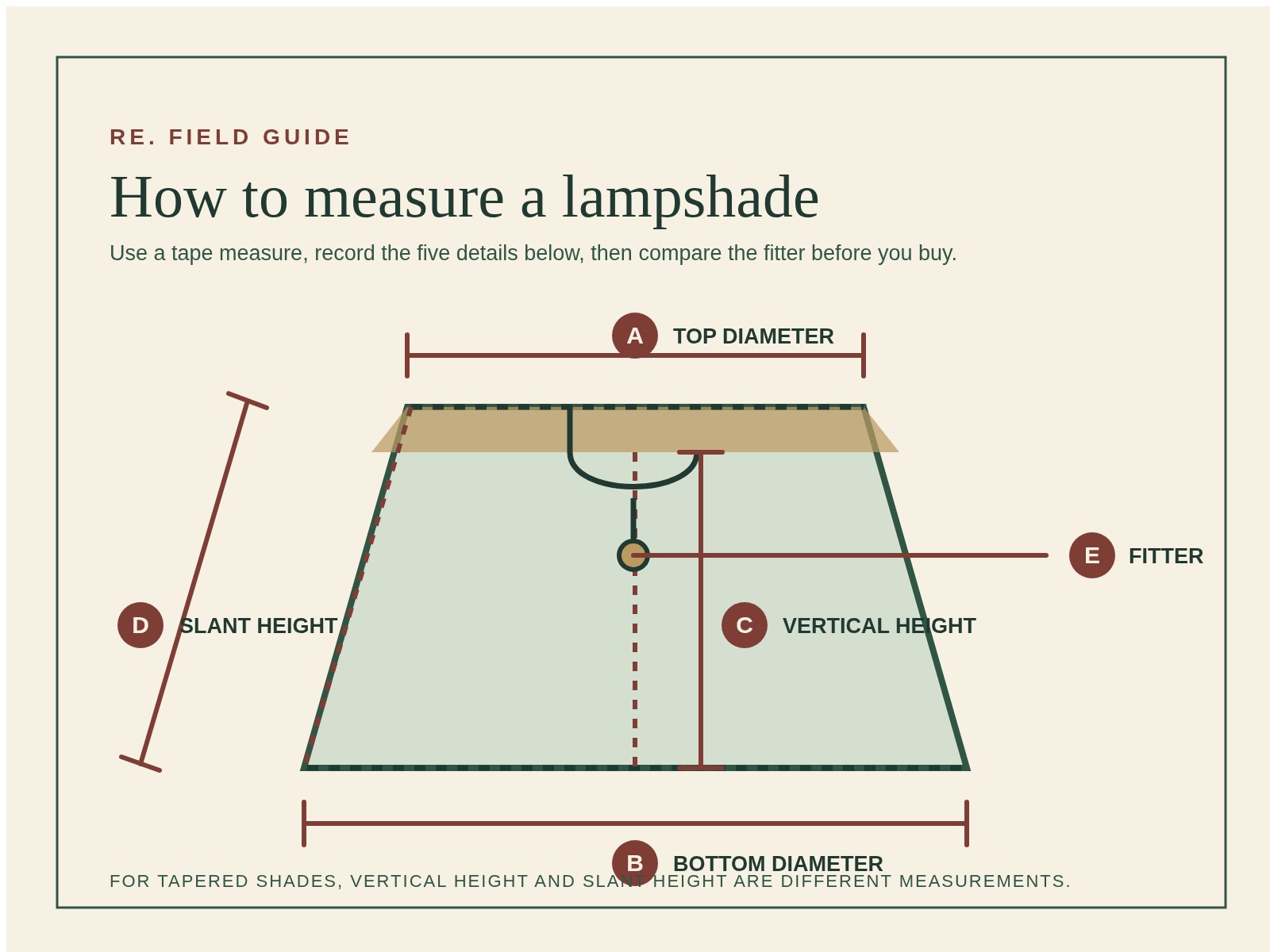
The current shade can help, but do not assume it was right. If it makes the base feel pinched, shows too much bulb, or sticks into the path beside a bed, its dimensions are evidence, not instructions. Re.'s five-step lampshade measuring guide gives you the full set of shade measurements to record before comparing replacements.
Use the lamp height to find a useful shade height
Measure from the bottom of the base to the top of the socket, or to the point where the harp starts if that is easier to see. This gives you the vertical space the shade needs to work with. A shade that is too short makes the bulb and hardware feel exposed. One that is too tall can cover a graceful neck, bury a decorative base, or make a small lamp feel heavy.
The calculator produces a height range rather than one exact number because lamp shapes vary. A straight-sided cylinder base, a wide pottery lamp, and a narrow candlestick lamp can have the same height yet need very different visual treatment. Use the result to pull a few likely options together, then compare how much base remains visible below the lower rim.
Try the lamp at normal eye level. On a bedside table, sit or lie down as you usually would. On a desk, take the chair. You should not be looking into the bare bulb. You also should not need to crane over the shade to use the switch. That is a more useful test than a formula on its own.
Check the harp before ordering a replacement
Many table lamps use a spider fitter that rests on a harp and is held by a finial. The harp is not just a piece of hardware in the background. Its height decides where the new shade begins and ends. If the harp is too tall, a good shade may hover awkwardly above the base. If it is too short, the lower rim can crowd the socket or leave the bulb showing.
Measure from the point where the harp enters the lamp to the top where the finial fastens. Enter that height in the calculator, then look closely at the fitter on the shade you are considering. A deep drop fitter lowers the shade more than one that sits close to the top rim. These small differences explain why two shades with the same listed height can sit differently on the same lamp.
Before buying a new shade for a lamp that sits too high or low, use Re.'s lamp harp measuring guide. A different harp may solve the problem without forcing you to give up a shade whose width and fabric you already love.
Let the table and room set the outer limit
A shade can be proportional to the lamp and still be wrong for the room. Measure the clear width of the table, shelf, or console around the lamp. On a bedside table, include the headboard, book stack, and hand reaching for a glass of water. On a narrow console, look at the wall behind it and the objects beside it. The shade needs breathing room, not just a place to perch.
The calculator reserves a little space at each side, then adjusts the suggested range when the surrounding area is tight. Treat that as a prompt to look more closely. A tailored oval shade may give the lamp the width it needs while taking up less front-to-back depth. Re.'s oval lampshade measuring guide explains the additional length and width notes an oval replacement needs.
Measure the space around the lamp, not only the lamp itself. The best shade leaves room for daily life.
Choose the shape after you know the range
Once you have a likely width and height, choose a shape that suits the base and the room. A drum shade has straight sides and a clean, contemporary outline. A tapered empire shade feels lighter and can give a broader base more lift. A bell shade has more movement and works well when you want the lamp to feel traditional without looking stiff.
Shape changes the way the same dimensions read. A 14-inch drum shade will look more substantial than a 14-inch tapered shade because it keeps that width from top to bottom. A tapered shade may be easier near a wall because its top is smaller. A square or rectangular shade can make sense on an angular base, while an oval can be a smart answer for a narrow table.
For a fuller comparison of fabric, shape, fitter, and light, see Re.'s guide to choosing a lampshade. The calculator gives the dimensions a sensible starting point. The shape is where you decide how the finished lamp should feel in the room.
Keep a short shade-sizing note
A useful calculator result is easier to act on when you keep it with the measurements that produced it. Put the lamp base width, overall height, harp height, suggested bottom-width range, suggested height range, fitter type, and available table space in one note. Add a front photo and a side photo. You will not need a technical drawing. You simply want enough information to compare one shade with another without relying on memory.
For a round or tapered shade, write the top diameter and bottom diameter separately. For an oval, rectangular, or square shade, record width and depth at both the top and bottom. If you are looking at a shade with a drop fitter, add that measurement too. The drop is the distance from the top of the shade to the fitting that rests on the harp. It can change the lamp's proportions even when the shade's listed height seems right.
Keeping the note also saves time later. A good lampshade may move from a console to a bedside table, or a lamp may find a new home after you rearrange a room. When that happens, you already know what worked about its scale and what was specific to the old location. That makes a future replacement feel more like a choice and less like a fresh puzzle.
Use the result to compare real shades
Write the calculator result down with your other measurements. Then compare it with each shade listing one line at a time: bottom width, top width, vertical height, slant height, fitter type, and fitter drop. Retailers do not all list dimensions in the same order, so a quick note prevents the common mistake of comparing a slant height with a vertical height.
When two sizes fall inside the range, choose based on the lamp's job. A reading lamp can use a little more width when it has a deep table and needs a generous pool of light. A lamp on a crowded chest may need a more compact, opaque shape that directs light up and down. A decorative lamp can be quieter, as long as the shade still covers the working parts.
Take a front and side photo before you order. The photos show the lamp's silhouette, table, and nearest furniture all at once. They are also the fastest way to get useful help when the numbers leave you with two plausible choices.
Check the shade after dark
A shade that looks right in daylight can behave differently once the lamp is on. Before committing to a size, consider how the fabric and lining will change the light. Pale linen or cotton usually lets more glow through the sides. A darker, thicker, or lined shade puts more emphasis on the light above and below it. Neither is better. The useful choice depends on whether the lamp is there to read by, soften a corner, or give a table a little warmth after dinner.
Stand where you usually use the room and look for three things: the bulb should not glare directly into view, the shade should not throw an awkward shadow over the task at hand, and the lower rim should not make the lamp look cut in half. A few minutes with the lamp switched on can make it obvious whether the calculator's larger or smaller recommendation is the better starting point.
If you are keeping a lamp with a shade you already like, photograph it while it is lit as well as while it is off. The lit photo helps you remember the warmth, coverage, and brightness you are trying to recreate. When you are choosing a new fabric or lining, it is one of the clearest references you can share.
When a calculator is not enough
A calculator is especially helpful for a familiar lamp shape with a standard spider fitter. It becomes less decisive when the lamp is unusually tall, has a sculptural base, needs an exact depth for a tight location, or deserves a fabric with more personality than a ready-made shade offers. These are not failures of measurement. They are the moments when proportion needs a human eye.
Re. makes custom lampshades for lamps that need more than a standard size chart. Bring the base width, height, harp measurement, a photo of the lamp, and a photo of the room. Those simple details make it much easier to choose a shape, lining, fabric, and fit that feel made for the piece rather than borrowed from another lamp.
For a traditional cylinder silhouette with a particular depth or fabric, the custom drum lampshades page is a useful next stop. For an unusual proportion, meaningful textile, or replacement that needs to solve a practical problem, the calculator gives Re. a clear starting brief.
Frequently asked questions
How do I calculate the right lampshade size?
Start with the lamp base width and height, then use the room as a final check. A shade is often about one and a half to two times the base width, but it must also hide the hardware and leave enough room on the table.
What if my lamp needs a shade between standard sizes?
Compare the lamp with the space around it before automatically choosing the smaller size. A slightly larger shade can work when it has room, while an awkward or unusual base may be better served by a custom proportion.
Does harp height affect lampshade size?
Yes. The harp affects where a spider-fitter shade sits on a lamp. A shade that otherwise fits may sit too high or low when the harp height is wrong, so check it before replacing the shade.
Can I use this calculator for an oval lampshade?
Use the calculator as a starting point for the overall scale, then measure the oval's long and short dimensions at both the top and bottom. An oval shade needs more detail than a round one, especially when space behind the lamp is tight.
Related posts
Lampshades
How to Measure a Lampshade in 5 Simple Steps
Measure a replacement lampshade with confidence, from the top and bottom width to the height and fitter that help a lamp feel balanced.
Lampshades
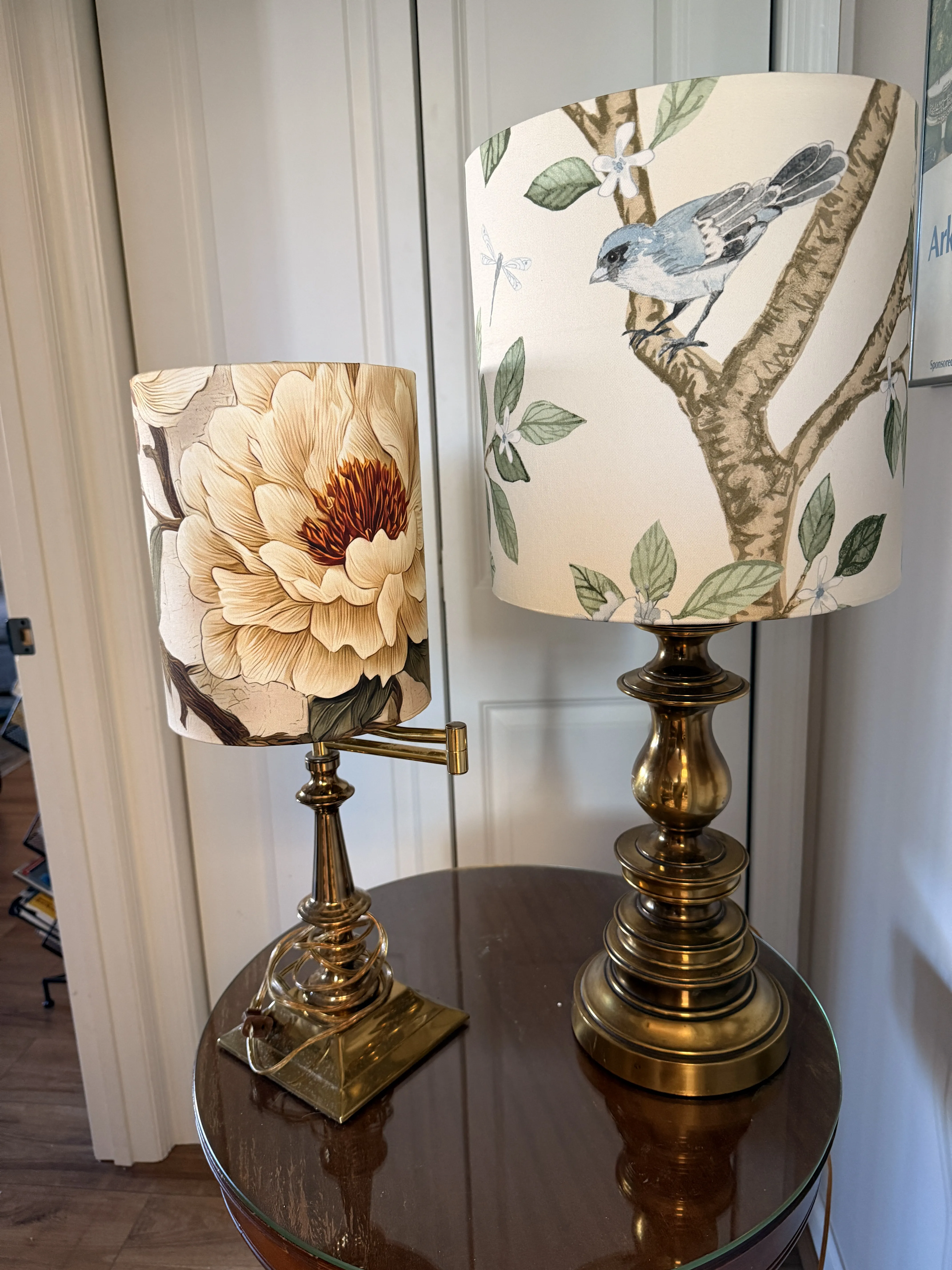
How to Measure an Oval Lampshade for a Replacement
A simple way to measure an oval lampshade, check its fitting, and find a replacement that works with the lamp and the room.