
Your first home does not need to look finished on moving day. In fact, the rooms that feel best usually take a little time. They come together through use, patience, a few lucky finds, and the confidence to leave some space for the things you have not met yet.
There is a peculiar pressure around a first home. One minute you are celebrating a set of keys, and the next you are looking at every bare wall as if it needs an immediate answer. It does not. A home is allowed to be in progress. It is allowed to have the sofa you brought with you, a cardboard-box season, and a lamp standing in for the overhead light you already know you will never use.
The goal is not to recreate a showroom. It is to make daily life easier and more pleasant, then let the room gather character as you do. These first home decor ideas are a way to begin without buying a pile of things you will regret by next spring.
Start with how you want to live
Before choosing a color or filling a cart, spend a few days noticing the room. Where do you naturally put your coffee? Which corner catches the good afternoon light? Where does everyone drop a bag or take off their shoes? A beautiful room that ignores those small habits gets irritating very quickly.
Give each space one clear job. A living room may need to be a place for reading, movie nights, and the occasional group of friends. A bedroom may need to be restful before it needs to be impressive. An entry may need a surface for keys and a basket for the things that otherwise migrate to the floor. Once a room has a job, the shopping list becomes much shorter.
Begin with the useful foundation: somewhere comfortable to sit, a surface within reach, a rug or textile if the room feels echoey, and light that makes people want to stay. Decorative objects work much harder when they are added to a room that already functions.
Choose one room to make feel settled first
You do not have to furnish the entire house at once. Pick the room that will give you the biggest emotional return, then finish enough of it to enjoy. For many people, that is the bedroom. For others, it is the living room where they finally get to host a friend without apologizing for the boxes.
Define “settled” kindly. It can mean a made bed, curtains or shades that give you privacy, a bedside lamp, and one thing on the wall. In a living room, it might mean a comfortable chair, a table for a drink, and a lamp that softens the room after dark. This is not a grand reveal. It is a place you can exhale.
Working one room at a time also protects your budget. It gives you time to learn what you actually need instead of buying six versions of the same decorative problem. An empty corner can wait. A bedside table you use every night is worth deciding on.
Let lighting do the early heavy lifting
Nothing makes a room feel more immediately intentional than warm, low-level light. Overhead fixtures are useful when you are cleaning or looking for a dropped earring. They are rarely what makes a room feel welcoming at the end of the day.
Try to give your main living space at least two pools of light at different heights: a table lamp near a chair or sofa, and another lamp, floor lamp, or shaded source across the room. The result is softer and more flexible than a single bright ceiling fixture. A lamp on a small table also creates a destination, a natural spot for a book, a cup of tea, or a conversation.
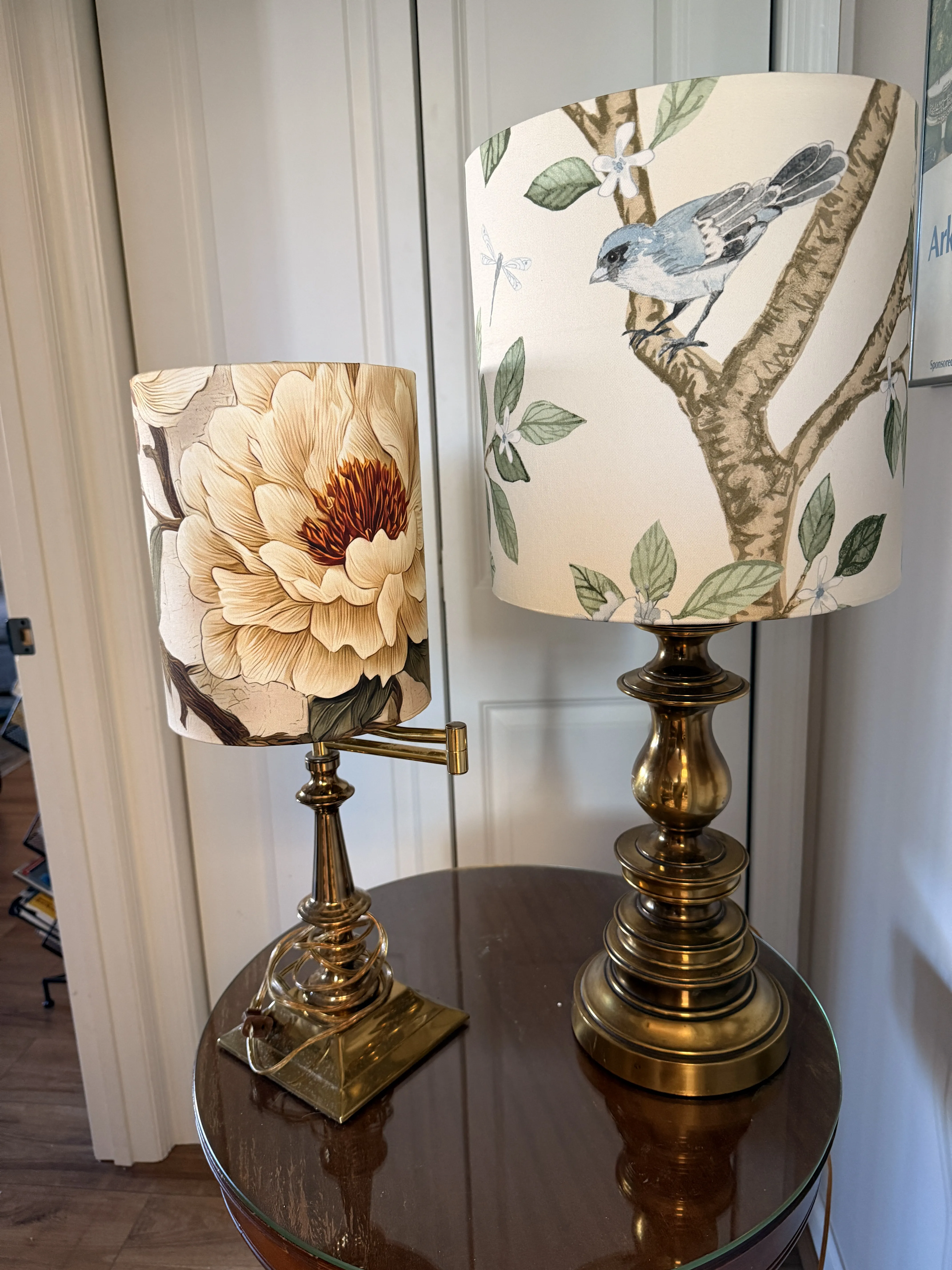
Vintage lighting is especially useful in a first home because it brings both function and personality in one piece. A restored base with a fresh shade can make a new sofa feel less anonymous. If you have inherited a lamp or found one with a good silhouette, our guide to choosing a lampshade that fits your lamp will help you get the proportions right.
Buy the backbone slowly, then collect the character
There are two kinds of purchases in a first home. The backbone pieces are the things your body notices every day: a mattress, sofa, dining chairs, storage, and lighting. Character pieces are the things your eye notices: a mirror, an unusual lamp, art, a small table, a blue-and-white jar, a stack of books, or a textile with a little history.
The backbone deserves measuring, patience, and a clear sense of scale. Do not buy a sofa because it is on sale if it leaves no room to walk around it. Do not choose a dining table without thinking about chairs, opening doors, or where the person sitting at the end will put their knees. A tape measure is not glamorous, but it is cheaper than a return.
Character can arrive more slowly. That is good news. It means you can leave a shelf open until you find the bowl you love, rather than buying five acceptable objects to fill it. One vintage piece, a family photograph, or an artwork you found on a trip gives a room more of you than a matching set ever will.
Mix old and new for a home that feels like yours
A first home does not need to choose between practical new purchases and older pieces with patina. The mix is often what makes a room feel relaxed. A simple new sofa can take on warmth beside a wood side table with a few honest marks. New bedding feels less generic with a vintage brass lamp on the nightstand. A modern kitchen gains personality from an old mirror, a silver tray, or a small painted stool.
When you are mixing eras, look for a shared thread instead of trying to match everything. It might be warm wood, aged brass, a mossy green, a blue note repeated in art and fabric, or simply the same level of visual quiet. The pieces do not have to come from the same decade to belong together.
Condition matters more than perfection. Look for stable construction, working drawers, sound joinery, and electrical pieces that have been professionally restored when needed. A little wear is part of the point. Damage that makes an object unsafe or unusable is a different matter. Our thoughts on why restoring old furniture still matters can help you spot the difference between a piece with promise and a project you do not need.
Use textiles to make the room feel finished
Textiles are the gentlest way to change a room. They bring color, softness, and a sense of care without demanding a major commitment. A rug gives furniture a place to gather. Curtains make a room feel taller and more settled. A pillow or throw can connect a chair to the rest of the room without forcing everything to match.
Start with texture before pattern if you feel unsure. Linen, cotton, wool, woven shades, a basket, or a nubby rug add depth without making the room busy. Once you know the room needs more life, add one pattern that you genuinely enjoy. Let it be the lead, not the entire cast.
It is also fine for a first home to have a practical sofa in a practical color. That is what cushions, throws, and a good lamp are for. You do not need to replace the whole thing to make it feel less temporary.
Make your entry do one useful thing well
The entry does not need a grand foyer to matter. Even a few feet inside the door can become a small landing place for the day. A narrow table, wall hooks, a tray, or a basket can stop keys, mail, and shoes from spreading through the house. Add a mirror if it helps the space catch light or gives you a last look on the way out.
This is a wonderful place for a smaller vintage find because it gets noticed often. A silver-toned mirror, a ceramic vase, a small lamp, or a framed print turns a purely practical corner into a welcome. Keep the surface useful, though. The best entry is not a shrine to decorative objects. It is a spot that helps you arrive home gracefully.
Leave room for the story to grow
Every room benefits from a little blank space. It lets the things you do love stand out, and it gives your home permission to change with you. Resist buying filler just because a wall, shelf, or corner is empty. That space is not a failure. It may be waiting for the chair you find next year, the art your friend makes, or the inherited piece you learn to appreciate later.
A useful rule is to take a photo before you buy more. Looking at the room through a screen makes repetition easier to spot. You may notice you already have plenty of small brown objects, or that what the room truly needs is a larger lamp, a softer textile, or nothing at all.
Homes with personality usually have a little breathing room. They do not explain every inch of themselves at once. That restraint will make the future additions feel chosen rather than crowded in.
Find a few pieces worth keeping
Re. is built around the idea that a home becomes more personal through objects with a past, a purpose, and some staying power. A restored lamp can change the feeling of a room every evening. A collected mirror or a small piece of vintage tableware can make the ordinary rituals of home feel more considered.
Browse the current collection when you are looking for a piece with character, or explore custom lampshades if a lamp you already love needs a new life. You do not need much. One useful, beautiful thing is a perfectly good place to begin.
Frequently asked questions
Where should I start when decorating my first home?
Start with the room that will make the biggest difference to your daily life, usually the bedroom or living room. Decide how you need it to work, then add the larger useful pieces before buying decorative details.
How do I decorate a first home on a realistic budget?
Buy slowly and give each room a short list of needs. Spend on the items you use every day, then bring in lower-cost character through vintage finds, books, textiles, art, and objects you already own.
How can I make a new home feel more personal?
Use items with a point of view: a favorite color, a family object, art that actually means something to you, a vintage lamp, or a textile you want to touch. A small collection of specific things feels more personal than a room of matching decor.
Should every room be finished before I invite people over?
No. A home can be welcoming while it is still taking shape. Good light, a place to sit, and a little care matter more than having every wall filled or every shelf styled.
Related posts

Lampshades
How to Choose a Lampshade That Fits Your Lamp
An easy way to choose lampshade size, shape, fitter, fabric, and light, so your lamp feels right in the room.
Restoration & reuse
Why Restoring Old Furniture Still Matters
A case for keeping well-made furniture, clothing, and household pieces in use, and for valuing the skilled hands that help them last.