Re.Heritage Home Decor
CartView Collection
Menu
ShopCustom ShadesSoft FurnishingsCandle RefillsPicnic HampersJournalOur StoryContactView CollectionCart

Vintage lighting, finished personally

Custom Lampshades for Vintage Lamps

Keep the base you love, then give it a shade with the right proportion, hardware, fabric, and glow for the room it calls home now.

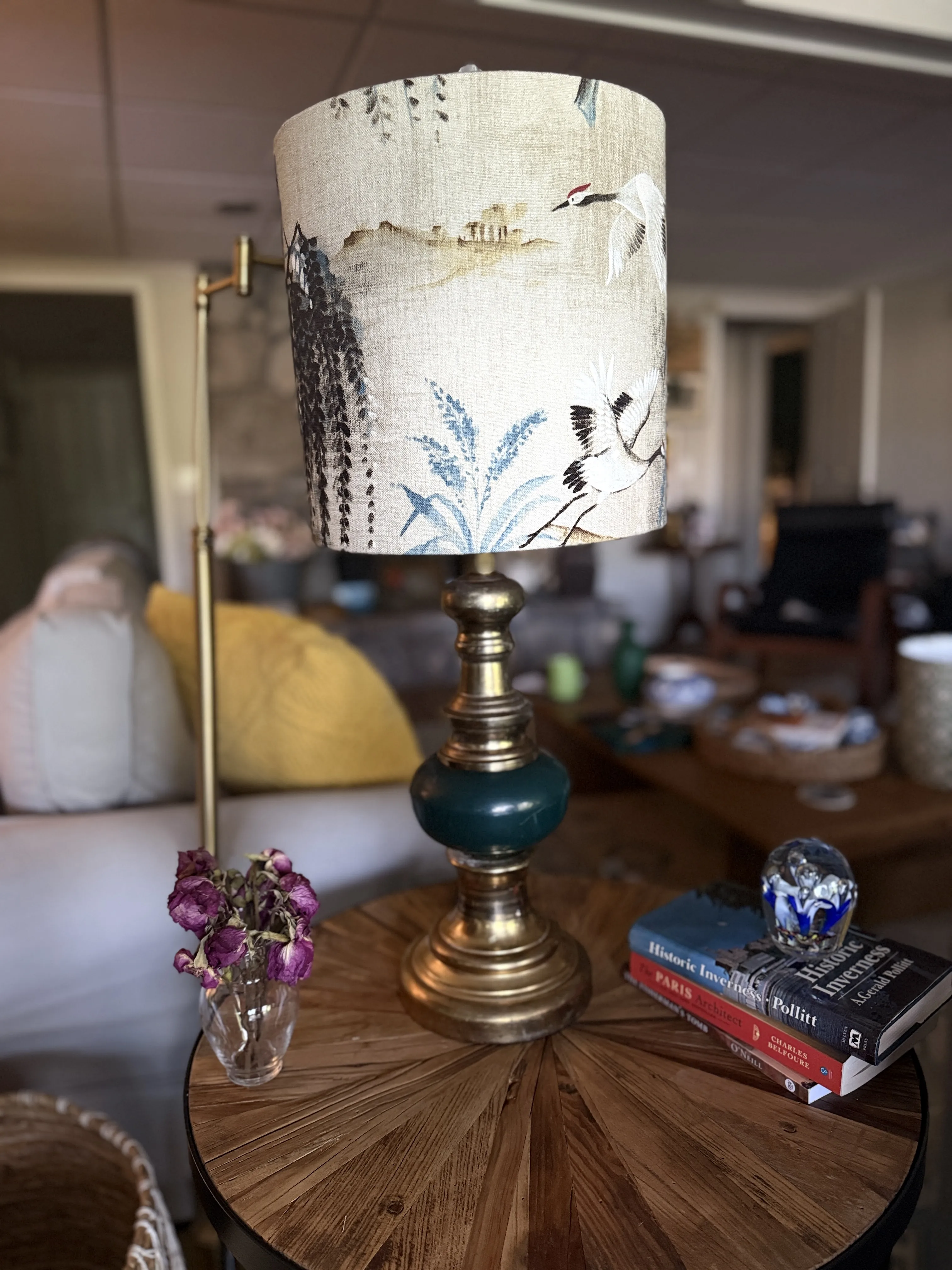
Restored brass vintage lamp with a custom crane-patterned lampshade

The old shade is not the whole story

Let the lamp keep what made it worth saving.

A vintage lamp can have exactly the right base and still feel unfinished. The shade may be stained, yellowed, too short, too wide, or simply from another life. Re. makes custom lampshades for vintage lamps that need a more thoughtful answer, one that respects the original piece while helping it belong in the room you have today.

The goal is not to make every old lamp look precious or period-perfect. A clean linen shade can quiet a detailed porcelain base. A patterned fabric can bring a plain brass column into a more collected room. A gentle taper can give a traditional silhouette lift, while a drum can give it a calm, tailored outline. The best choice lets the lamp remain recognizable, then gives it a fresh reason to be used every day.

Older lamps rarely follow a standard formula. Their necks, harps, socket heights, and base proportions can be a little different from what a shelf of replacement shades expects. That is why a good custom shade begins with the actual lamp, not a guess based on diameter alone. It needs to hide the bulb and hardware comfortably, leave the most beautiful part of the base visible, and make sense beside the bed, chair, console, or chest where it will live.

Re. works with both vintage lighting and custom shades, so the finish of the lamp and the character of the new shade can be considered together. A few photographs and rough measurements are enough to begin a useful conversation. You do not need a complete plan before you reach out.
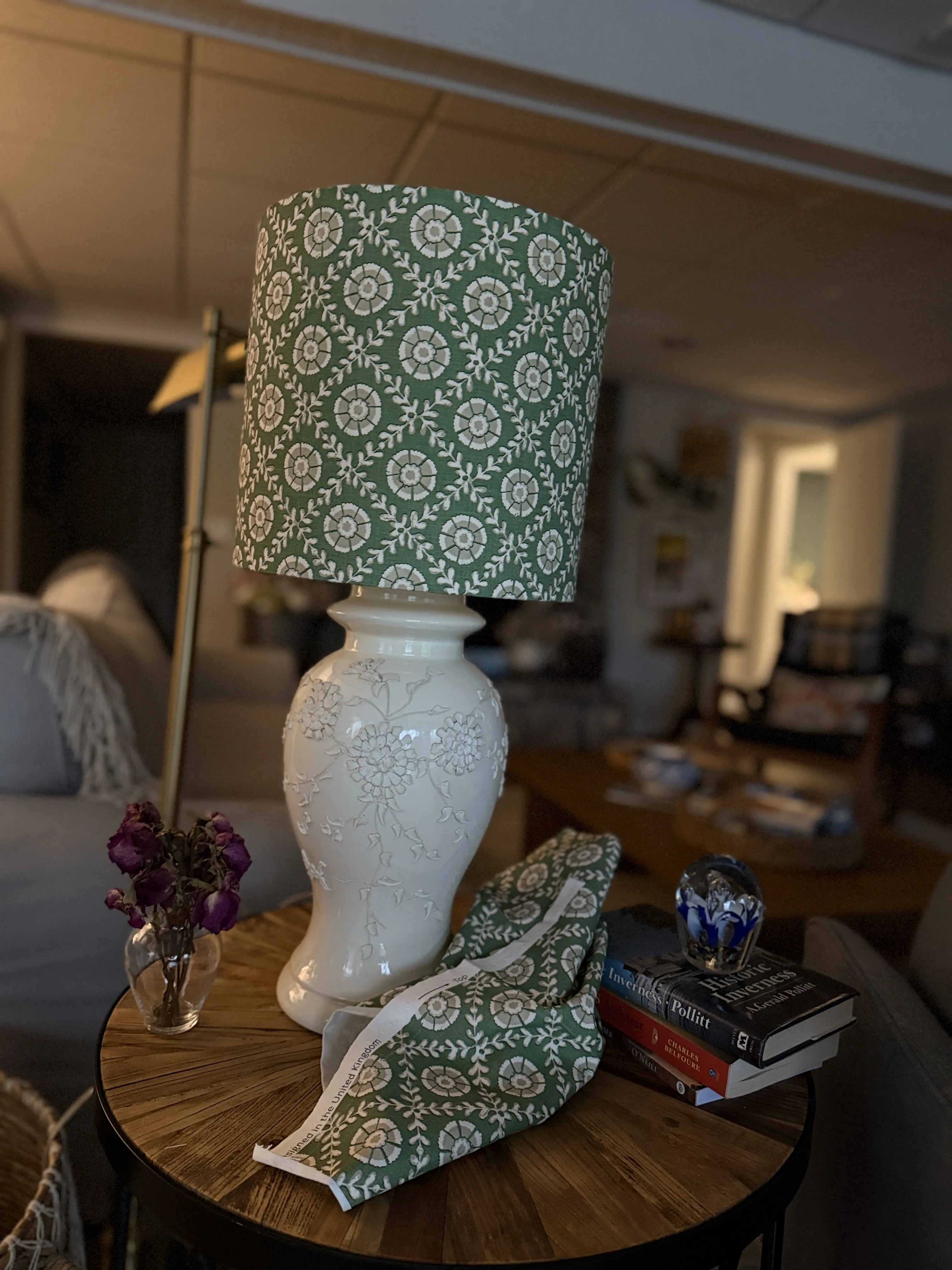
Vintage ceramic lamp restored with a botanical custom lampshade

Start with the lamp in front of you

Proportion makes an older piece feel at ease again.

When a shade is too small, a substantial vintage base can look top-heavy and the harp may feel too exposed. When it is too wide, the shade can swallow a graceful neck or crowd the table beneath it. Height matters too. The new shade should sit low enough to conceal the practical parts of the lamp at normal eye level, while still allowing the base to show its shape.

Re. looks at the width of the base, the total height to the socket or harp, the existing fitter, and the view from where the lamp will actually be used. A bedside table has different needs from a reading chair. A narrow console may call for a more contained shape, while a deep chest can hold a shade with a little more presence. These are small decisions, but together they are what make a lamp feel composed rather than merely dressed.

The fabric changes the result again. A light, open weave can create a soft, useful glow. A deeper color or lining can make the light more intimate in the evening. A print needs enough surface to read well around the frame, whether it is a simple stripe, a botanical, or a textile with personal history. Re. helps you choose a direction that makes sense in daylight and after dark.

What the shade needs to solve

One finished piece, shaped around the details that matter.

Keep the lamp's best features in view.

A lamp with hand-painted ceramic, warm brass, carved wood, or an expressive silhouette does not need a shade that competes with it. The right scale gives the base enough presence, then lets the shade add softness, height, pattern, or restraint where the piece needs it.

Choose a shape that has a reason.

Drum shades have straight sides and a quiet, even outline that can balance an ornate or rounded base. Tapered shades can make a traditional lamp feel lighter and more graceful. The lamp's own lines, not a passing trend, should lead the decision.

Make the hardware work comfortably.

A vintage lamp may have a spider fitter, an uno fitting, a clip-on shade, or hardware that needs a closer look. A clear photo of the top of the lamp helps Re. choose a frame that sits securely and covers the socket and harp without making the whole piece feel crowded.

Let the fabric earn its place.

A saved remnant, heirloom textile, favorite linen, or studio fabric can all lead somewhere beautiful. The weave, color, pattern scale, and condition affect how the material wraps the frame and how the lamp glows. A good choice relates to the room without asking every pillow, curtain, and chair to match it exactly.

A practical first step

Bring the lamp into the conversation.

Send a front photo and side photo of the lamp, then add one wider view of the room where it will sit. If the old shade is still there, include it too. Its top width, bottom width, and height can be useful, even when you know it is not the right answer.

Share a picture of any fabric you hope to use, along with a rough measurement of the piece. Re. can help you think through whether the pattern has enough room, whether the fabric will create the right light, and whether a different shape would let the lamp feel more like itself.

Tell Re. about your lamp
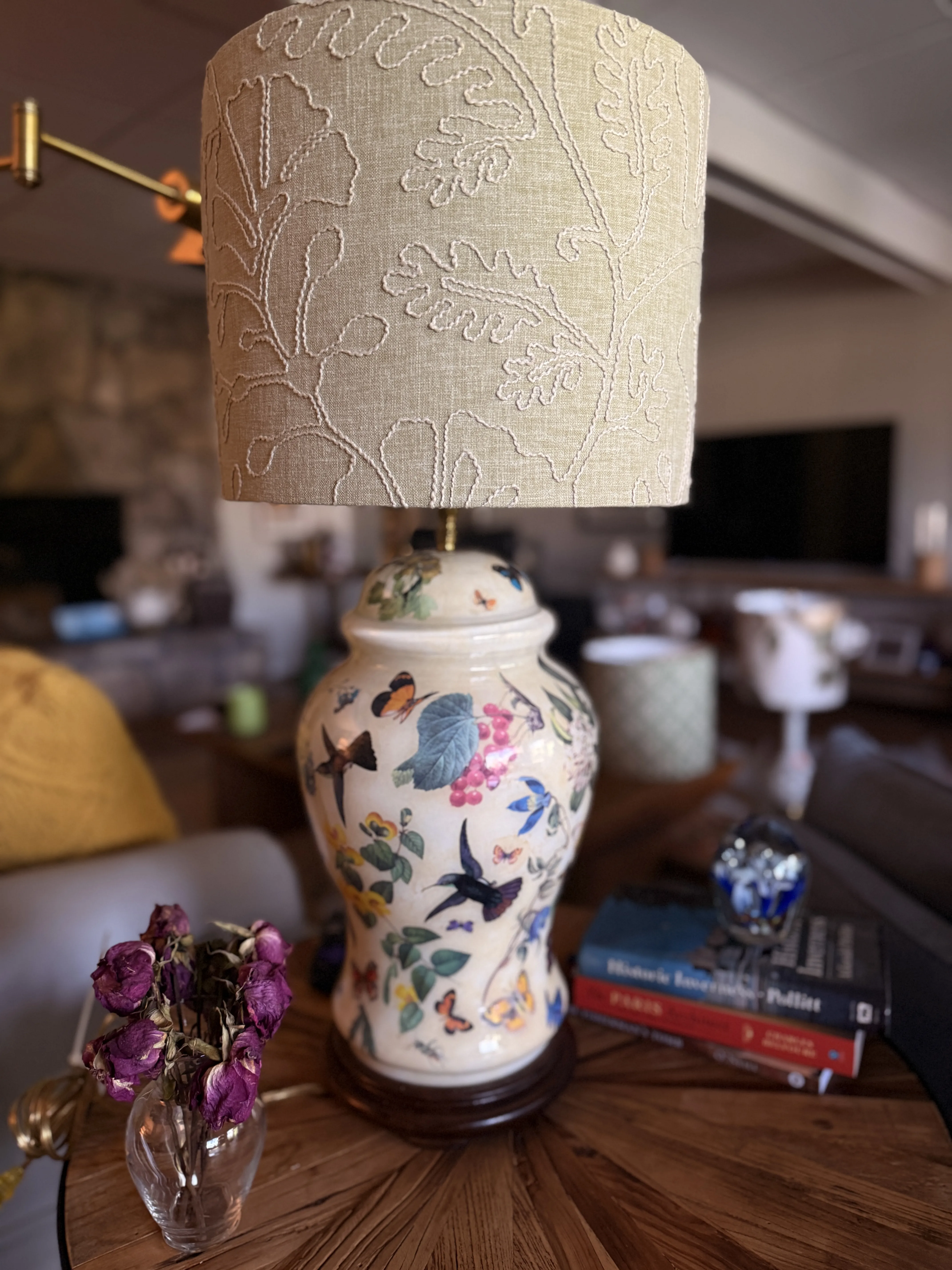
Vintage ginger jar lamp with a hand-finished botanical lampshade

A better starting point than guessing

Gather a few simple details before you choose a shade.

A little context makes it easier to find a shape, scale, and fabric that feel right for the piece you want to keep.

Measure the lamp where it is widest.

The base width gives a useful first sense of how broad the bottom of the shade may need to be. The lamp's height to the socket or top of the harp also helps show how much shade height the piece can carry. These numbers do not need to be perfect to be helpful.

Look at it from the seat or doorway.

A lamp is rarely seen only up close. Sit where you read, stand in the doorway, or look across the room. That view helps reveal whether a shade needs to stay narrower beside a headboard, rise above a chair, or add more presence to a broad console or chest.

Take a closer photo of the top.

The socket, harp, and fitting determine how the shade needs to attach and how low it can sit. This is especially useful on vintage lamps, where a fitting may not behave like a modern replacement. Re. can use that view to guide the frame choice before anything is made.

Think about what the light needs to do.

A reading lamp may need a wider, brighter pool of light. A bedside lamp can be softer and more contained. An entry lamp may be there mostly to make the room feel welcoming at the end of the day. The purpose of the lamp helps guide the lining, fabric weight, and shape.

Use the existing guides when you want more direction.

The lampshade size guide explains the basic measurements, and the lamp harp guide helps when the hardware is the part that is unclear. For a vintage lamp with more personality than a standard replacement can handle, Re. can help turn those notes into a tailored shade.

Custom lampshade inquiry

Tell Re. about the lamp you want to keep.

Share what you know about the lamp, its current shade, the room, and any fabric you are considering. A photo is welcome by email after you send your inquiry.

Frequently asked questions

Vintage lamps and custom shades.

Can a new lampshade work on an old lamp?

Yes. A custom shade is often the best answer for a vintage lamp because older bases can have unusual proportions, distinct hardware, or a silhouette that deserves more than a standard replacement. Re. starts with the lamp itself, then helps shape a shade that keeps its character visible.

Do I need the original shade?

No. The original shade can be useful as a reference, even when it is worn, damaged, or clearly the wrong size, but it is not required. A front photo, side photo, and a few simple measurements of the lamp are enough to begin.

Can I use a fabric I already have?

Often, yes. A saved remnant, family textile, favorite print, or fabric from elsewhere in the room can become the starting point. Re. will help you consider whether the weave, pattern scale, condition, and amount of fabric suit the frame and the light you want.

Will the new shade fit the lamp's existing hardware?

That depends on the lamp's fitter and the way the shade needs to sit. A photograph of the top of the lamp, including the harp or socket, makes it easier to choose a frame that covers the hardware comfortably and sits at the right height.

How do I know what size shade my vintage lamp needs?

Start with the widest point of the base, the full height to the socket or top of the harp, and the current shade's top width, bottom width, and height when available. Re.'s lampshade size guide is a helpful first check, and Re. can refine the direction from photos.

Can Re. help with a vintage lamp that needs both restoration and a shade?

Yes. Re. works with vintage lighting and custom lampshades, so the restored base and the finished shade can be considered together. Send a few photos of the lamp and describe how you hope to use it in the room.

Keep the lamp. Change the light.

Give a favorite vintage lamp its next chapter.

A thoughtful custom shade can make an older piece feel useful, personal, and perfectly at home again.

Start a custom shade inquiry