
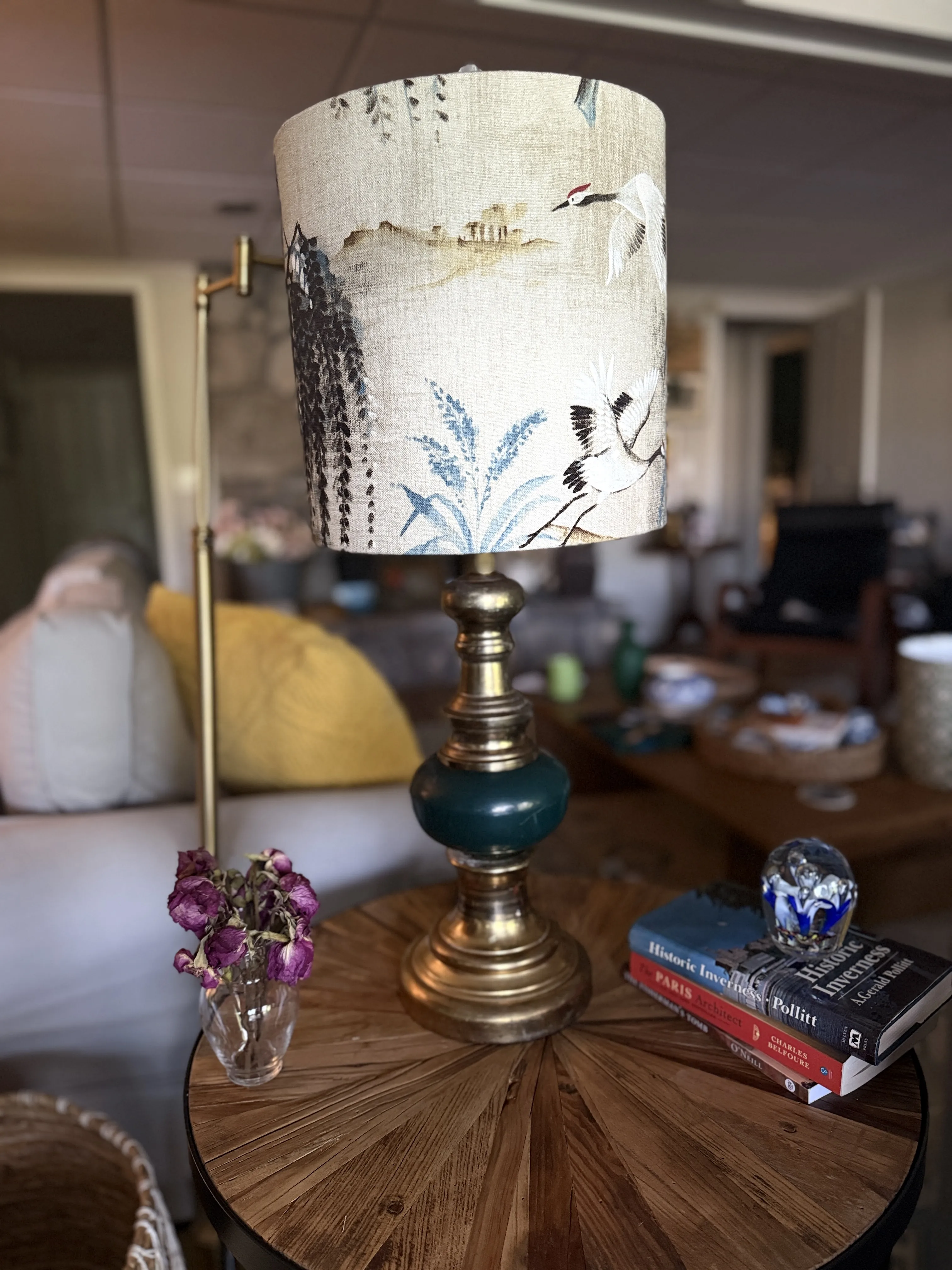
A drum lampshade is one of the simpler shapes to measure because its sides run straight up and down. The important part is not just getting one diameter. You also need to check the height, the fitter, and the space around the lamp so the replacement feels settled rather than merely possible.
Start with the shade you have, even when it is yellowed, bent, or not quite right. It gives you a useful record of what fits the hardware and how much room the lamp has claimed. Then decide which measurements are worth repeating and which are the reason you are replacing it in the first place.
Know what makes a drum shade different
A drum shade is a cylinder: the top and bottom rims are the same size, and the sides stay straight rather than tapering inward. That clean outline can give a detailed ceramic, brass, wood, or painted base room to breathe. It also means a drum shade often looks more substantial than a tapered shade with the same bottom diameter.
That fuller shape is useful when a lamp needs a calm, tailored finish. It can be less forgiving on a narrow bedside table or a crowded console, where an even width may reach farther into the room than a tapered option would. Measure before falling for fabric. The right silhouette begins with the room the lamp has to live in.
If you are still choosing among shapes, Re.'s guide to choosing a lampshade explains how a drum, empire, bell, oval, or square shade changes the way a lamp reads. For this guide, assume you have decided that the straight-sided shape is the one you want to fit.
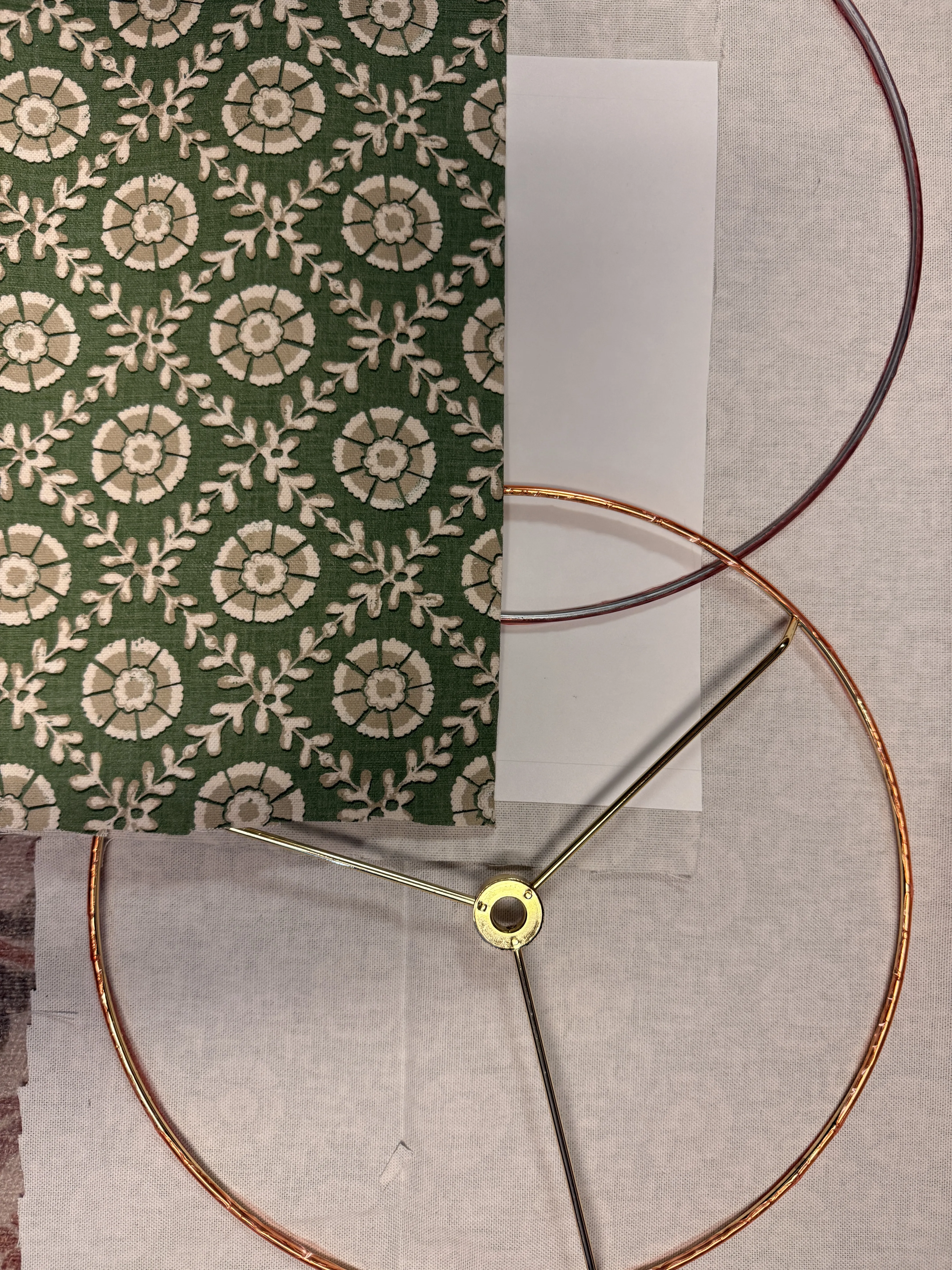
1. Measure the diameter across the bottom rim
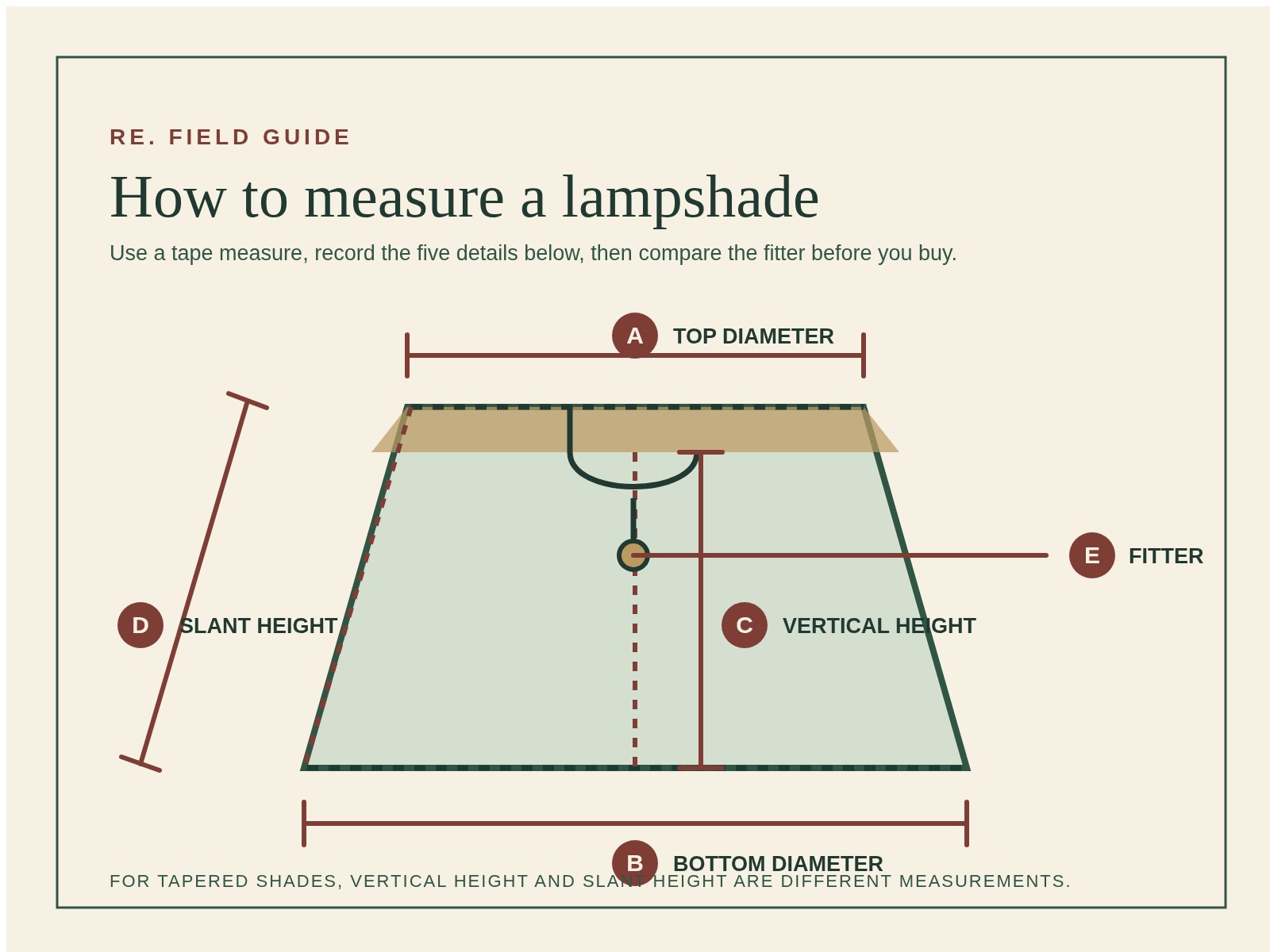
Set the shade upright on a flat table. Stretch a tape measure straight across the widest point of the bottom opening, rim to rim. Do not follow the curve and do not measure around the outside. The straight line through the center is the diameter.
Write it down as the bottom diameter, even though a true drum shade should have the same diameter at the top. This helps when you compare a listing that is labelled by its bottom measurement or when you discover that an old shade is not quite as straight-sided as it first appeared.
When the old frame is bent or the rim is soft, take two measurements at right angles and use the average as a starting point. A shade that has sagged over time should not force the next one to inherit the same problem. A front photo of the lamp makes it easier to see whether the current width feels generous, pinched, or just right.
2. Confirm the top diameter
Measure straight across the top rim in the same way. On a true drum shade, it will match the bottom measurement. If the two numbers differ, you may have a tapered shade, a shallow empire, or a shade that has distorted with age. That difference matters because a 14-inch tapered shade and a 14-inch drum shade do not cast the same silhouette.
A drum shade keeps its full width near the socket, so it can make a narrow or delicate lamp feel heavier than expected. It can also be exactly the thing that makes a broader base feel balanced. Check the top and bottom rather than trusting a product name alone, especially when buying from a listing with only a few measurements.
For a broader starting range based on the lamp itself, use Re.'s lampshade size guide. It begins with the widest part of the base, then adds the lamp height and the room to keep the choice grounded in what you actually own.
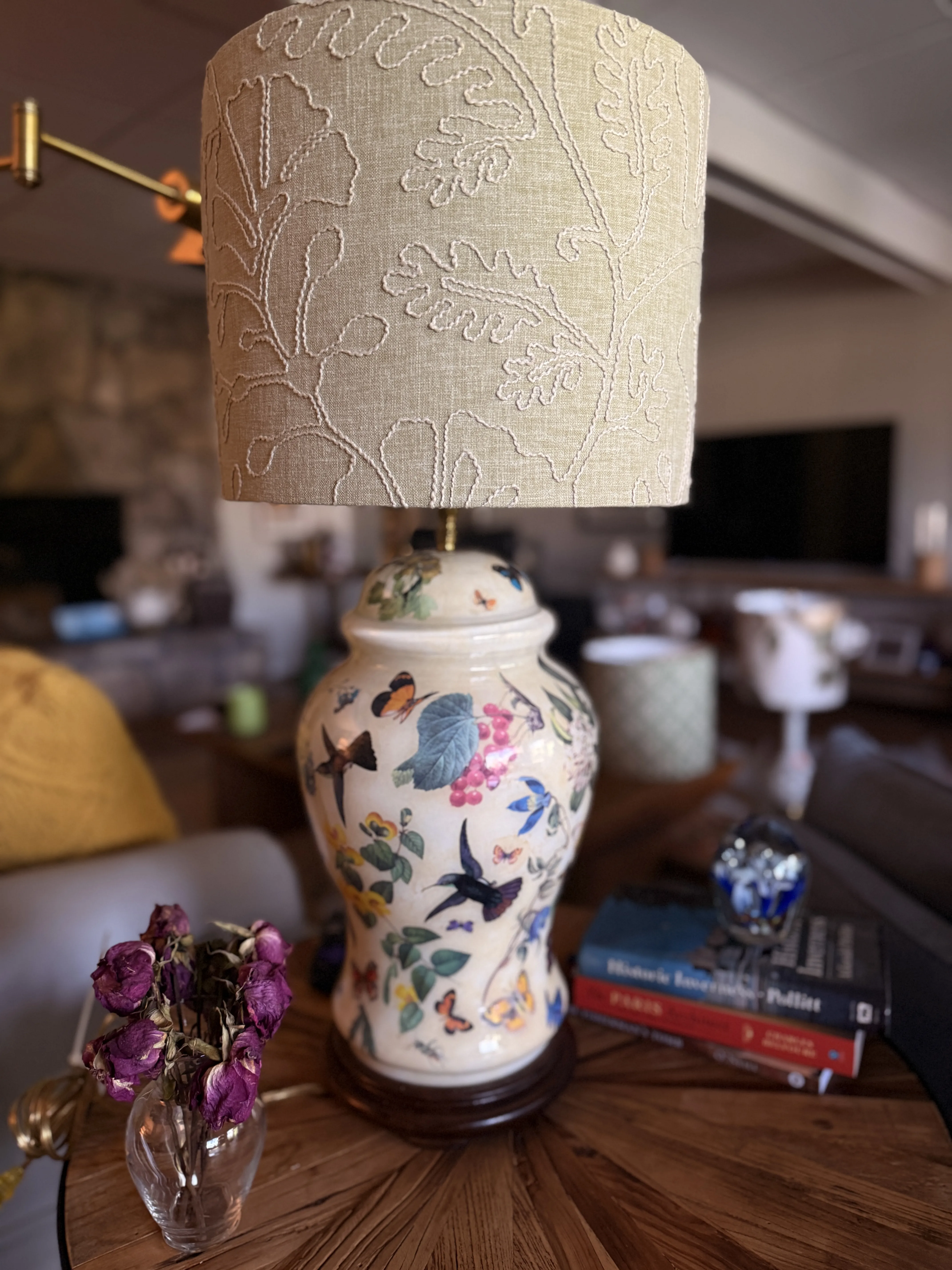
3. Measure the vertical height
With the shade still upright, measure straight up from the bottom rim to the top rim. This is the vertical height. On a drum shade, the vertical height and the slant height are the same because the sides do not slope. That makes the listing easier to read, but it does not make height less important.
Height decides how much of the lamp's neck and base remain visible, as well as whether the socket and bulb are covered from normal eye level. A short drum shade can make a tall lamp look top-heavy and show too much hardware. A tall one can hide the character that made you keep the base.
Use the current shade as a visual test. Sit in the chair beside the lamp or stand where you usually see it first. The lower rim should hide the bulb comfortably without making the lamp feel swallowed. If the old shade exposes the bulb, measure it, then make a note that the new shade needs more height or a different fitter drop.
4. Check the fitter and its drop
Turn the shade over and look at the metal support inside. Most table-lamp drum shades use a spider fitter, which rests on a harp and is held by a finial. An uno fitter threads onto the socket, while a clip-on shade attaches directly to the bulb. The dimensions can be perfect and the shade can still be wrong if the fitter does not suit the lamp.
For a spider fitter, measure the drop from the top rim down to the point where the fitter rests on the harp. A deeper drop lets the shade sit lower. This detail matters when you are trying to cover a tall socket, show more of a sculptural neck, or keep a new shade from hovering above the base.
If a shade is the right width and height but sits too high or low, the harp may be the better thing to change. Re.'s lamp harp measuring guide walks through that small but useful adjustment. Do not assume you need to replace a shade you love before you have checked the support beneath it.
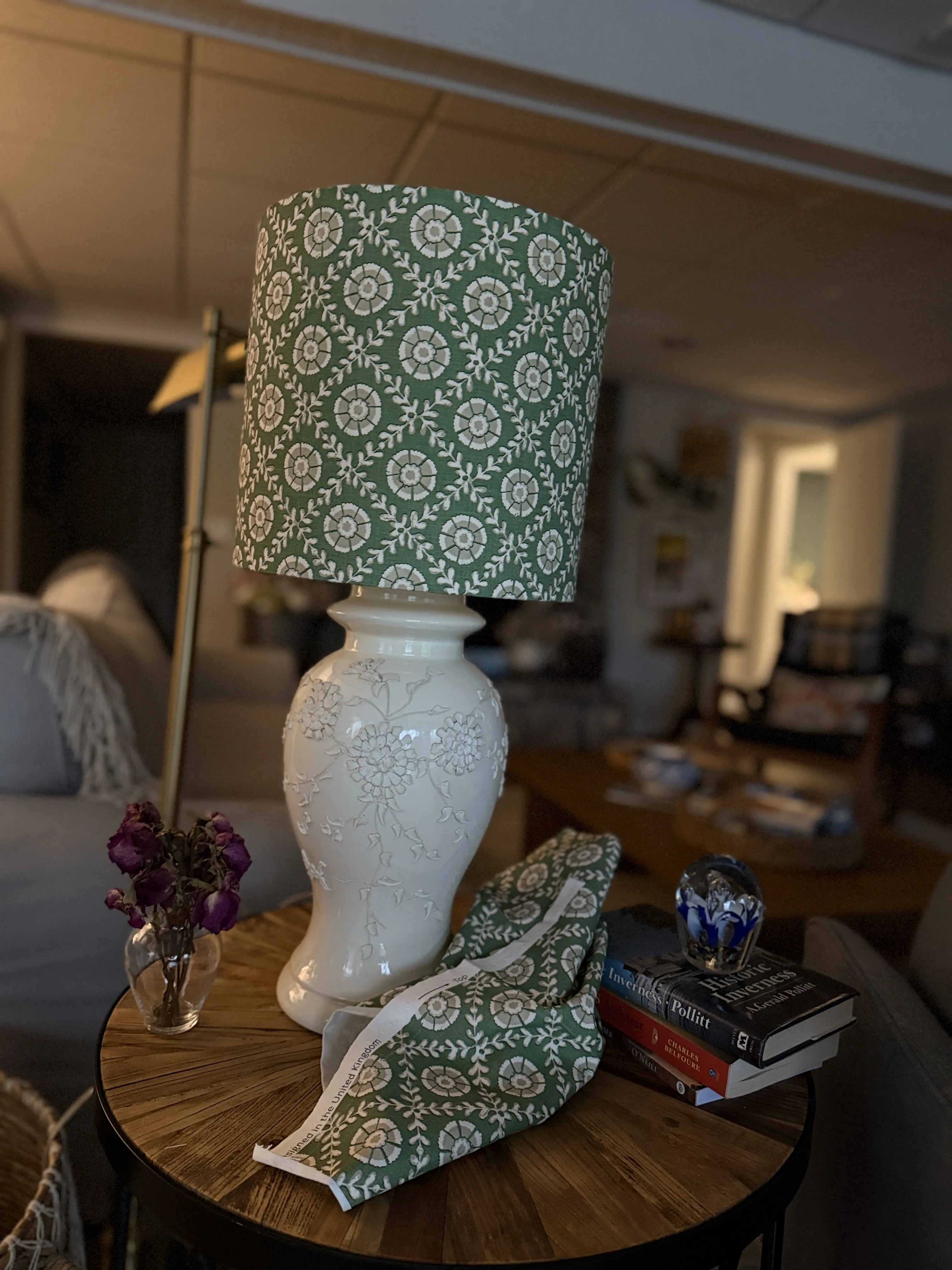
5. Measure the space around the lamp
A drum shade needs room because its width stays consistent from top to bottom. Measure the clear width and depth of the table, console, or bedside surface around the lamp. Include the headboard, wall, books, picture frames, and the space your hand needs to reach a switch or glass of water.
Look at the lamp from the doorway as well as close up. A drum shade that looks balanced on its own can crowd an arrangement when it stands beside a mirror, artwork, or a matching lamp. The goal is not to leave a mathematical amount of empty space. It is to make sure the lamp still has an easy job in the room.
For tight spaces, compare the same diameter in a drum and a tapered shape before you commit. The tapered shade may give you a little more visual air at the top, while the drum creates a stronger, simpler outline. Re.'s lamp shade calculator can turn the base width, height, harp, and available clearance into a practical range.
How to compare a drum shade listing
Once you have your notes, compare each listing in the same order: diameter, vertical height, fitter type, fitter drop, and fabric or lining. Do not rely on a label such as “medium” or “large.” Those terms change from one seller to another, while a 14-inch diameter is still a 14-inch diameter.
It also helps to separate the shade frame from the fabric. A pale linen drum shade can look airy and make a room feel brighter. A lined, darker, or patterned one can make the light more focused and the lamp more decorative. The frame has to fit first, then the material can help decide whether the lamp should glow gently, read by comfortably, or add warmth to a quiet corner.
Major lighting retailers often present shade dimensions as diameter by height, which is a useful format to look for while comparing options. The practical fitting advice in Lamps Plus's lampshade measurement guide also reinforces the point that fitter and height belong in the same decision as the width.
Check the lamp after dark
Measurements tell you whether a shade can fit. Evening use tells you whether it is the right answer. Before settling on a diameter and fabric, switch on the lamp and sit where it will be used. A bedside lamp should not send a bare bulb into your line of sight. A reading lamp should leave enough useful light on the page. A console lamp can be softer and more atmospheric, as long as its shade does not leave the base looking disconnected.
Drum shades spread their visual weight evenly, so the fabric and lining affect the experience as much as the frame. A light, open weave lets a gentle glow come through the sides. A darker or lined shade sends more light above and below the rim. Neither choice is more correct. The useful choice depends on whether the lamp needs to work hard, soften a corner, or make a favorite base feel complete after the overhead lights are off.
Common mistakes to avoid
The first mistake is measuring around the rim. That is the circumference, which is useful for trim but not for choosing the frame. Measure straight across through the center for the diameter. The second is copying an old shade that was never a good fit. Keep the dimensions that worked and name the problem you want the replacement to solve.
Another common mistake is treating a drum shade as if it will read like a tapered one. Even when the bottom diameter matches, the drum shade carries its full width higher up. That can make a lamp feel more modern and tailored, but it can also make the combination feel heavier. Stand back before assuming the familiar number will give you a familiar look.
Finally, do not ignore the hardware. Check whether the lamp has a spider, uno, or clip-on fitter before ordering. If the socket, saddle, or wiring looks loose or worn, pause rather than forcing a new part into place. A beautiful shade deserves a lamp that is safe and ready to use.
When a custom drum shade is worth it
A ready-made drum shade is a good answer when the lamp uses standard hardware, the table has comfortable room, and an available size and fabric suit the room. A custom shade becomes more useful when the base is unusual, the lamp needs an exact height or diameter, the space is tight, or you have a fabric that deserves to become part of the piece.
Re. makes custom drum lampshades around the lamp and the room, rather than asking an interesting vintage base to settle for a nearly-right stock size. A front photo, side photo, base width, lamp height, current shade measurements, and fitter type are enough to start. Those details let the fabric, proportion, and light work together instead of competing.
Keep this measurement note
- Top diameter and bottom diameter
- Vertical height, measured rim to rim
- Fitter type and fitter drop
- Lamp base width and height to the socket or harp
- Clear width and depth around the lamp
- A front and side photo of the lamp in its room
With these notes in one place, you can compare options without relying on memory, spot a misleading listing quickly, and explain exactly what you need when a standard shade is close but not quite enough.
Frequently asked questions
How do you measure a drum lampshade?
Measure the diameter straight across the bottom rim and the vertical height from the bottom rim to the top rim. A true drum shade has matching top and bottom diameters. Add the fitter type and its drop from the top rim to your note before comparing replacements.
What size drum lampshade should I buy?
Start with the lamp base width and the table around it. A drum shade often begins around one and a half to two times the base width, but the final diameter needs to leave room around the lamp and suit the height of the base.
Are drum lampshades measured by slant height?
A drum shade has straight sides, so its slant height and vertical height are the same. Retail listings may use either phrase, but check that the measurement is from rim to rim and not from the fitter to the edge.
Can I put a drum shade on a lamp that had a tapered shade?
Often, yes. A drum shade will look fuller because it keeps its width at the top. Check the diameter, height, fitter, and the clearance around the lamp before deciding that the same listed size will have the same effect.
Related posts
Lampshades
How to Measure a Lampshade in 5 Simple Steps
Measure a replacement lampshade with confidence, from the top and bottom width to the height and fitter that help a lamp feel balanced.
Lampshades
Lamp Shade Calculator: Find a Size That Fits
Use a few simple measurements to find a lampshade size that suits your lamp, your table, and the way the room is used.