
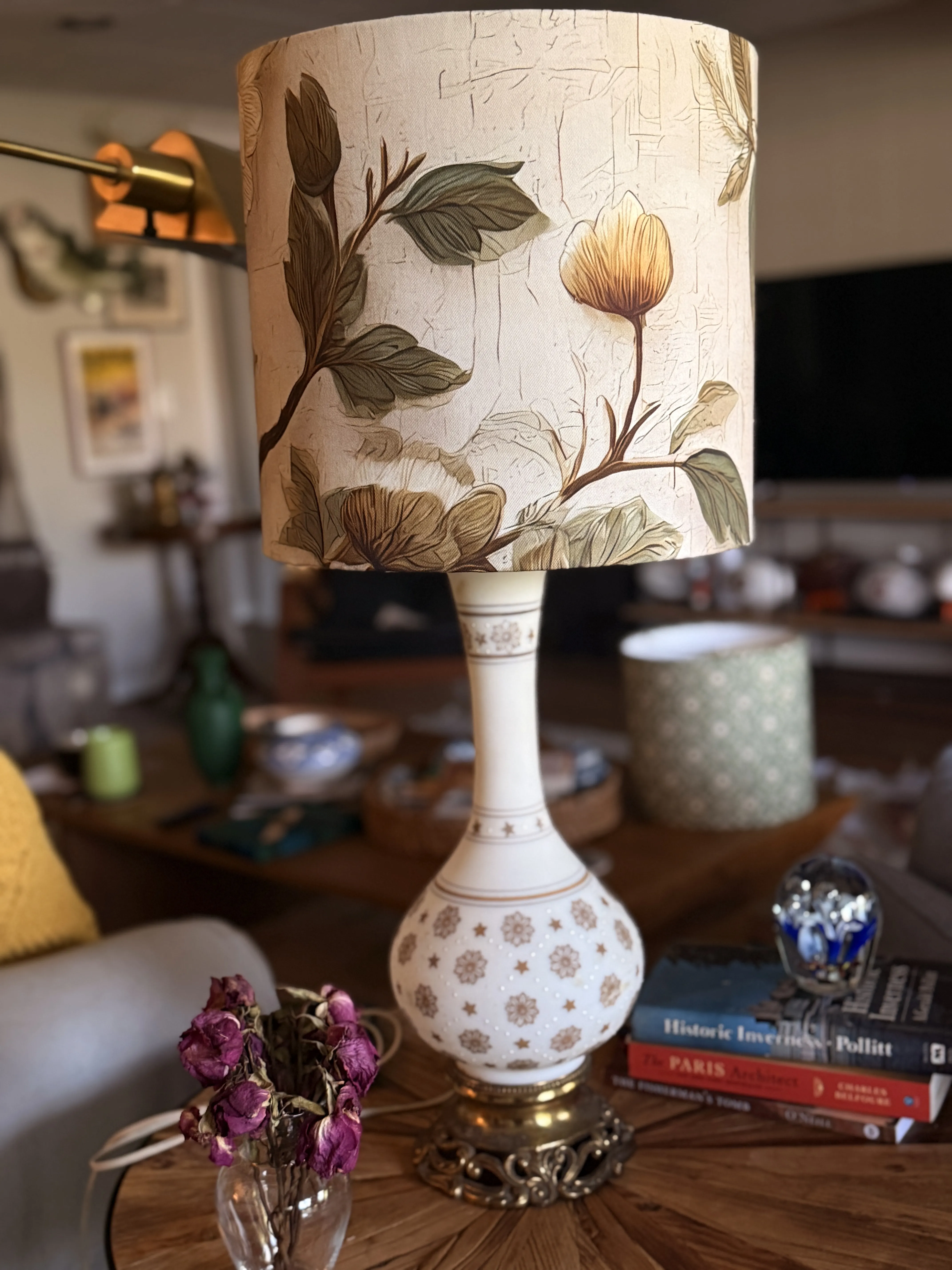
The useful answer is not one number. A lampshade has to balance the lamp, cover the hardware, give the right kind of light, and leave enough breathing room on the table. A few measurements give you a reliable starting range, then your eye and the room help you choose the better fit.
Begin with the lamp where it will actually live. A shade that feels generous on a wide console can be clumsy beside a bed, while a compact bedside shade can look lost on a substantial vintage base. The aim is a lamp that feels like one considered piece, not a base wearing a hat.
Start with three checks, not a fixed formula
For most table lamps, start with the widest part of the base, the visible height from the bottom of the base to the socket or harp, and the clear space around the lamp. A shade bottom often lands around one and a half to two times the base width. Its height often begins around two-thirds of the visible base height. Those are starting points, not furniture law.
The better final test is simple: from the place you use the lamp, the shade should hide the bulb and socket, give the base enough presence, and leave the table usable. The lampshade size guide is a useful first pass if you need a quick range before comparing options.
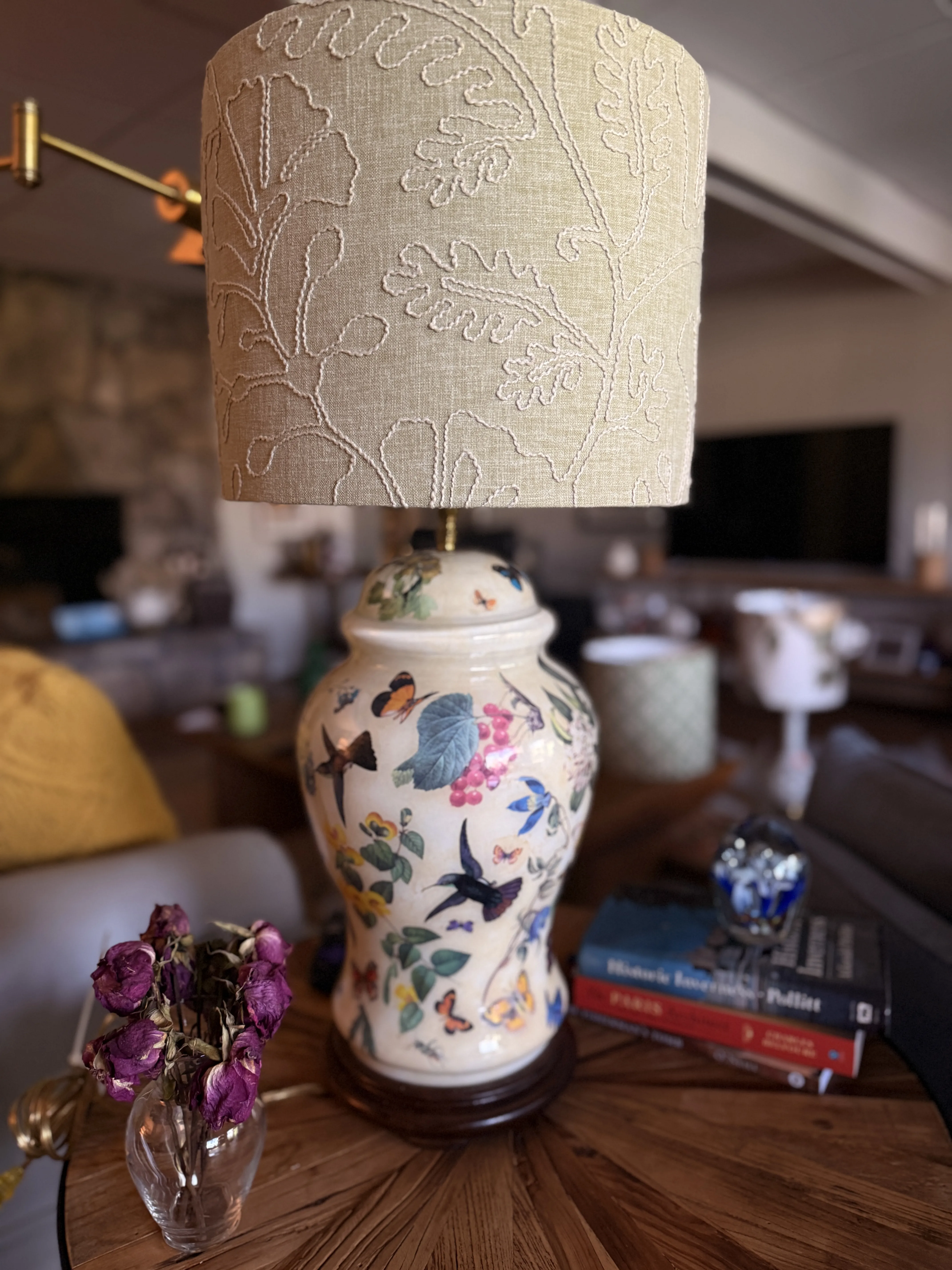
Measure the lamp base at its widest point
Place a ruler or tape measure straight across the broadest part of the lamp body. For a round or ginger-jar base, that is usually its belly. For a square or rectangular base, measure the widest face. Do not measure around curves and do not let a tiny foot or finial decide the scale. You are looking for the width the shade has to balance.
Use that number to form a range rather than a single verdict. A five-inch-wide base may suit a shade somewhere around eight to ten inches wide, depending on the base height, the shade shape, and the table. A detailed or visually heavy base can carry more shade than a slender glass column of the same physical width.
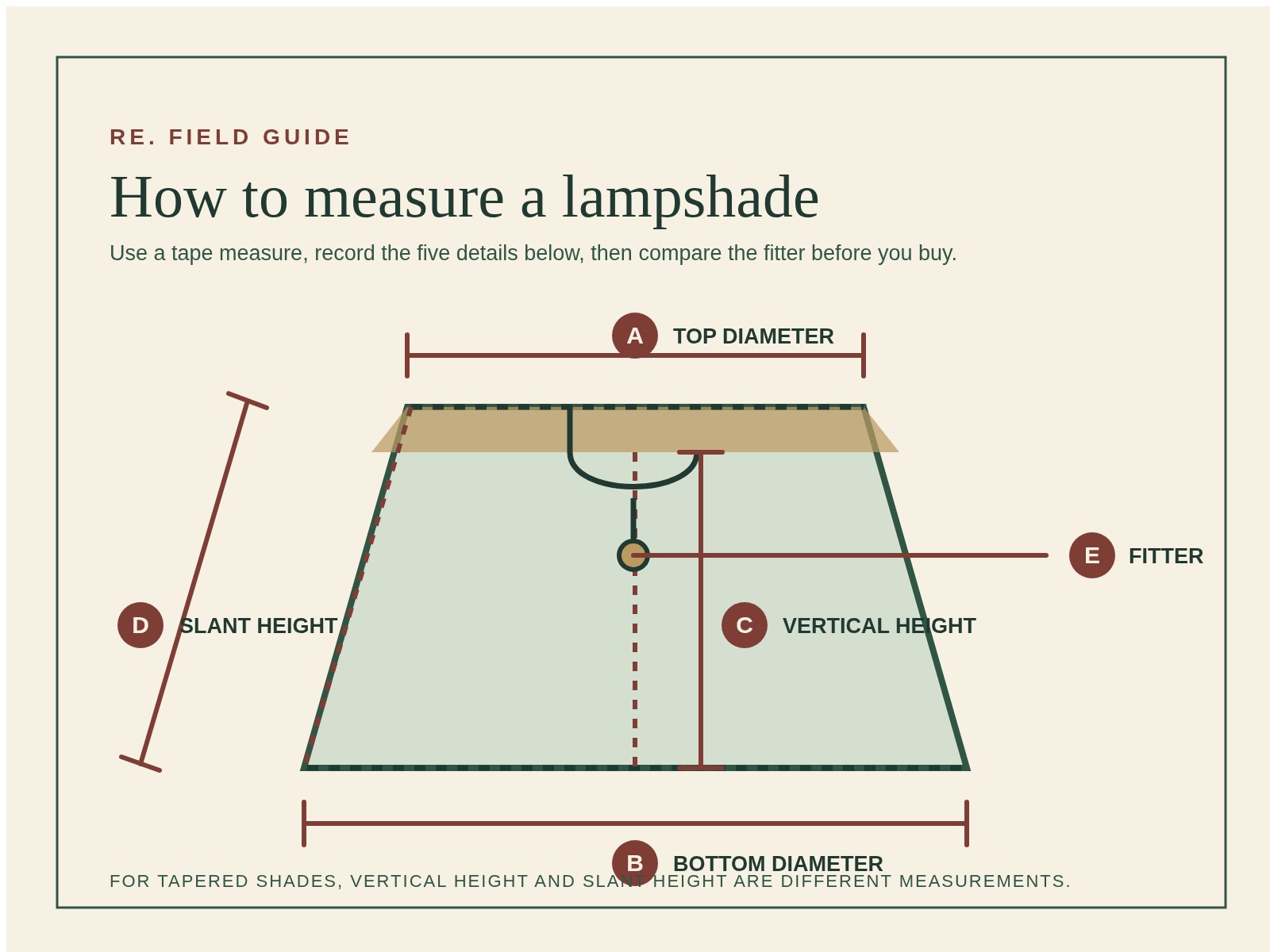
If the lamp already has a shade that works, measure its top width, bottom width, and height before changing anything. Re.'s five-step measuring guide shows exactly what to write down. The old shade is useful evidence, even when you want the next one to be a little wider, taller, or calmer.
Use the old shade as a reference, not a command
A replacement does not have to copy every dimension of the old shade. First decide what the existing one does well. Perhaps it sits at the right height but feels narrow, or perhaps its width works but it leaves the bulb visible from the sofa. Keep the successful measurement and change the one that solves the actual problem.
Be especially careful with a shade that is bent, yellowed, or clearly too small. Its fitter may still tell you how the lamp attaches, but its outline is not necessarily a proportion worth repeating. A lamp can be beautifully made and still have worn an almost-right shade for decades. The next one is an opportunity to correct the fit without losing the character of the base.
Use height to cover the hardware
Shade height is where a lamp often starts to look wrong. A short shade can leave the socket, harp, and bulb exposed. A very tall one can hide a beautiful neck or make the whole lamp feel crowded. For many table lamps, a shade close to two-thirds of the visible base height makes a balanced starting point.
Look at the lamp from normal eye level rather than only from above. Sit in the chair next to it, lie back in bed if it is a bedside lamp, and look from the doorway. The lower rim should keep the bulb out of direct view without swallowing the lamp. This practical check matters more than forcing a ratio to the nearest quarter inch.
When a shade has the right height but sits too high, the harp may be the real problem. A spider-fitter shade rests on the harp, and a different harp height changes the shade's position. Before abandoning a shade you love, use the lamp harp guide to check the support beneath it.
Do not judge this part with the lamp switched off alone. Turn it on after checking the dimensions. A bare bulb in the sightline makes a comfortable chair feel less inviting, while a shade that directs all of the light upward can make a reading corner work harder than it needs to. The right height earns its place after dark as well as in daylight.
Let the shape change the size you expect
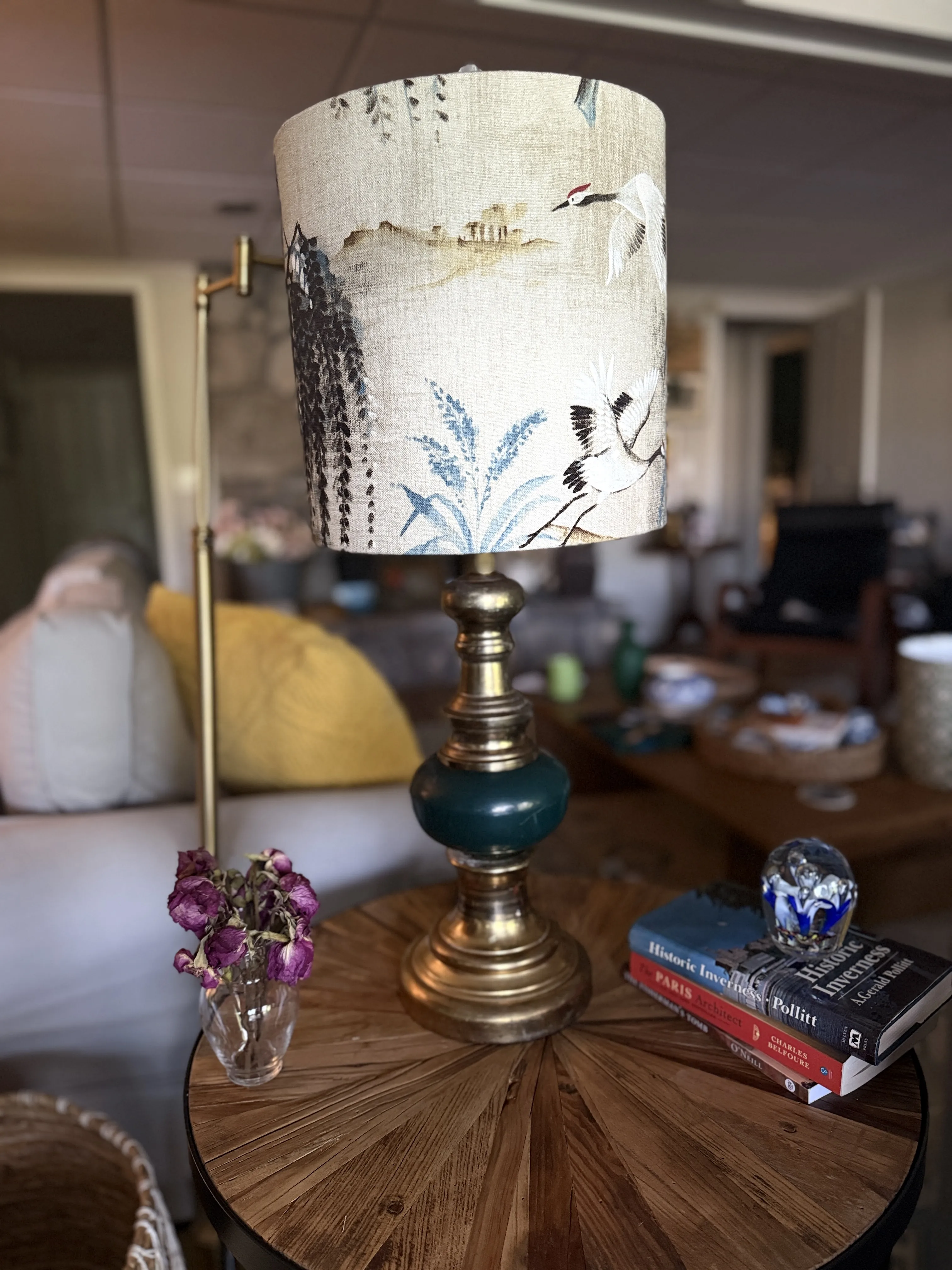
A twelve-inch drum shade and a twelve-inch tapered shade do not feel equally large. A drum carries its full width at the top, so it looks fuller and takes up more visual space. A tapered empire or bell shade draws inward and can feel lighter above the same base. Square and oval shades add another detail because their width and depth affect nearby walls, headboards, and artwork differently.
This is why copying only the bottom measurement can disappoint. Decide first whether you want a tailored, even drum or a softer tapered shape, then compare the size. If you are fitting a straight-sided style, the drum lampshade measuring guide explains the extra clearance worth checking. For a broader look at silhouette, fabric, and fitting, start with how to choose a lampshade.
Make room for the table and the room
The lamp does not live in a vacuum. Measure from the lamp to the edge of the table, the wall, the headboard, and the objects you use nearby. Leave enough room to reach the switch, set down a book, or pull back a chair. On a narrow console, a broad shade may interfere with a mirror or artwork even when it looks perfect from the front.
Then stand back. A shade can meet every numerical guideline and still look too small in a large, layered room or too insistent in a quiet corner. The best choice gives the lamp enough visual weight for its setting without making the surface feel crowded. This is also why a slightly larger shade can sometimes work better than a small one, provided the lamp and table have room to carry it.
Check the fitter before you order
A lovely shade that cannot attach is still the wrong shade. Turn the current shade over and look for the fitting: a spider fitter rests on a harp and is held by a finial, an uno fitter threads onto the socket, and a clip-on attaches directly to the bulb. The same overall size can sit at a different height depending on the fitter and its drop inside the shade.
Make this part of the same note as your width and height. Retailers often list a shade as top diameter by bottom diameter by height, but the attachment can decide whether those proportions actually work on your lamp. For an unusual piece, take a front photo, a side photo, and one clear image of the hardware before comparing replacements.
A quick way to test two possible sizes
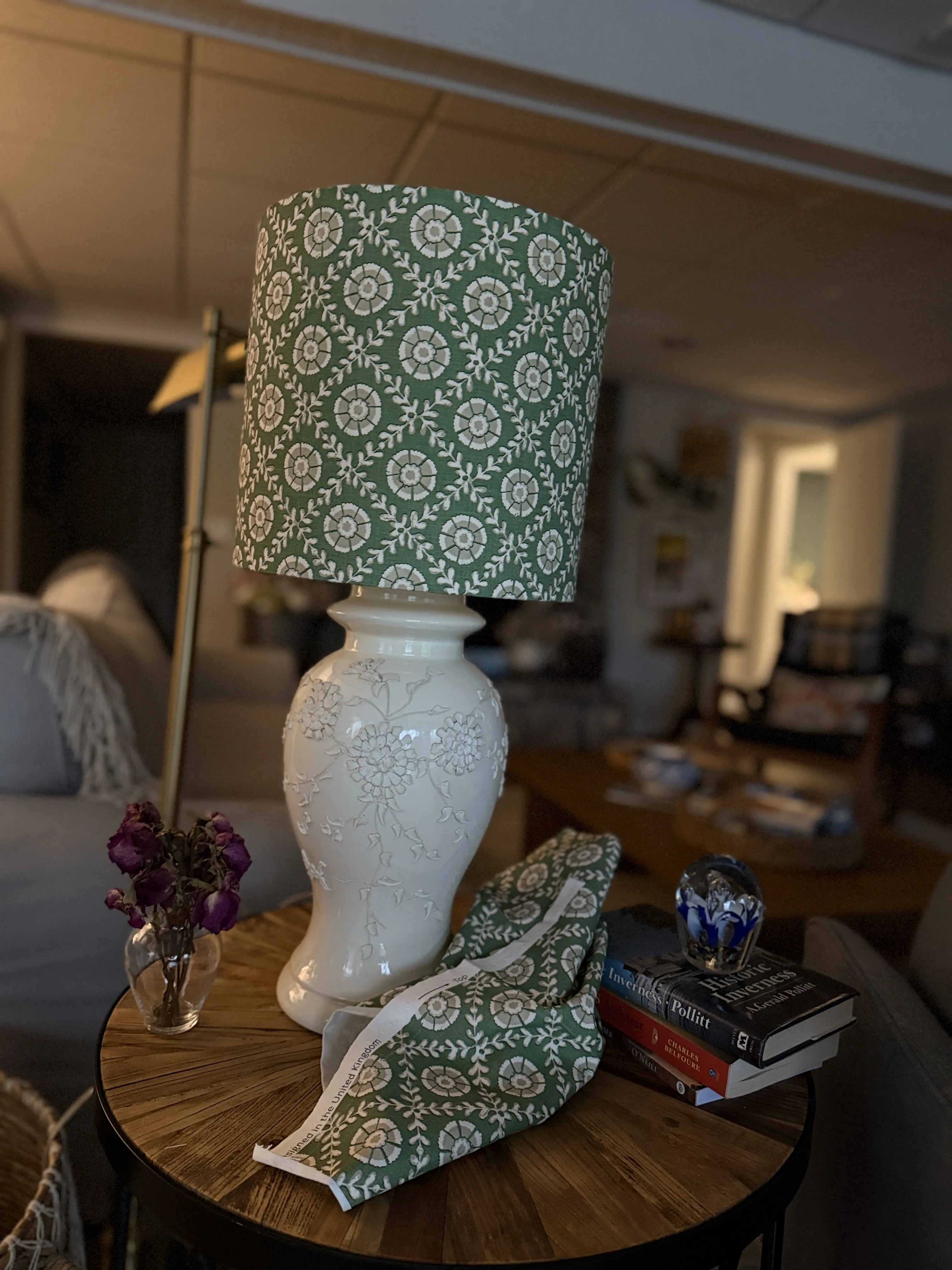
When you are choosing between two sizes, make the decision in the room. Cut a simple paper ring or band close to the proposed diameter and hold it around the lamp, or place another shade with a similar footprint on top for a moment. It will not predict fabric or light, but it makes the silhouette and table clearance easier to see.
Ask four questions. Does the shade hide the bulb from where the lamp is used? Is it at least as wide as the broadest part of the base? Does it leave the surface easy to use? Does the lamp still feel settled when you step back? If the answer is yes to all four, you have a good candidate. If only the numbers work, keep looking.
For a more structured starting range, Re.'s lamp shade calculator brings together base width, lamp height, harp height, and available clearance. It is useful for narrowing the field before you judge the actual shape and fabric in the room.
When a custom shade is the sensible answer
Ready-made shades work well when the lamp uses standard hardware and a familiar size fits the room. A custom shade becomes useful when an unusual vintage base needs a very particular height or diameter, when a bedside table is tight, or when the lamp has a fabric and mood that a standard option cannot give it.
Re. makes custom lampshades around the lamp rather than asking a good base to accept a nearly-right size. Bring the measurements above, photos of the lamp in its room, and a sense of the light you want. Those details give the shade a chance to feel made for the piece, because it is.
Keep this note with the lamp
- Base width at its widest point
- Visible base height to the socket or harp
- Current shade top width, bottom width, and height
- Fitter type and, for a spider fitter, the drop inside the shade
- Clear width and depth around the lamp
- One front photo and one side photo in the room
With those notes together, you can compare a listing without guessing, see when a shade is close but not right, and explain what needs to change. That is a better way to choose than hoping a label such as small, medium, or large means the same thing from one maker to the next.
Frequently asked questions
What size lampshade do I need for a table lamp?
Start with the lamp base at its widest point, its visible height to the socket or harp, and the room on the table. A shade often begins around one and a half to two times the base width and around two-thirds of the base height, then needs to hide the bulb and work with the fitter.
Is it better for a lampshade to be too big or too small?
Neither is ideal, but a shade that is slightly generous often reads more settled than one that is visibly narrow or short. In a tight space, however, the table and nearby furniture get a vote too.
How do I know if my lampshade is too short?
View the lamp from the chair, bed, or doorway where it is normally used. If the bulb, socket, or harp is clearly visible beneath the lower rim, the shade may be too short or sitting too high.
Can I use the same size shade on every table lamp?
No. The lamp base, its shape, its height, the fitter, and the space around it all affect the right size. Similar-looking bases can need different shades when they sit in different rooms or have different proportions.
Related posts
Lampshades
How to Measure a Lampshade in 5 Simple Steps
Measure a replacement lampshade with confidence, from the top and bottom width to the height and fitter that help a lamp feel balanced.
Lampshades
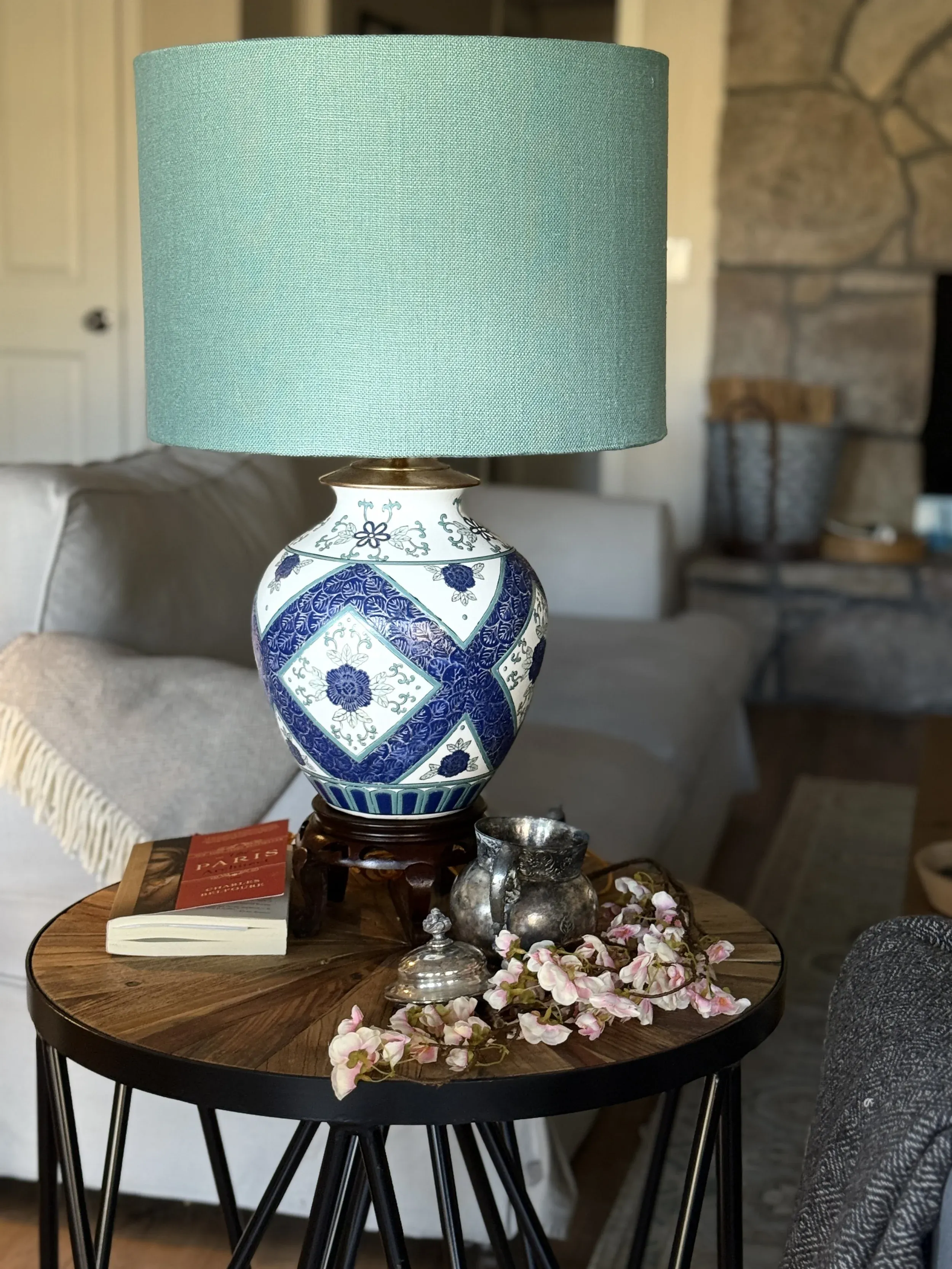
Lamp Shade Calculator: Find a Size That Fits
Use a few simple measurements to find a lampshade size that suits your lamp, your table, and the way the room is used.