
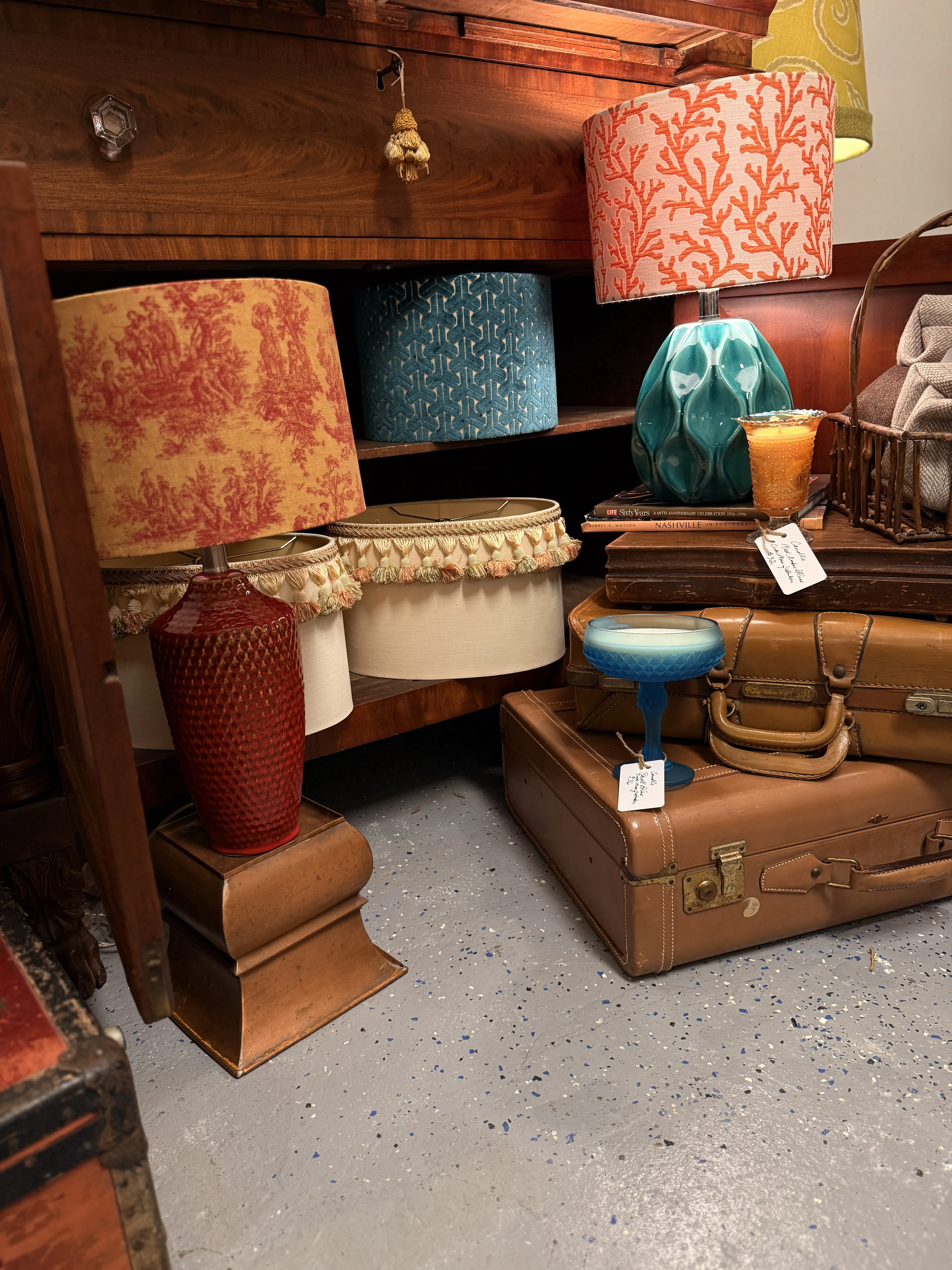
A lampshade does more than soften a bulb. Its shape changes the outline of the lamp, the amount of light that reaches a page or tabletop, and the way the whole corner feels after dark. The right choice makes a lamp look as though it has always belonged there.
Start by looking at the lamp from across the room, not just from above. Notice the base, the table, and the open space around it. A shade should be in conversation with all three. The most useful shape is not always the most dramatic one. It is the one that gives a favorite lamp the proportion and kind of light the room needs.
Choose the job before the silhouette
Before naming a shape, decide what you need the lamp to do. A bedside lamp needs to keep the bulb out of view and give enough light for a book. A console lamp can be calmer, softer, and more decorative. A reading chair often needs more directed light than a hall table. Shape, fabric, lining, height, and fitter all work together, but the shape is where the visual decision begins.
Measure the lamp and its available space first. Re.’s lampshade measuring guide covers the top width, bottom width, height, and fitter details that make a replacement possible. The table lamp size guide helps turn those measurements into a sensible starting range. Once the scale is in hand, choosing a shape feels much less like a guess.
It helps to separate the decisions. First ask whether the lamp is short and broad, tall and narrow, rounded, or angular. Then consider the surface beneath it. A low lamp on a large chest can carry a fuller shape than the same lamp on a tiny bedside table. Finally, think about the view across the room. The best shade should not only fit the lamp. It should make the arrangement feel easier to look at.
Drum shades: clean and steady
A drum shade has matching top and bottom diameters, with straight sides between them. It gives a lamp a calm, tailored outline and lets a detailed ceramic, brass, or painted base have some breathing room. This is why drums are such an easy choice for a collected home, especially when the base already carries pattern, texture, or a strong silhouette.
The same even width that makes a drum shade feel composed can also make it feel substantial. On a narrow table, it reaches farther into the room than a tapered shade of the same bottom diameter. Check the clearance around a bedside lamp or a crowded console. For a closer look at the measurement side of this shape, use Re.’s drum lampshade guide.
Empire shades: familiar, flexible, and softly tapered
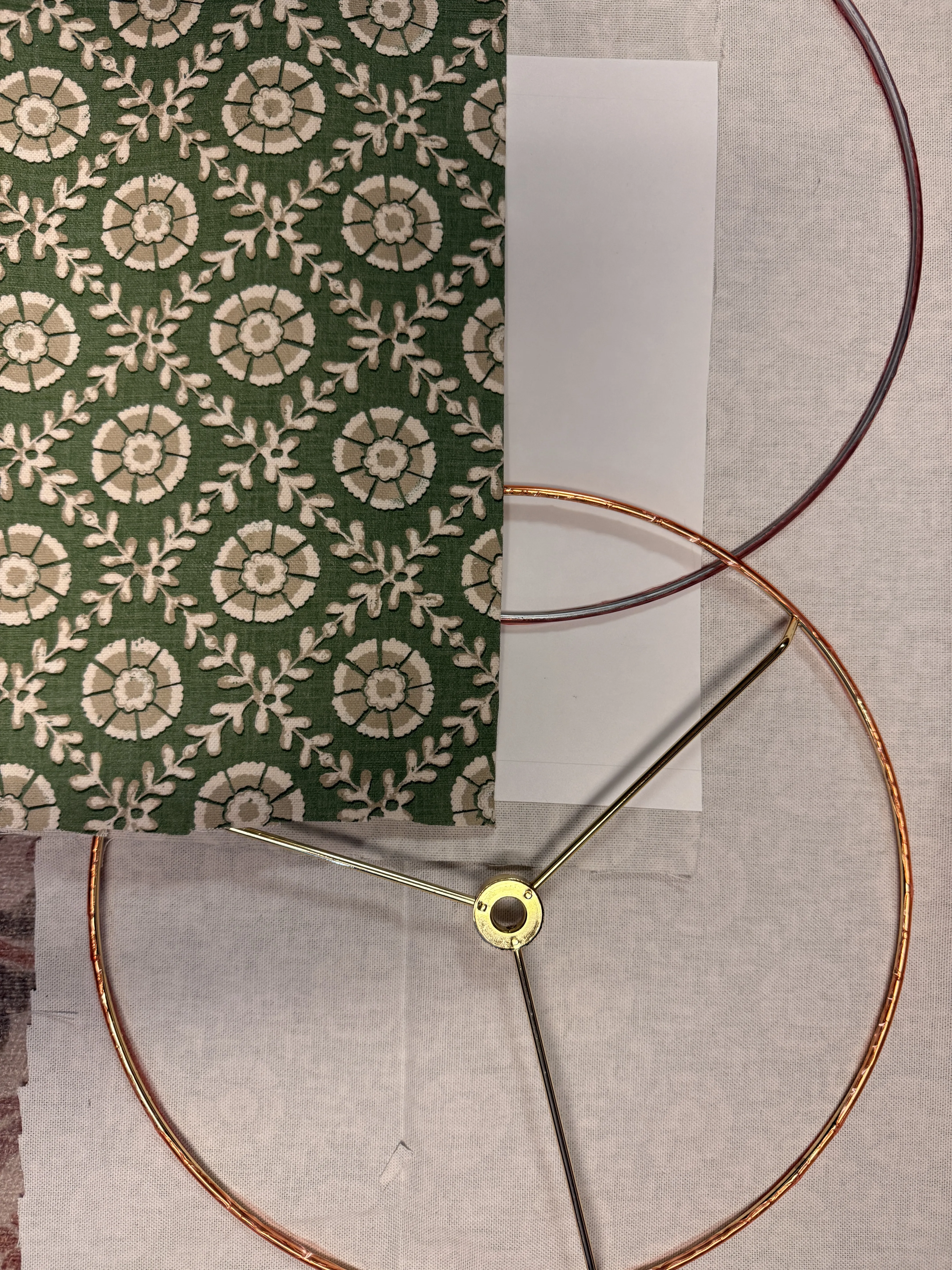
An empire shade is narrower at the top and wider at the bottom, with a straightforward taper. It is a familiar shape for good reason. The wider lower edge gives a lamp a gentle spread of light, while the smaller top keeps the silhouette from becoming too heavy. It often feels especially natural with rounded, urn-like, ginger jar, or traditionally shaped bases.
Empire shades are forgiving when a room has a little more visual detail. The taper adds movement without asking for attention. They can also be useful where a drum shade would feel too blocky or wide. The key is to avoid making the top so narrow that the shade pinches the lamp visually, or the bottom so wide that the table loses its useful surface.
Bell shades: softer curves for more traditional lamps
A bell shade usually narrows toward the top and opens more generously at the lower edge, often with a slight curve rather than a straight taper. It brings softness to a lamp with a rounded ceramic body, carved wood, or traditional brass. A bell shape can make a familiar lamp feel less strict than a drum or square frame.
Because the lower edge flares outward, look at the lamp from the side as well as the front. The shade needs enough room around it to feel intentional. A bell shade can be lovely on a side table or in a reading corner, but it may crowd a narrow console or a pair of closely spaced bedside lamps. Treat it as a shape with presence, not just a default replacement.
Oval shades: useful when the room is narrow
An oval shade has a longer front-to-back or side-to-side outline rather than a perfect circle. It is often the sensible answer when a lamp sits against a wall, on a shallow console, or beside a bed where a round shade would project too far. It can also echo an oval base, mirror, or tabletop without making the match feel too literal.
Oval shades need two width measurements, one across the longer axis and one across the shorter axis. The fitter still matters, and the shade must look balanced from the front, not only fit the depth of the furniture. Re.’s oval lampshade measuring guide shows what to note before comparing replacements.
Square and rectangular shades: crisp contrast
Square and rectangular shades bring clean edges to a room. They are often a natural match for square, column-like, or architectural bases, but they can also sharpen a round lamp that needs a more structured presence. A rectangular shape can make a lamp practical on a narrow surface because its straight sides are easier to align with a wall or console.
These shapes ask for a little more care with orientation. Stand in the usual viewing position and make sure the corners do not look awkwardly turned away from the room. The shade should read as deliberate from the doorway, not as though it was placed on the lamp in a hurry. A simple base and a clean rectangular shade can be a quiet, handsome pairing.
Coolie and cone shades: a stronger downward focus
Coolie and cone shades are wider at the bottom with a more pronounced, low profile. Their broad opening sends attention downward, which can be useful over a writing desk, a reading chair, or an accent table. They also give a lamp a slightly more casual, old-world character than a tall drum or empire shape.
These shapes can look wonderful on a shorter, broader base, but they are less forgiving when the height is wrong. Too shallow and the lamp may look squashed. Too wide and the shade begins to dominate the furniture around it. Use them when the lower spread and relaxed profile are part of the point, not simply because the diameter happens to fit.
Match the shape to the lamp, then the room
There is no rule that says every round base needs a round shade or every angular base needs square corners. Those pairings are useful starting points, not laws. A round lamp with a simple drum shade can feel collected and calm. A square shade on a round base can add contrast. The better question is whether the combination makes the lamp feel settled at the scale of the room.
Use a paper outline when you are torn between two shapes. Cut a simple band or silhouette close to the proposed width and height, hold it around the lamp, then step back. It will not show fabric or glow, but it makes the visual weight clear. Many lighting guides also emphasize that the base shape, shade proportion, and intended light all belong in the same decision, as outlined in The Home Depot’s overview of lampshade types.
When two shapes both seem plausible, choose the one that gives the lamp a clearer job. A straight drum can quiet a patterned base and make a console feel organized. A tapered empire can soften an already traditional lamp. An oval can solve a depth problem without making a room feel like it was planned around measurements. That kind of practical choice is more lasting than following a shape simply because it is having a moment.
Use fabric to finish the shape, not rescue it
Fabric can make a shade feel light, tailored, textured, playful, or formal, but it cannot fix a shape that is out of proportion. Pick the frame first, then consider what the material should contribute. A simple pale linen can make a detailed base feel calm. A patterned fabric can give a plain base warmth and a point of view. Pleats, trim, and a darker lining all add character, but they also make the shape read more strongly.
Look at the fabric during the day and after dark. Daylight reveals color, weave, and how the shade sits with the room. Evening shows the glow and where the light lands. If a lamp is meant to be used for reading, do not let the prettiest fabric choice leave the page dim. If it is meant to soften a corner, a gentler glow may be exactly what the room has been missing.
Do not forget the fitter and the light
A beautiful shape still has to sit correctly. Most table lamps use a spider fitter that rests on a harp, while uno and clip-on shades attach differently. The fitter drop determines how high or low the shade sits, which changes how much socket, bulb, and neck remain visible. Re.’s lamp harp guide can help when the shade is close but not sitting at the right level.
Then turn the lamp on. A pale linen shade may glow gently through the sides, while a lined or darker shade sends more light above and below the rim. Check the lamp at night from the chair, bed, or doorway where it will actually be used. A lampshade should be comfortable to live with, not merely attractive in a product listing.
When a custom shade is the better answer
Ready-made shades work beautifully when the lamp uses standard hardware and a familiar shape and size fit the room. Custom work becomes useful when a vintage base needs an exact diameter or height, when a narrow table needs an oval or rectangular footprint, or when a particular fabric is the detail that will make the lamp feel at home.
Re. makes custom lampshades around the lamp and its room. A front photo, a side photo, base width, height to the harp or socket, fitter type, and the available space nearby give the process a clear start. The lampshade calculator is also a helpful way to organize those measurements before deciding which shape will suit the piece.
A simple shape checklist
- Choose the lamp’s job first: reading, bedside, ambient, or accent light.
- Measure the base, shade height, fitter, and clear space around the table.
- Use a drum for an even, tailored outline; empire or bell for softness and taper.
- Consider oval or rectangular shapes when the furniture depth is limited.
- Switch the lamp on and check the view from where you actually sit.
Once the shape, scale, and hardware agree, fabric becomes the enjoyable part. That is when a lamp stops being something you are trying to fix and starts becoming part of the room again.
Frequently asked questions
What is the most versatile lamp shade shape?
A drum shade is often the most versatile starting point because its clean, straight outline works with many simple round, ceramic, brass, and wood bases. It still needs the right diameter, height, and fitter for the lamp.
Should a lampshade match the shape of the lamp base?
Matching a round shade to a round base, or an angular shade to an angular base, is a dependable starting point. A simpler base can also carry a contrasting shape beautifully when the scale and hardware are right.
Is an empire shade the same as a bell shade?
Both shapes taper toward the top, but an empire shade is usually a straightforward, even taper. A bell shade often has a softer curve or more pronounced flare near the lower edge.
Can I change a lamp from a tapered shade to a drum shade?
Often, yes. A drum shade carries more width near the top, so check the lamp's height, the space around it, and whether the fitter lets the shade sit at a comfortable level before making the switch.
Related posts

Lampshades
How to Choose a Lampshade That Fits Your Lamp
An easy way to choose lampshade size, shape, fitter, fabric, and light, so your lamp feels right in the room.
Lampshades
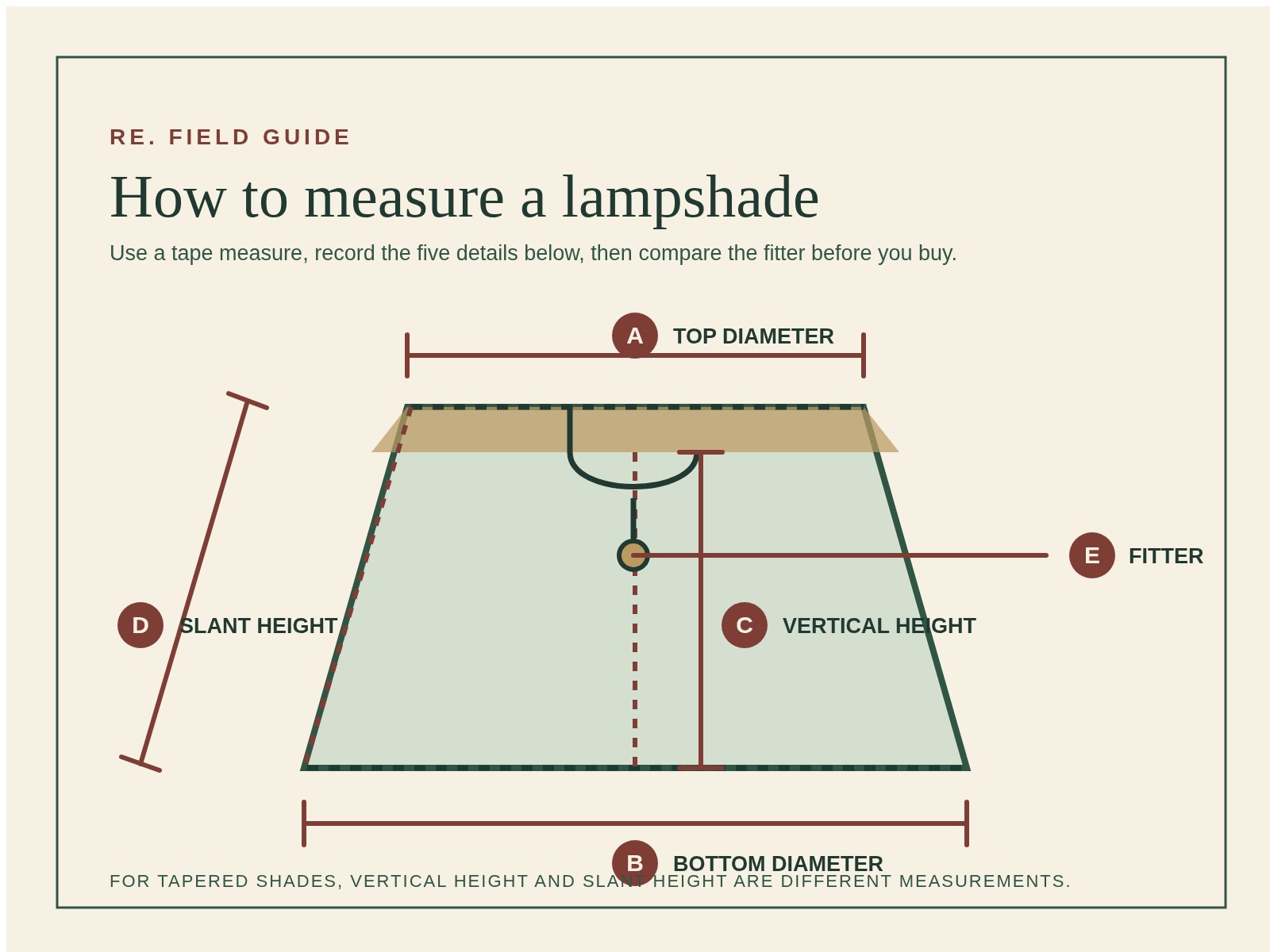
How to Measure a Lampshade in 5 Simple Steps
Measure a replacement lampshade with confidence, from the top and bottom width to the height and fitter that help a lamp feel balanced.